


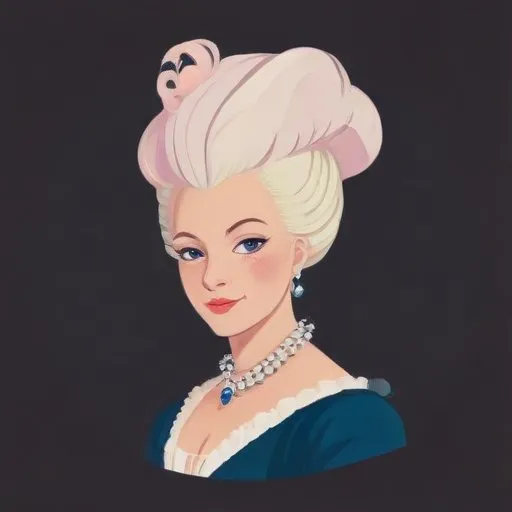
A French mystic and stigmatist who experienced intense spiritual visions and physical manifestations of Christ's wounds, influencing Catholic devotion and mysticism.
MarieAntoinette de Geuser, affectionately known as Consummata, is renowned for her profound devotion to the Carmelite Order, exemplifying a life of contemplation and spirituality. Despite being unable to take her vows due to her fragile health and the tumultuous events of World War I, her correspondence and notes remain a testament to her deep commitment to the Carmelite tradition.
Born on April 20, 1889, in Le Havre, France, MarieAntoinette was the eldest of twelve children to René de Geuser and his wife, née Loyzeaux Grandmaison. Her family was deeply rooted in religious vocations, with several uncles and aunts serving as Jesuits, Canons, and Carmelites. Four of her brothers would later follow suit, pursuing religious careers.
As a child, MarieAntoinette's fragile health often left her bedridden. However, it was during one of these periods of convalescence in 1906 that she experienced a profound moment of discernment, which she described as a "light of my childhood" that had become "something truly divine." This epiphany solidified her commitment to a life of devotion.
MarieAntoinette's correspondence with Marie-Thérèse of the Sacred Heart, a Carmelite nun at the Pontoise convent, began in 1910 and continued until 1917. It was during this period that she received the religious name Marie of the Trinity. Her letters, marked by introspection and spiritual depth, provide valuable insights into her inner life and Carmelite spirituality.
Despite her inability to enter the convent due to her health, MarieAntoinette continued to live a life of reclusion, alternating between her parents' home and periods of solitude. Her correspondence, characterized by its introspective nature and poetic language, remains a testament to her profound spirituality.
MarieAntoinette de Geuser's legacy lies in her contribution to the Carmelite tradition, her correspondence serving as a beacon of inspiration for those seeking a deeper understanding of contemplative life. Her life, marked by illness and war, serves as a powerful reminder of the human spirit's capacity for resilience and devotion.
In the wake of Thérèse of Lisieux and Elizabeth of the Trinity, MarieAntoinette's writings provide a unique window into the mystical experiences of early 20th-century Carmelite spirituality. Her story, though marked by challenges and setbacks, remains an enduring testament to the transformative power of faith and devotion.
MarieAntoinette de Geuser's life, though marked by adversity, serves as a powerful reminder of the enduring power of faith and devotion. Her correspondence, infused with spiritual depth and poetic language, continues to inspire those seeking a deeper understanding of the Carmelite tradition.
Born in 1873
A French nun who lived a simple life of prayer and sacrifice, and is revered for her "little way" of trusting in God's love and mercy. She is also known for her writings, which have inspired countless people around the world.
Born in 1412
A French heroine who led the French army to several victories during the Hundred Years' War, and was later canonized as a saint after being burned at the stake for heresy.
Born in 1844
A French nun who had visions of the Virgin Mary, leading to the discovery of a healing spring in Lourdes, France, and is now revered as a symbol of faith and hope.
Born in 1887
A mystic and stigmatist, known for bearing the wounds of Christ and possessing supernatural gifts, including healing and bilocation.
Born in 1504
Leader of the Catholic Church during the Counter-Reformation, he excommunicated Queen Elizabeth I and played a key role in the Council of Trent.
Born in 1910
A selfless Albanian-Indian nun dedicated her life to caring for the poor, sick, and marginalized, earning her a Nobel Peace Prize and sainthood. Her tireless charity work inspires millions worldwide.
