


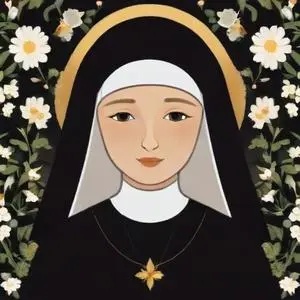
A French nun who lived a simple life of prayer and sacrifice, and is revered for her "little way" of trusting in God's love and mercy. She is also known for her writings, which have inspired countless people around the world.
Known as the "Little Flower of Jesus," Therese of Lisieux is a beloved French saint, revered for her unwavering dedication to her faith and her extraordinary devotion to the spiritual life. With her simple, yet profound approach to Christianity, she has inspired countless individuals around the world to deepen their relationship with God.
Therese was born Marie Françoise Therese Martin on January 2, 1873, in Alençon, France, to Louis Martin and Marie-Azeline Guérin. From a young age, she demonstrated a deep affinity for the spiritual life, and her desire to serve God only intensified as she grew older.
In 1888, at the tender age of 15, Therese entered the Carmelite convent in Lisieux, Normandy, where she joined her two elder sisters. Over the next nine years, she fulfilled various roles within the convent, including sacristan and assistant to the novice mistress. Despite her youth, she demonstrated remarkable maturity and wisdom, earning the respect and admiration of her fellow sisters.
In her final eighteen months in Carmel, Therese experienced a profound crisis of faith, often referred to as her "night of faith." During this period, she felt an overwhelming sense of doubt and uncertainty, questioning the existence of God and her own salvation. This dark period, though difficult, ultimately deepened her faith and trust in God.
Therese's remarkable life was cut short on September 30, 1897, when she succumbed to tuberculosis at the age of 24. However, her legacy has endured, inspiring countless individuals to embark on a journey of spiritual discovery and devotion.
Today, Therese is revered as one of the most popular saints in the history of the Catholic Church. Her feast day, October 1, is celebrated around the world, and the Basilica of Lisieux, where she lived and died, is the second most popular pilgrimage site in France, after Lourdes.
Therese's remarkable life and teachings have made her a model of sanctity for Catholics and non-Catholics alike. Her emphasis on the importance of prayer, self-sacrifice, and devotion has inspired generations to strive for a deeper spiritual life.
In 1927, Pope Pius X declared Therese the "greatest saint of modern times," a testament to her enduring legacy and influence. Today, her story continues to inspire and motivate individuals to cultivate a deeper relationship with God and to live a life of love, compassion, and service to others.
Therese's approach to prayer was characterized by simplicity, humility, and trust. She believed in the power of prayer to transform lives and to bring people closer to God. Her own prayer life was marked by a deep sense of abandonment and surrender, as she sought to consecrate herself entirely to God.
Throughout her life, Therese demonstrated a remarkable willingness to sacrifice herself for the benefit of others. Her selflessness and generosity inspired her fellow sisters, and her legacy continues to inspire individuals to live a life of service and devotion.
In conclusion, Therese of Lisieux is a shining example of Christian virtue and devotion. Her remarkable life, marked by simplicity, humility, and trust, continues to inspire and motivate individuals around the world to deepen their relationship with God and to live a life of love, compassion, and service to others.
Born in 1504
Leader of the Catholic Church during the Counter-Reformation, he excommunicated Queen Elizabeth I and played a key role in the Council of Trent.
Born in 1675
A 18th-century pope who reformed the Catholic Church, promoting tolerance and scholarship, and is known for his encyclicals on topics like usury and the sacraments.
Born in 1876
The leader of the Catholic Church from 1939 to 1958, known for his controversial role during World War II, particularly in regards to the Holocaust. He is also remembered for his encyclicals on social justice and liturgical reforms.
Born in 1881
Reformed the Catholic Church, introducing progressive reforms and ecumenical dialogue, and convened the Second Vatican Council.
Born in 1417
A 15th-century pope who played a significant role in the fall of the Western Schism, ending the division in the Catholic Church. He's also known for his lavish spending and nepotism.
Born in 1920
Leader of the Catholic Church from 1978 to 2005, known for helping to end communism in Poland and being a charismatic advocate for human rights and social justice.
Born in 1910
A selfless Albanian-Indian nun dedicated her life to caring for the poor, sick, and marginalized, earning her a Nobel Peace Prize and sainthood. Her tireless charity work inspires millions worldwide.
