


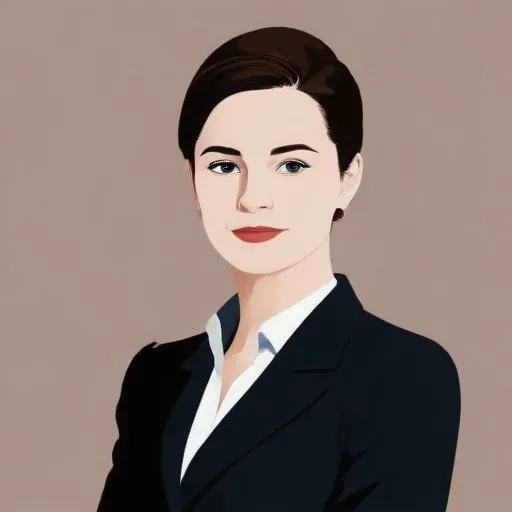
Known as the most influential woman of the Enlightenment, Marie Thérèse Rodet Geoffrin was a French salonnière, art collector, and patron who played a crucial role in shaping French culture and society. Her weekly salons, where she brought together the brightest minds of the time, were the epicenter of intellectual and artistic innovation, making her the unseen force behind many groundbreaking ideas.
Born on June 26, 1699, in Paris, France, Marie Thérèse was raised in a modest family of artisans. Despite the limitations of her social class, she was determined to cultivate her love for the arts and literature. Her marriage to Pierre Geoffrin, a wealthy manufacturer, provided her with the means to pursue her passions.
In her elegant townhouse on the Rue Saint-Honoré, Marie Thérèse established a series of salons, which became the hub of Parisian intellectual and artistic life. Every Monday, she welcomed luminaries such as Voltaire, Diderot, Montesquieu, and Jean-Jacques Rousseau, fostering an environment of creative exchange and debate.
Marie Thérèse was a discerning patron, supporting artists, writers, and musicians who would go on to shape the cultural landscape of France. She commissioned works from notable artists like Jean-Honoré Fragonard and François Boucher, and her home became a treasure trove of art and antiquities.
Her salons also played a significant role in promoting the work of women artists, writers, and intellectuals, providing them with a platform to showcase their talents in a society that often marginalized their contributions.
Marie Thérèse's salons and patronage had a profound impact on modern society. Her gatherings helped disseminate Enlightenment ideas, shaping the intellectual and cultural landscape of France and beyond. The Encyclopédie, a landmark project edited by Denis Diderot, was famously written in her home, with many contributors attending her salons.
Her legacy extends to the realm of art, as she helped establish the Louvre Museum, which today is one of the world's greatest cultural institutions. Her influence can be seen in the works of numerous artists, writers, and thinkers who benefited from her support and encouragement.
Marie Thérèse's life was marked by significant milestones, including her marriage to Pierre Geoffrin in 1713, with whom she had one daughter. Her husband's death in 1749 left her a wealthy widow, allowing her to dedicate herself fully to her salons and philanthropic pursuits.
Throughout her life, Marie Thérèse faced criticism and scrutiny, particularly from those who saw her as a woman overstepping her social bounds. However, she remained undeterred, using her wit, intelligence, and charm to navigate the complexities of Parisian society.
Marie Thérèse Rodet Geoffrin's remarkable life and achievements serve as a testament to the power of women in shaping cultural and intellectual history. Her salons, which continued until her death in 1777, left an indelible mark on French society, influencing generations of artists, writers, and thinkers.
In an era when women were often relegated to the sidelines, Marie Thérèse defied convention, creating a space where creativity, innovation, and intellectual curiosity thrived. Her legacy is a reminder of the crucial role women have played in shaping our shared cultural heritage.
Born in 1712
A pioneering thinker who shaped modern democracy and education with his ideas on social contracts, general will, and the importance of early childhood education. His writings influenced the French Revolution and modern political thought.
Born in 1694
A witty and insightful 18th-century writer and philosopher who used satire to critique societal norms and advocate for reason, tolerance, and human rights.
Born in 1714
A French philosopher who developed a comprehensive system of philosophy that emphasized the role of sensation and experience in shaping our understanding of the world, and is known for his influential works on epistemology and psychology.
Born in 1723
French historian and author who wrote influential works on the Enlightenment and the French Revolution, including a 12-volume history of France.
Born in 1715
A French Enlightenment philosopher who argued that human beings are motivated solely by self-interest and that morality is based on the pursuit of pleasure and avoidance of pain. His ideas influenced the development of utilitarianism and the concept of the social contract.
