


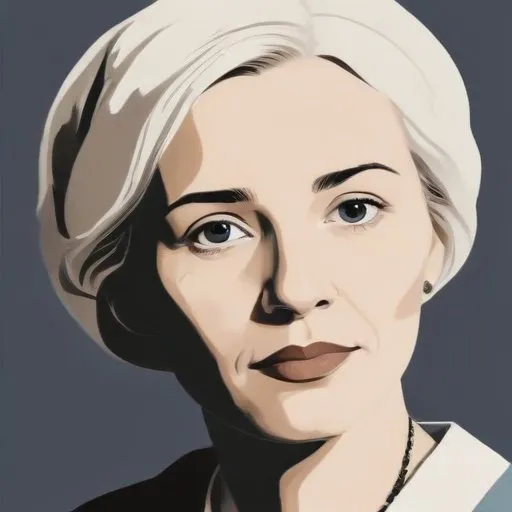
Estonian poet and author, known for her lyrical and introspective works that explored themes of love, nature, and the human condition. Her poetry is characterized by its musicality and emotional depth.
Marie Under, an Estonian poet of unparalleled repute, was nominated for the Nobel Prize in Literature an astonishing 14 times, a testament to her profound impact on the literary world. With a career spanning over seven decades, Under's contributions to Estonian literature are nothing short of monumental, earning her the distinction of being one of the most celebrated poets of her time.
Born on March 27, 1883, in Reval (now Tallinn), Estonia to school teachers Priidu and Leena Under, Marie's innate affinity for language and literature was nurtured from an early age. Her education at a private German girls' school laid the foundation for her later literary pursuits. After graduating, she worked as a salesclerk in a bookstore, where she discovered her passion for writing poetry in German.
In 1902, Under married Carl Hacker, an Estonian accountant, and moved to Kuchino, a suburb of Moscow, where she began writing poetry in earnest. It was during this period that she met the Estonian artist Ants Laikmaa, who encouraged her to translate her poetry into Estonian. This pivotal decision marked the beginning of her literary journey, as her translated works were subsequently published in local newspapers under the pseudonym Mutti.
In 1913, Under met Artur Adson, who would become her secretary and later husband. Adson played a crucial role in compiling the first volumes of her published poetry. In May 1917, Under co-founded the influential Siuru literary group with Adson, Friedebert Tuglas, August Gailit, Henrik Visnapuu, and Johannes Semper. As the only woman in the group, she was affectionately known as "Princess" and was appointed chairman, boldly defying traditional gender roles.
The Siuru group's expressionistic and neoromantic movement, named after the firebird in Finnic mythology, ran counter to the Young Estonia formalist tradition. Between 1917 and 1919, the group published three volumes of poetry, cementing Under's position as a leading voice in Estonian literature. Her poetry, characterized by its intense emotionality and profound insight into the human experience, continues to captivate readers and inspire generations of writers.
Marie Under's remarkable literary career was punctuated by numerous accolades, including her 14 nominations for the Nobel Prize in Literature. Her contributions to Estonian literature have been recognized and celebrated, solidifying her position as one of the most important figures in Estonian cultural heritage.
Under's personal life was marked by significant events, including her divorce from Carl Hacker in 1924 and her subsequent marriage to Artur Adson. She passed away on September 25, 1980, leaving behind a rich literary legacy that continues to inspire and influence Estonian literature to this day.
In conclusion, Marie Under's remarkable life and literary career serve as a testament to her unwavering dedication to her craft and her indelible mark on Estonian literature. Her poetry, characterized by its depth and emotional intensity, continues to captivate readers, ensuring her place as one of the most celebrated poets of her time.
Born in 1878
Finnish-Estonian writer who explored themes of love, nature, and national identity in her novels and poetry, particularly in her 1920s works that showcased her unique blend of Finnish and Estonian cultures.
Born in 1886
Estonian-Finnish playwright and politician who wrote influential plays and was a key figure in Finnish cultural and political life, known for her strong female characters and socially conscious themes.
Born in 1843
Estonian poet and playwright who wrote about love, nature, and social issues, and is considered the founder of Estonian theatre.
Born in 1904
Estonian poet known for his lyrical and symbolic works that explored themes of love, nature, and the human condition. His poetry is characterized by its musicality and depth.
Born in 1906
A prominent Estonian literary figure, celebrated for her poetry and novels that explored themes of love, nature, and national identity. Her works are considered classics of Estonian literature.
