


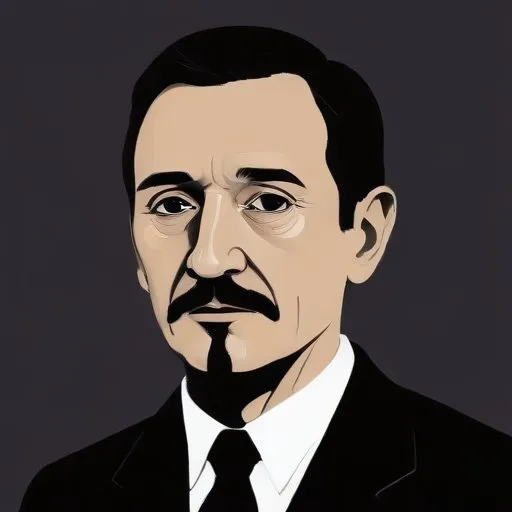
Estonian poet, playwright, and critic who wrote influential works that explored themes of love, nature, and social commentary, and was a key figure in Estonia's literary scene.
Artur Adson is celebrated as a renowned Estonian poet, writer, and theatre critic, whose contributions to the country's literary landscape are still revered today. With a writing career spanning over six decades, Adson's works encompassed a wide range of genres, from poetry and plays to literary criticism and translations, solidifying his position as a leading figure in Estonian literature.
Born Karl Arthur Adson on February 3, 1889 (O.S. January 22), in Tartu, Estonia, Adson attended schools in Tartu, Snna, and Vru. After completing his education, he initially studied surveying in Pskov, but later pursued literature at the University of Tartu in 1925-1926.
Adson's literary journey began in 1917, when he became a member of the Siuru literary movement, which greatly influenced Estonian literature. He was also active in the Tarapita movement, showcasing his versatility as a writer. As a poet, Adson was particularly notable for his works in the Vro language of southern Estonia.
His poetry collections, such as Henge palangoq (1917), Vana laterna (1919), and Rahume kannel (1973), are considered some of the most significant in Estonian literature. Adson's plays, including Toomapev (1928) and Kolmas tee (1932), written under the pseudonym Peeter Bollmann, showcased his talent for storytelling and dialogue.
Adson's expertise extended to translation, and his Estonian translation of Dr. Zhivago is particularly notable. As a literary critic, he was known for his conservative views, which often sparked debates in the Estonian cultural scene.
With the Soviet occupation of Estonia in 1940, Adson and his wife, Marie Under, fled to Sweden, where they continued their literary pursuits. Adson worked as an archivist, and both he and Under remained committed to promoting Estonian literature in exile.
Artur Adson passed away on January 5, 1977, at the age of 87, in Stockholm. He and his wife are buried at the Skogskyrkogrden cemetery in Stockholm.
Artur Adson's contributions to Estonian literature are immeasurable. His works continue to inspire new generations of writers and readers, and his legacy as a poet, playwright, and translator remains unparalleled.
Through his remarkable body of work, Artur Adson has left an indelible mark on Estonian literature, ensuring his legacy as one of the country's most celebrated writers.
Born in 1909
A renowned Estonian thinker who merged philosophy and theology to explore the human condition, producing influential works on existentialism and phenomenology.
Born in 1904
Estonian poet known for his lyrical and symbolic works that explored themes of love, nature, and the human condition. His poetry is characterized by its musicality and depth.
Born in 1906
A prominent Estonian literary figure, celebrated for her poetry and novels that explored themes of love, nature, and national identity. Her works are considered classics of Estonian literature.
Born in 1913
A pioneering Estonian writer and poet, celebrated for her lyrical and introspective works that explored themes of love, nature, and national identity. Her poetry is characterized by its musicality and depth.
Born in 1914
Estonian poet and translator who introduced European modernism to Estonian literature and translated works of prominent authors like Rainer Maria Rilke and Thomas Mann. Known for his lyrical and expressive poetry that explored themes of love, nature, and existential crisis.
Born in 1883
Estonian poet and author, known for her lyrical and introspective works that explored themes of love, nature, and the human condition. Her poetry is characterized by its musicality and emotional depth.
