


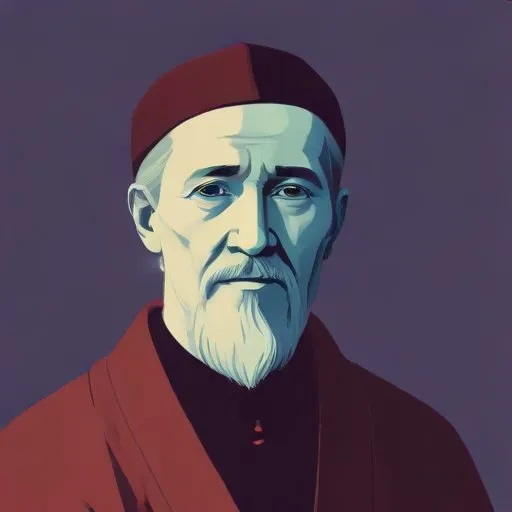
A renowned Estonian thinker who merged philosophy and theology to explore the human condition, producing influential works on existentialism and phenomenology.
Uku Masing, born Hugo Albert Masing, was a renowned Estonian philosopher and folklorist, best known for his significant contributions to Estonian religious philosophy and his work as a researcher of fairy tales.
Masing was born on August 11, 1909, in Lipa village, Raikkla Parish, Rapla County, to Ado Masing and Anna Masing. He had a younger sister, Agnes Masing (later Saag). Masing was a gifted polyglot, able to speak four languages by the end of secondary school and an astonishing forty languages by the end of his life.
He began studying theology at the University of Tartu in 1926, where he published numerous poems, translations, and essays. His literary talents flourished during this period, and he became a prominent figure in Estonian poetry.
Masing's most famous work, "Promontories into the Gulf of Rains" (Estonian: "Neemed vihmade lahte"), was published in 1935. He was also a member of the influential group of Estonian poets known as Arbujad (Soothsayers), which included notable poets such as Heiti Talvik, Betti Alver, and August Sang.
In addition to his poetry, Masing wrote one novel, "Liberation of Rapa Nui, or Seagulls at the Cemetery of Gods", which was published posthumously in 1989. His work as a folklorist led to significant contributions to the international Encyclopedia of the Folktale.
Masing's philosophical work focused on religious philosophy, and his ideas continue to influence Estonian thought. His writings explored the intersection of faith and culture, and he was known for his unique perspective on theology and its relation to everyday life.
During World War II, Masing risked his life to help a Jew escape capture in Estonia, and he was subsequently awarded the title of Righteous Among the Nations by Yad Vashem and the Israeli Supreme Court.
This courage and selflessness in the face of danger speak to Masing's strong moral compass and his commitment to helping others, even in the darkest of times.
Uku Masing's legacy extends far beyond his literary and philosophical contributions. He was a trailblazer in the field of folklore, and his work continues to inspire scholars and researchers today.
As a testament to his remarkable life and accomplishments, Masing's work remains a vital part of Estonian cultural heritage, and his story serves as a powerful reminder of the importance of courage, compassion, and intellectual curiosity.
Born in 1889
A German philosopher and academic who explored the meaning of existence, time, and human existence, influencing 20th-century philosophy with his concept of "Being-in-the-world".
Born in 1886
A renowned philosopher and theologian who explored the intersection of faith and modern culture, developing a unique Christian existentialist perspective that continues to influence contemporary theology and philosophy.
Born in 1884
A German Lutheran theologian and professor who demythologized the New Testament, seeking its deeper meaning beyond supernatural elements, and developed the concept of "existentialist theology".
Born in 1886
A 20th-century theologian who redefined Christian doctrine with his emphasis on God's revelation and humanity's sinful nature, influencing modern Christian thought.
Born in 1906
A Lithuanian-French philosopher who developed the concept of "ethics as first philosophy," emphasizing the importance of responsibility towards others and the face-to-face encounter. His work has influenced contemporary thought on morality, justice, and human rights.
Born in 1905
Existentialist philosopher and playwright who argued that humans have complete freedom to choose their actions and create their own meaning in life, influencing modern thought on morality and individual responsibility.
Born in 1908
A French philosopher and academic who developed the concept of phenomenology, exploring the relationship between the self and the world, and is known for his work on perception, consciousness, and embodiment.
