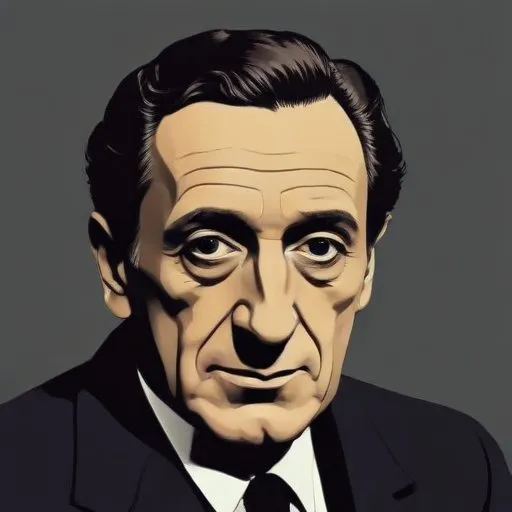
Maurice Merleau-Ponty: The Philosopher of Embodiment
A Pioneer of Phenomenology
Maurice Merleau-Ponty is renowned for his groundbreaking work in phenomenology, a philosophical movement that emphasizes the study of conscious experience. Specifically, he's known for his concept of "embodiment," which posits that the human body plays a crucial role in shaping our perception of the world.
The Constitution of Meaning
At the heart of Merleau-Ponty's philosophy lies a profound interest in understanding how meaning is constituted in human experience. He delved into various subjects, including perception, art, politics, religion, biology, psychology, psychoanalysis, language, nature, and history, to uncover the intricacies of human existence.
A Life of Intellectual Pursuits
Born on March 14, 1908, in Rochefort, France, Merleau-Ponty's intellectual journey began at an early age. He was deeply influenced by prominent philosophers such as
Edmund Husserl and
Martin Heidegger, whose ideas significantly shaped his own philosophical framework.
Les Temps Modernes and the Leftist Movement
In 1945, Merleau-Ponty co-founded the leftist magazine
Les Temps Modernes with
Jean-Paul Sartre and
Simone de Beauvoir. This publication became a platform for intellectuals to engage in debates about politics, philosophy, and culture, solidifying Merleau-Ponty's position as a key figure in the French philosophical circle.
Philosophical Contributions and Beliefs
Merleau-Ponty's philosophy can be characterized by his emphasis on the primacy of embodied experience. He argued that the human body is not just a passive receptor of sensory information but an active participant in shaping our understanding of the world. This idea is encapsulated in his concept of "indirect ontology" or the "ontology of the flesh," which posits that the perceiving body and the perceived world are inextricably linked.
The Science-Philosophy Nexus
Merleau-Ponty was one of the few phenomenologists of his time to engage extensively with the natural sciences. He believed that the sciences could inform and enrich philosophical inquiry, leading to a more comprehensive understanding of human experience.
Influence and Legacy
Merleau-Ponty's work has had a profound impact on various fields, including philosophy, psychology, cognitive science, and anthropology. His emphasis on embodiment has influenced thinkers such as Hubert Dreyfus, who has applied Merleau-Ponty's ideas to the study of artificial intelligence.
Major Works and Publications
Some of Merleau-Ponty's notable works include:
- Phenomenology of Perception (1945)
- Husserl at the Limits of Phenomenology (1959)
- The Visible and the Invisible (1964)
- Eye and Mind (1964)
Personal Milestones and Key Life Events
Merleau-Ponty's life was marked by a deep commitment to his philosophical pursuits. He taught at various institutions, including the University of Lyon and the Sorbonne, and was appointed as the Chair of Philosophy at the Collège de France in 1952.
Personal Relationships and Anecdotes
Merleau-Ponty's relationships with prominent intellectuals such as Jean-Paul Sartre, Simone de Beauvoir, and Martin Heidegger played a significant role in shaping his philosophical ideas. His collaborative spirit and engaging personality earned him a reputation as a charismatic thinker and educator.
A Lasting Legacy
Maurice Merleau-Ponty's philosophy has left an indelible mark on modern thought. His emphasis on embodiment, his engagement with the sciences, and his commitment to exploring the complexities of human experience have inspired generations of scholars and thinkers. As we continue to grapple with the intricacies of existence, Merleau-Ponty's work remains a testament to the power of philosophical inquiry to illuminate the human condition.
FAQ
What was Maurice Merleau-Pontys philosophy focused on?
Maurice Merleau-Pontys philosophy was focused on the relationship between the human body, perception, and the world. He developed the concept of phenomenology, exploring how our embodied experiences shape our understanding of reality.
What is Maurice Merleau-Pontys most famous book?
Maurice Merleau-Pontys most famous book is Phenomenology of Perception, in which he critiques traditional notions of consciousness and perception. This influential work has had a profound impact on fields such as philosophy, psychology, and cognitive science.
How did Maurice Merleau-Ponty influence existentialism?
Maurice Merleau-Pontys philosophy had a significant influence on existentialism, as it emphasized the importance of human freedom, responsibility, and embodied experience. His ideas complemented those of Jean-Paul Sartre and other existentialist thinkers.
What was Maurice Merleau-Pontys approach to politics?
Maurice Merleau-Pontys approach to politics was characterized by a commitment to humanism, democracy, and social justice. He was critical of totalitarian regimes and advocated for a more participatory, decentralized form of politics.
What is Maurice Merleau-Pontys legacy like today?
Maurice Merleau-Pontys legacy is that of a pioneering philosopher, who challenged traditional notions of perception, consciousness, and embodiment. His work continues to influence diverse fields, from philosophy and psychology to anthropology and cultural studies.