


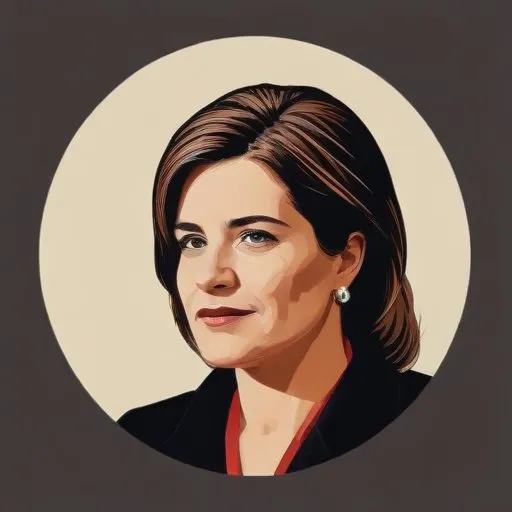
German politician and Member of the European Parliament, advocating for social justice, human rights, and environmental protection. Known for her commitment to progressive policies and activism.
Marina Weisband is a name synonymous with progressive politics in Germany. As a former senior leadership member of the Pirate Party Germany and current member of the Green Party of Germany, Weisband has been a beacon of hope for a more inclusive and participatory democracy.
Born on October 4, 1987, in Kyiv, Ukraine, to a Jewish family, Weisband's life was marked by activism from a young age. After moving to Wuppertal, Germany, with her family in 1994, she became involved in various social causes, including fighting against antisemitism and right-wing extremism.
Weisband's meteoric rise to prominence began in 2009 when she joined the Pirate Party Germany. Her charisma and laid-back style resonated with younger voters, earning her the reputation as the party's most recognizable face. In 2011, the Pirate Party won its first seats in the Berlin regional election, with Weisband playing a key role in the campaign.
Weisband is a staunch advocate for direct, liquid democracy. In 2013, she published a book outlining her vision for a more participatory democracy, where citizens have a direct say in policy-making. Her work on the Aula project, an initiative to facilitate children's participation in politics using software, has been praised for its innovation and potential to reshape the political landscape.
Weisband has not shied away from controversy. In 2012, she called out the Pirate Party for its perceived tolerance of radical extremists, sparking a debate about the party's stance on antisemitism and right-wing extremism. Her decision to leave the party in 2016 and join the Green Party of Germany was seen as a bold move, cementing her reputation as a principled politician unafraid to challenge the status quo.
Weisband's commitment to participatory democracy has inspired a generation of young Germans to engage in politics. Her work has contributed to a broader discussion about the role of technology in democratizing politics and the importance of inclusivity in politics.
Weisband's personal journey is a testament to her resilience and determination. From fleeing Ukraine as a refugee to becoming a prominent politician in Germany, her story is an inspiration to many. Her dedication to her studies, culminating in a diploma in psychology from the University of Münster, demonstrates her commitment to personal growth and development.
Through her life and work, Marina Weisband has left an indelible mark on German politics. As a champion of direct democracy, inclusivity, and participatory politics, she continues to inspire and challenge the political establishment, cementing her legacy as a trailblazing politician of our time.
72 Years Old
The first female Chancellor of Germany, serving for 16 years, known for her leadership during the European sovereign-debt crisis and her role in shaping the European Union's policy. She's a highly influential figure in modern politics.
82 Years Old
The 7th Chancellor of Germany, a lawyer-turned-politician, led the country from 1998 to 2005, implementing significant economic and social reforms. He's known for his efforts to modernize Germany and strengthen the European Union.
67 Years Old
A German educator and politician who served as the 17th Vice-Chancellor of Germany, known for his efforts in promoting social democracy and European integration. He played a key role in shaping Germany's foreign policy and economy.
68 Years Old
A physician-turned-politician who served as Germany's Defense Minister and later became the President of the European Commission, known for shaping the EU's policies and response to global crises.
