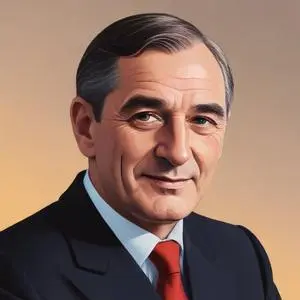
Gerhard Schröder: The Controversial Chancellor of Germany
The Rise to Power
Gerhard Schröder, the former
Chancellor of Germany, is known for his remarkable political career, which spanned over three decades. Born on April 7, 1944, in Blomberg, Lippe, Schröder rose to prominence as the leader of the Social Democratic Party of Germany (SPD) and served as Chancellor from 1998 to 2005.
A Lawyer-Turned-Politician
Before venturing into politics, Schröder was a practicing lawyer. He earned his law degree from the University of Göttingen and began his legal career in 1971. However, his passion for politics soon took over, and he became a full-time politician in 1986.
Minister President of Lower Saxony
Schröder's political career gained momentum when he became the Minister President of Lower Saxony in 1990, a position he held until 1998. During his tenure, he implemented several reforms, including the reduction of bureaucracy and the promotion of economic development.
Chancellor of Germany
In 1998, Schröder's SPD party won the federal election, and he became the Chancellor of Germany. He formed a coalition government with the Alliance 90/The Greens and served as Chancellor until 2005. During his tenure, he implemented several key reforms, including the Agenda 2010, which aimed to reduce unemployment and stimulate economic growth.
Post-Political Career
After leaving office, Schröder has worked for several Russian state-owned energy companies, including Nord Stream AG, Rosneft, and Gazprom. He has also held roles as a global manager for the investment bank Rothschild and as chairman of the board of football club Hannover 96.
Controversies and Criticisms
Schröder has faced criticism for his close ties with Russian President
Vladimir Putin and his work for Russian state-owned companies. In 2022, he was accused of complicity in crimes against humanity due to his role in Russian state-owned corporations. The SPD party arbitration committee later ruled that he had not violated any party rules.
Personal Life
Schröder has been married five times and has four children. He is known for his charismatic personality and his ability to connect with people from all walks of life.
Legacy
Schröder's legacy is complex and multifaceted. While he is credited with implementing several key reforms during his tenure as Chancellor, his close ties with Russia and his work for Russian state-owned companies have raised eyebrows. Despite the controversies, Schröder remains a significant figure in German politics, and his legacy continues to shape the country's political landscape.
Major Works and Achievements
- Implementation of the Agenda 2010, a comprehensive reform package aimed at reducing unemployment and stimulating economic growth.
- Formation of a coalition government with the Alliance 90/The Greens, marking a significant shift in German politics.
- Successful negotiation of the European Union's Lisbon Treaty, which aimed to streamline the EU's decision-making process.
Philosophical Contributions and Beliefs
Schröder's political philosophy is rooted in social democracy, and he has been a vocal advocate for social justice and equality. He believes in the importance of a strong European Union and has worked tirelessly to promote European integration.
Awards and Honors
- Grand Cross of the Order of Merit of the Federal Republic of Germany (2009)
- European Medal of the Jean Monnet Foundation for Europe (2003)
- Honorary doctorate from the University of Göttingen (2001)
Quote
"I want to be the chancellor of all Germans, not just the chancellor of the SPD." – Gerhard Schröder
FAQ
What was Gerhard Schröders early life like?
Gerhard Schröder was born on April 7, 1944, in Mossenberg, Germany. He studied law at the University of Göttingen and became involved in politics at a young age.
How did Gerhard Schröder become Chancellor of Germany?
Schröder was elected Chancellor of Germany in 1998, leading a coalition government with the Social Democratic Party (SPD) and the Alliance 90/The Greens.
What were Gerhard Schröders major policy initiatives?
Schröder implemented several key reforms, including the Agenda 2010 program, which aimed to improve Germanys economic competitiveness and reduce unemployment.
What awards has Gerhard Schröder won?
Schröder has been awarded several honors for his contributions to European politics, including the German Media Award and the Quadriga Prize.
What has Gerhard Schröder done since leaving office?
Schröder has remained active in politics, serving as the chairman of the Nord Stream company and as a mediator in international conflicts. He has also written several books on politics and economics.