


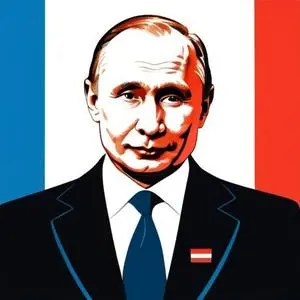
A Russian politician who has dominated the country's politics for over two decades, known for his authoritarian leadership style and controversial foreign policy decisions.
Vladimir Putin is known for being the longest-serving Russian or Soviet leader since Joseph Stalin, holding continuous positions as President or Prime Minister of Russia since 1999. He has been instrumental in shaping modern Russia, from economic reforms to military interventions, and has left an indelible mark on global politics.
Born on October 7, 1952, in Leningrad, Soviet Union (now Saint Petersburg, Russia), Putin grew up in a communal apartment and spent most of his childhood playing sports, particularly sambo and judo. He developed a strong interest in German language and culture, which would later serve him well in his diplomatic career.
Putin joined the KGB in 1975, rising through the ranks to become a lieutenant colonel before resigning in 1991 to begin a career in politics. He worked in the administration of President Boris Yeltsin and quickly gained prominence, eventually becoming the Director of the Federal Security Service (FSB) in 1998.
In 1999, Putin became the Prime Minister of Russia, and following Yeltsin's resignation in December 1999, he took over as Acting President. In less than four months, he was elected to his first term as President, and has since maintained a tight grip on power.
Putin's leadership has been marked by significant economic growth, driven by reforms and a surge in oil and gas prices. He has also overseen military interventions in Chechnya and Georgia, and annexed Crimea in 2014.
Putin's political ideology is often described as nationalist and authoritarian. He has expressed admiration for Peter the Great and Joseph Stalin, and has sought to restore Russia's global influence and prestige.
In his 2005 state-of-the-nation address, Putin declared, "Above all, we should acknowledge that the collapse of the Soviet Union was a major geopolitical disaster of the century."
Putin's leadership has had a profound impact on modern Russia and the world. His anti-LGBTQ+ laws, restrictions on civil liberties, and military interventions have sparked widespread criticism and protests.
Despite this, Putin remains a popular figure in Russia, with many seeing him as a strong leader who has restored national pride and stability.
Putin has been accused of human rights abuses, corruption, and electoral fraud. His government has been criticized for its treatment of opposition voices, including the imprisonment of Alexei Navalny.
Internationally, Putin's actions have sparked sanctions and condemnation from the West, particularly over the annexation of Crimea and support for separatist movements in Ukraine.
"The demise of the Soviet Union was the greatest geopolitical catastrophe of the century."
"Russia has made its choice in favor of democracy... and we will not allow this national choice to be revoked."
Putin's leadership has drawn comparisons to other authoritarian leaders, including Joseph Stalin and Adolf Hitler. His presidency has been marked by a concentration of power, suppression of dissent, and an aggressive foreign policy.
Despite the controversies, Putin's legacy will likely be remembered as a leader who restored Russian influence and pride, albeit at a significant cost to human rights and democracy.
60 Years Old
Russian lawyer and politician who served as President of Russia from 2008 to 2012, known for his efforts to modernize Russia's economy and politics. He also served as Prime Minister from 2012 to 2020.
76 Years Old
Russia's top diplomat, responsible for shaping the country's foreign policy and representing its interests on the global stage, known for his sharp wit and tough negotiating style.
81 Years Old
Leader of the Communist Party of the Russian Federation, advocating for socialist policies and criticizing Western influence, while maintaining a significant presence in Russian politics.
95 Years Old
First President of Russia, leading the country's transition from communism to democracy, and known for his bold reforms and iconic leadership style.
95 Years Old
The last leader of the Soviet Union, who introduced reforms that led to the end of the Cold War and the collapse of communism, earning a Nobel Peace Prize. He's known for his policies of glasnost and perestroika, which transformed the Soviet Union and the world.
50 Years Old
A Russian lawyer and politician who has been a vocal critic of corruption and has led anti-government protests, known for his fearless activism and YouTube investigations exposing corruption.
