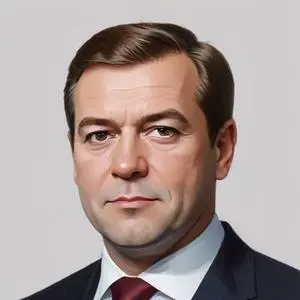
Dmitry Medvedev: The Enigmatic Russian Leader
A Legacy of Contrasts
Dmitry Medvedev, the former President and Prime Minister of Russia, is a political figure known for his paradoxical persona - a leader who has embodied both liberal and authoritarian tendencies. He has been a key player in Russian politics, serving as President from 2008 to 2012 and Prime Minister from 2012 to 2020.
Early Life and Education
Born on September 14, 1965, in Leningrad, Soviet Union (now St. Petersburg, Russia), Medvedev came from a family of intellectuals. His father, Anatoly Afanasyevich Medvedev, was a chemical engineer and a professor at a local institute. Medvedev's parents instilled in him a strong sense of education and social responsibility. He graduated from the Leningrad State University's law faculty in 1987 and later earned his Ph.D. in private law in 1990.
Rise to Power
Medvedev's rise to power began in the 1990s, when he worked as a legal consultant for the St. Petersburg city administration. He soon caught the attention of
Vladimir Putin, then the city's deputy mayor, and joined Putin's team. In 2000, Medvedev became the head of Putin's presidential campaign, which marked the beginning of their close political partnership.
Presidential Tenure (2008-2012)
In 2008, Medvedev succeeded Putin as President of Russia, viewed by many as a more liberal alternative to his predecessor. During his presidency, Medvedev launched an ambitious modernization program aimed at diversifying Russia's economy and reducing its dependence on oil and gas. He also signed the New START nuclear arms reduction treaty with the United States and oversaw Russia's recovery from the Great Recession.
Prime Ministerial Tenure (2012-2020)
After serving one term as President, Medvedev stepped down and was succeeded by Putin, who then appointed him as Prime Minister. During his prime ministerial tenure, Medvedev continued to push for modernization and economic reforms, but his efforts were often overshadowed by controversies surrounding corruption and authoritarianism.
Controversies and Criticisms
Medvedev's presidency and prime ministerial tenure have been marred by allegations of corruption, abuse of power, and authoritarian tendencies. He has been accused of using his position to amass wealth and has been involved in several high-profile scandals, including the Pussy Riot controversy.
Philosophical Contributions and Beliefs
Despite his controversies, Medvedev has contributed to the development of Russian politics and society. He has advocated for modernization, economic liberalization, and greater engagement with the international community. However, hishawkish stance on Ukraine and threats to use nuclear weapons have raised concerns about his commitment to democratic values.
Influence on Modern Society
Medvedev's presidency and prime ministerial tenure have had a significant impact on modern Russian society. He has played a key role in shaping Russia's political landscape and has influenced the country's relationships with the international community. However, his legacy is also marked by authoritarian tendencies, corruption, and human rights abuses.
Personal Milestones and Key Life Events
- 1987: Graduated from Leningrad State University's law faculty
- 1990: Earned Ph.D. in private law
- 2000: Became head of Putin's presidential campaign
- 2008: Became President of Russia
- 2012: Became Prime Minister of Russia
- 2020: Resigned as Prime Minister and became deputy chairman of the Security Council of Russia
Quotes and Memorable Sayings
- "We are a country of paradoxes, and we must learn to live with them."
- "Modernization is not just about technology; it's about changing the way people think."
Visual Timeline and Milestones
Trivia and Fun Facts
- Medvedev is an avid fan of rock music and has attended several rock concerts.
- He is a talented pianist and has performed publicly on several occasions.
A Legacy of Contrasts
Dmitry Medvedev's legacy is a complex mix of liberal and authoritarian tendencies, modernization and corruption, and hawkishness and diplomacy. As a key player in Russian politics, he has left an indelible mark on the country's political landscape. While his presidency and prime ministerial tenure have been marked by controversy, he remains an enigmatic figure, full of contradictions and paradoxes.
FAQ
What is Dmitry Medvedevs political background?
Dmitry Medvedev is a Russian lawyer and politician, who served as the President of Russia from 2008 to 2012 and Prime Minister from 2012 to 2020.
What were Dmitry Medvedevs key policies as President?
Dmitry Medvedevs key policies as President included modernization, liberalization, and anti-corruption initiatives, as well as strengthening Russias international relationships.
What is Dmitry Medvedevs stance on economic reform?
Dmitry Medvedev has been a proponent of economic reform, promoting diversification, innovation, and foreign investment to drive Russias economic growth.
What is Dmitry Medvedevs approach to foreign policy?
Dmitry Medvedevs approach to foreign policy emphasizes multilateralism, cooperation, and strategic partnerships, with a focus on promoting Russian interests and global stability.
What is Dmitry Medvedevs legacy in Russian politics?
Dmitry Medvedevs legacy in Russian politics is marked by his commitment to reform, modernization, and international cooperation, as well as his efforts to strengthen Russias institutions and promote economic growth.