


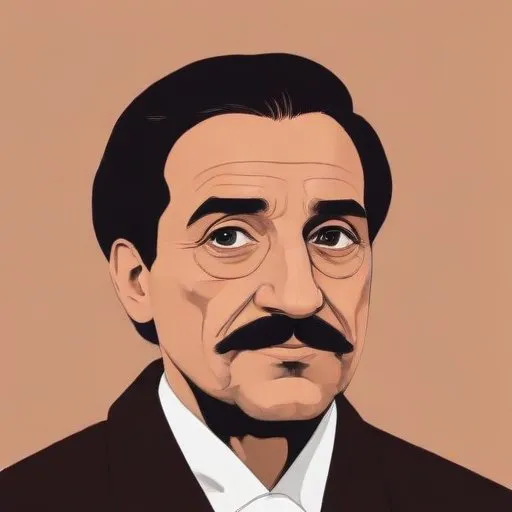
A 16th-century Italian polymath who made significant contributions to mathematics, astronomy, and philosophy, particularly in the fields of trigonometry and cosmology.
Mario Bettinus, an Italian Jesuit philosopher, mathematician, and astronomer, left an indelible mark on the scientific community of the 17th century. He is renowned for his groundbreaking work in mathematics, particularly in the fields of conics, stereometry, and military architecture, earning him the prestigious title of "philosophus mathematicus."
Born on February 6, 1582, in Italy, Bettinus pursued his academic interests under the guidance of prominent mathematicians Jean Verviers and Giuseppe Biancani at the Jesuit College of S. Rocco in Parma. Following Biancani's demise in 1624, Bettinus took over the chair of mathematics, teaching a range of subjects, including military art, stereometry, and conics theory.
Bettinus' impressive career was marked by his service as a military consultant to the courts of Parma (1612-1613), Modena (1617-1618), and again Parma (1626-1627). He also worked as a military architect at Novellara (1618-1619), the seat of the novitiate of the Jesuit Provincia Veneta. Notably, he taught military mathematics to the two sons of Duke Ranuccio, Ottavio and Odoardo.
Bettinus was ambivalent towards Galileo's Copernicanism and his new astronomical observations. Although he recognized the importance of Galileo's discoveries, he disagreed with some of the conclusions expounded in Sidereus Nuncius, particularly regarding the height of the mountains on the moon. Bettinus argued that if the moon had very high mountains, the lunar disk observed with the telescope would appear irregular and jagged, whereas it appeared perfectly round.
Giovanni Riccioli, who attended Bettinus' lectures at Parma, mentions his attempts to measure the heights of lunar mountains. Bettinus' work had a lasting impact on the scientific community, earning him a place in the annals of history. The lunar crater Bettinus was named after him by Giovanni Riccioli in 1651, a testament to his enduring legacy.
Bettinus was a mentor to Guarino Guarini (1624-1683) and a friend of Christoph Grienberger. His teachings and ideas influenced a generation of mathematicians and astronomers, shaping the course of scientific inquiry in the 17th century.
Mario Bettinus' remarkable career, marked by his significant contributions to mathematics and astronomy, continues to inspire generations of scholars and scientists. His legacy serves as a testament to the power of human ingenuity and the importance of interdisciplinary approaches to understanding the natural world.
Born in 1564
Pioneering astronomer, physicist, and mathematician who played a major role in the Scientific Revolution, making key discoveries that challenged Aristotelian views and laid the foundation for modern science.
Born in 1571
A 17th-century trailblazer who discovered the three laws of planetary motion, revolutionizing our understanding of the solar system. He's also credited with being a pioneer in the field of astrology.
Born in 1546
A 16th-century astronomer who made precise measurements of the stars and planets, laying the foundation for modern astronomy. His data helped Kepler discover planetary orbits.
Born in 1511
Developed the Prutenic Tables, a set of astronomical tables that improved planetary calculations, and was a prominent figure in the development of astronomy during the Renaissance.
Born in 1436
A 15th-century mathematician and astronomer who calculated tables of planetary positions and made significant contributions to trigonometry, paving the way for later astronomers like Copernicus.
Born in 1749
Developed nebular hypothesis of the origin of the solar system and formulated Laplace's equation, a fundamental concept in mathematics and physics. He's considered the founder of celestial mechanics.
