


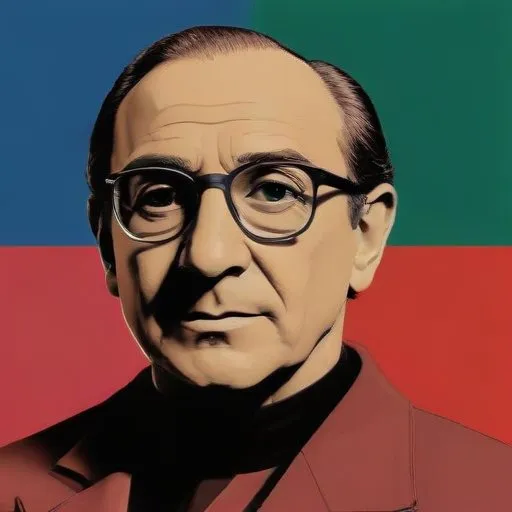
Mario Castelnuovo-Tedesco, an Italian composer, pianist, and writer, is renowned for his contributions to the guitar repertoire, having crafted nearly 100 compositions for the instrument. Additionally, his Hollywood stint as a film composer for Metro-Goldwyn-Mayer (MGM) resulted in an impressive portfolio of over 200 movie scores.
Born in Florence, Italy on April 3, 1895, Castelnuovo-Tedesco descended from a prominent banking family with roots in Tuscany. His mother, Noemi Senigaglia, introduced him to the piano at a young age, and he began composing at the tender age of nine.
After completing his piano degree in 1914 under Edgardo Del Valle de Paz, he pursued composition studies under Ildebrando Pizzetti, earning a diploma in 1918. The influential composer and pianist Alfredo Casella took notice of the young Castelnuovo-Tedesco, incorporating his work into his repertoire and securing performances throughout Europe.
In 1922, Castelnuovo-Tedesco's compositions were featured in the first festival of the International Society of Contemporary Music in Salzburg, Austria. This exposure solidified his stature as one of Italy's leading young composers. The premiere of his opera La Mandragola, based on a play by Niccolò Machiavelli, in 1926, marked the beginning of a long line of works inspired by great literature.
In 1939, Castelnuovo-Tedesco emigrated to the United States, where he began his 15-year tenure as a film composer for MGM. During this period, he scored over 200 films, collaborating with prominent directors and actors. His concertos for Jascha Heifetz and Gregor Piatigorsky further showcased his mastery of diverse musical genres.
Castelnuovo-Tedesco's output has had a profound impact on the guitar repertoire, elevating the instrument's status in the classical music world. His film compositions, though often overlooked, contributed significantly to the Golden Age of Hollywood. As a composer, pianist, and writer, he left an indelible mark on the music world.
Castelnuovo-Tedesco's guitar compositions continue to inspire musicians and composers worldwide. His film scores, while often uncredited, remain an integral part of Hollywood's rich cultural heritage. As a testament to his enduring legacy, his music remains a staple of classical music performances and film retrospectives.
Castelnuovo-Tedesco's life and career spanned two world wars, the rise of fascism in Italy, and the Golden Age of Hollywood. Despite the challenges he faced, he maintained a prolific output, leaving behind a rich musical legacy that continues to captivate audiences today.
Through his remarkable body of work, Mario Castelnuovo-Tedesco has secured his place as one of the most important and versatile composers of the 20th century, leaving an indelible mark on the music world.
Born in 1893
Renowned for popularizing classical guitar music and transcribing classical masterpieces for the instrument, he elevated the guitar's status as a concert instrument.
Born in 1901
A virtuosic violinist renowned for his technical perfection, tone, and phrasing, revolutionizing the art of violin playing through his recordings and teaching.
Born in 1903
A renowned cellist and educator, he was a master of his craft, known for his expressive playing style and dedication to teaching and mentoring future generations of musicians.
Born in 1892
A French composer and educator who blended jazz and classical music to create a unique sound, and is best known for his ballet scores and chamber music compositions.
Born in 1882
A Russian master of music, renowned for revolutionizing classical music with bold, avant-garde compositions that blended traditional and modern elements. His iconic works, such as "The Rite of Spring," continue to inspire and influence artists across genres.
Born in 1874
A pioneer of atonality and 12-tone serialism, revolutionizing classical music with innovative compositions that pushed boundaries of harmony and melody.
Born in 1898
A renowned pianist and composer who blended jazz and classical music to create iconic works like "Rhapsody in Blue" and "An American in Paris", leaving a lasting impact on American music.
