


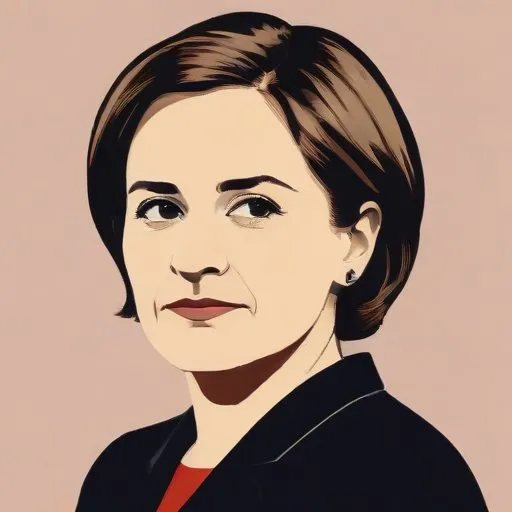
German politician who served as the Federal Minister of Health from 1998 to 2002, known for her efforts to reform the healthcare system and improve healthcare services.
As a prominent German politician and member of the Social Democratic Party of Germany (SPD), Marion Caspers-Merk is best known for her dedication to reforming drug policies and promoting a more rational approach to substance regulation. Her work as a member of the Global Commission on Drug Policy, alongside international figures like Kofi Annan and Javier Solana, has been instrumental in shaping the global conversation on drug reform.
Caspers-Merk's political career spans over three decades, during which she has held various positions in the German government. She was first elected to the Bundestag in 1998, representing the constituency of Lörrach-Müllheim. Her commitment to social democracy and progressive values has been a hallmark of her political career, and she has been an outspoken advocate for marginalized communities and social justice.
Caspers-Merk's work on the Global Commission on Drug Policy has been instrumental in challenging the status quo on drug regulation. She has been a vocal critic of the war on drugs, arguing that it has failed to reduce drug consumption and has instead led to increased incarceration rates, health problems, and social marginalization. Her advocacy for a more rational approach to drug policy has been influential in shaping the global debate on the issue.
Caspers-Merk's contributions to drug policy reform have been recognized with several awards and honors. She has received the Order of Merit of the Federal Republic of Germany, one of the country's highest civilian honors, for her services to the nation.
Born on April 24, 1955, in Mannheim, Caspers-Merk grew up in a family committed to social justice and activism. Her early life was marked by a strong sense of social responsibility, which has continued to shape her political career.
Caspers-Merk's philosophical approach to drug policy is rooted in a commitment to human rights, social justice, and harm reduction. She believes that drug use should be treated as a public health issue rather than a criminal justice matter, and that users should be provided with access to health services and support rather than punishment.
Caspers-Merk's work on drug policy reform has had a significant impact on modern society. Her advocacy for a more rational approach to drug regulation has contributed to a shift in the global discourse on the issue, with many countries now reconsidering their drug laws and policies.
"The war on drugs has failed. It's time to rethink our approach and prioritize health, safety, and human rights."
Marion Caspers-Merk's contributions to drug policy reform have left an indelible mark on the field. Her advocacy for a more rational approach to drug regulation has inspired a new generation of policymakers and activists to challenge the status quo and promote a more humane approach to drug policy.
71 Years Old
The first female Chancellor of Germany, serving for 16 years, known for her leadership during the European sovereign-debt crisis and her role in shaping the European Union's policy. She's a highly influential figure in modern politics.
67 Years Old
A physician-turned-politician who served as Germany's Defense Minister and later became the President of the European Commission, known for shaping the EU's policies and response to global crises.
70 Years Old
A German politician who served as President of the European Parliament and leader of the Social Democratic Party of Germany, known for his efforts to strengthen the European Union.
71 Years Old
Luxembourg's Prime Minister from 1995 to 2013, known for his key role in shaping the European Union's economic and monetary policies. He was the President of the European Commission from 2014 to 2019, overseeing the EU's executive body.
69 Years Old
The 14th Prime Minister of Poland, a journalist-turned-politician who played a key role in shaping the country's post-communist era and later became a prominent EU leader. He's known for his strong stance on European integration and criticism of authoritarianism.
60 Years Old
German lawyer and politician who served as the Chairman of the Bundestag's Foreign Affairs Committee and was a prominent figure in the Christian Democratic Union party, known for his expertise in foreign policy and European affairs.
