


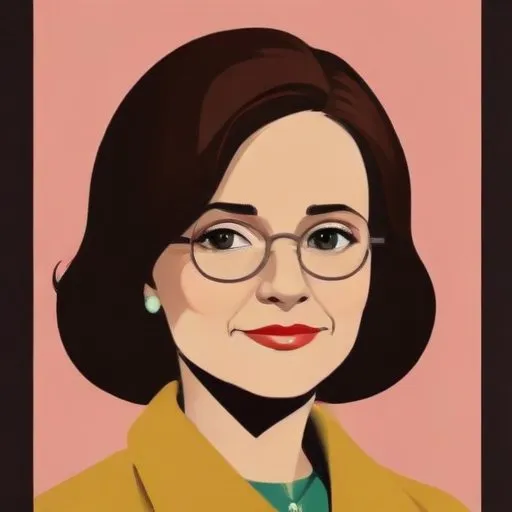
Pioneering educator who fought for women's rights and access to higher education, particularly in the field of home economics. She was a key figure in establishing the field as a legitimate area of study.
Marion Talbot was a pioneering American educator who dedicated her life to promoting women's education and equality in the early 20th century. As the Dean of Women at the University of Chicago from 1895 to 1925, Talbot played a pivotal role in shaping the higher education landscape for women in the United States.
Born in Thun, Switzerland, on July 31, 1858, Talbot spent her early years in Boston, where her mother, Emily Fairbanks Talbot, was an activist and former teacher. Her mother's advocacy led to the establishment of the Boston Latin Academy, the first all-girls college preparatory academy in the United States.
Talbot attended the Chapel Hill-Chauncy Hall School near Boston and later enrolled at Boston University, where her mother had to fight to secure her admission. She earned an AB in 1880 and an AM in 1882. Talbot's academic pursuits didn't stop there; she also obtained a BS from MIT, where she studied under the esteemed domestic science pioneer, Ellen Swallow Richards.
In 1882, Talbot, along with Ellen Swallow Richards, co-founded the Association of Collegiate Alumnae, which later became the American Association of University Women (AAUW) in 1921. Talbot served as secretary from the organization's inception to 1895 and later as president from 1895 to 1897.
As Dean of Women at the University of Chicago, Talbot worked tirelessly to improve support for women students and faculty, often challenging efforts to restrict equal access to educational opportunities. Her leadership and advocacy led to significant changes, including the establishment of separate residence halls for women and the creation of programs catering to their unique needs.
Talbot's contributions extended beyond the University of Chicago. She was a prominent figure in the women's education movement, advocating for equal access to education and equal pay for women. Her work with the AAUW helped to amplify the voices of women in academia and beyond.
Talbot's personal life was marked by dedication to her work and a strong sense of family. Her mother, Emily, played a significant role in shaping her early life and influencing her commitment to women's education.
In 1948, Talbot passed away at the age of 90, leaving behind a legacy that continues to inspire generations of women in education. Her contributions to the advancement of women's education and equality remain an integral part of her enduring impact on American history.
Talbot received numerous honors for her work, including honorary degrees from the University of Michigan, Mount Holyoke College, and Simmons College.
Marion Talbot's relentless pursuit of equality and education for women paved the way for future generations of female leaders, educators, and change-makers. Her work continues to inspire and empower women to this day, cementing her place as a trailblazing figure in American history.
Born in 1860
A pioneering social worker and peace activist, she founded Hull House, a settlement that provided social services to immigrants and the working poor, and was awarded the Nobel Peace Prize in 1931.
Born in 1863
Pioneering astronomer who classified over 350,000 stars and developed a system of stellar classification still used today. Her work paved the way for future astronomers to better understand the universe.
Born in 1818
Pioneering astronomer and academic who discovered a comet and was the first woman elected to the American Academy of Arts and Sciences, paving the way for future generations of women in science.
Born in 1799
A pioneering fossil hunter who uncovered several groundbreaking dinosaur discoveries, including the first complete plesiosaur skeleton, significantly advancing our understanding of prehistoric life.
Born in 1820
Pioneering nurse and statistician who revolutionized healthcare by introducing sanitation practices and data-driven decision making, becoming the founder of modern nursing.
Born in 1821
Founded the American Red Cross, providing humanitarian aid and disaster relief, and pioneering nursing education. Known for her courageous and selfless efforts during the Civil War and beyond.
Born in 1802
Pioneering nurse and social reformer who crusaded for humane treatment of the mentally ill and prisoners, establishing asylums and advocating for their rights.
