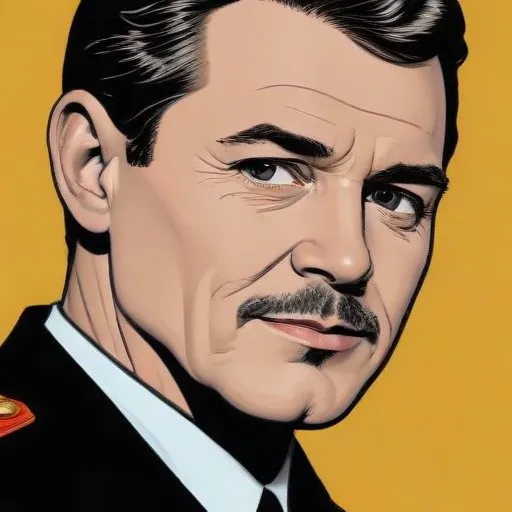
Mark W. Clark: The Controversial General Who Shaped the Course of World War II
A Fearless Leader with a Flawed Legacy
Mark W. Clark, a United States Army officer, is known for his valiant efforts during World War I, World War II, and the Korean War. As the youngest four-star general in the US Army during World War II, Clark played a pivotal role in shaping the course of history, but his decisions were often marred by controversy and criticism.
Ambition and Skill: Clark's Rise to Prominence
Born on May 1, 1896, Clark's military career spanned over three decades, during which he demonstrated exceptional skill and ambition. His talents were first recognized by General George C. Marshall, who would later become the US Army Chief of Staff, during World War I. Clark's bravery in the face of danger earned him the Purple Heart, and he went on to serve as a company commander in France in 1918. After the war, Clark continued to rise through the ranks, eventually becoming a key player in World War II.
Clark's most notable achievement was commanding the United States Fifth Army during the Italian campaign. Under his leadership, the Fifth Army captured Rome in June 1944, a monumental feat that coincided with the Normandy landings. However, this triumph was overshadowed by controversy surrounding Clark's decision to disobey orders from his superior, British General Sir Harold Alexander. Clark's choice to prioritize the capture of Rome over cutting off the German 10th Army's retreat led to heavy criticism and accusations of wasting lives.
A Brilliant Staff Officer, but a Flawed Commander?
Despite the controversy, Clark's abilities as a staff officer and trainer of men were highly regarded by his peers, including his close friend, Dwight D. Eisenhower. In 1945, at the age of 48, Clark became one of the youngest American officers to be promoted to four-star general. Nevertheless, his legacy remains tarnished by the perceived mistakes of his command.
A Life of Service and Sacrifice
Throughout his 36 years of military service, Clark was awarded numerous honors and decorations for his bravery and leadership. He passed away on April 17, 1984, leaving behind a legacy that is both celebrated and criticized. While Clark's flaws as a commander are undeniable, his fearlessness and dedication to his country cannot be contested.
Mark W. Clark: A Chronology of Service
- May 1, 1896: Born in Madison Barracks, New York
- 1918: Serves as a company commander in France during World War I
- 1942: Assumes command of the United States Fifth Army
- June 1944: Captures Rome during the Italian campaign
- March 10, 1945: Promoted to four-star general at the age of 48
- April 17, 1984: Passes away
Quotable Clark
- "The greatest glory in living lies not in never falling, but in rising every time we fall."
- "War is a brutal and dirty business, but it is sometimes necessary to achieve a greater good."
A Lasting Impact on Military History
Mark W. Clark's life and legacy serve as a reminder that even the most skilled and ambitious leaders can be flawed, but it is how they respond to those flaws that truly defines them. Clark's story is a testament to the complexities of war and the human cost of leadership decisions. As we continue to study and learn from the past, Clark's story remains an important chapter in the annals of military history.
FAQ
What was Mark W. Clarks role in World War II?
Mark W. Clark was a prominent American general during World War II, serving as the commander of the Allied Forces in Italy and playing a crucial role in the liberation of Rome. He was known for his strategic thinking and leadership skills, which earned him several accolades and promotions.
What were Mark W. Clarks accomplishments during the Italian Campaign?
During the Italian Campaign, Mark W. Clark led the Allied Forces to several key victories, including the capture of Rome and the surrender of German forces in Italy. He was also instrumental in planning and executing the Anzio landings, which helped to break the stalemate in Italy.
What was Mark W. Clarks relationship with Dwight D. Eisenhower?
Mark W. Clark had a close professional relationship with Dwight D. Eisenhower, who was the Supreme Allied Commander of the Allied Expeditionary Force in Europe. Clark often sought Eisenhowers counsel and guidance, and Eisenhower valued Clarks strategic insights and military expertise.
What were Mark W. Clarks post-war activities?
After the war, Mark W. Clark served as the commander of the U.S. Army Forces in Austria and later became the President of the Citadel, a military college in South Carolina. He also wrote several books about his wartime experiences and was involved in various veterans organizations.
What was Mark W. Clarks legacy in military history?
Mark W. Clarks legacy in military history is that of a skilled and innovative commander who played a significant role in the Allied victory in World War II. He is remembered for his bravery, strategic thinking, and leadership skills, which earned him the respect and admiration of his peers and subordinates.