


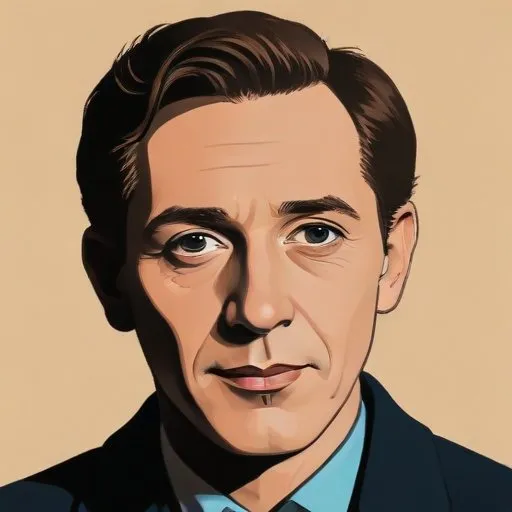
Prolific author of science fiction and thriller novels, including the classic "Cyborg" which inspired the TV series "The Six Million Dollar Man". Known for blending action, adventure, and futuristic concepts.
Martin Caidin was an American author, screenwriter, and renowned expert on aeronautics and aviation, best known for his novel Cyborg, which inspired the popular 1970s television series The Six Million Dollar Man. With a career spanning over four decades, Caidin penned more than 50 fiction and non-fiction books, as well as over 1,000 magazine articles, solidifying his position as a master of the sci-fi and military history genres.
Caidin's passion for aviation was evident not only through his writing but also through his hobby of piloting airplanes. He even owned and restored a 1936 Junkers Ju 52 airplane, showcasing his dedication to the field.
Caidin's fiction works often explored the intersection of technology and society, gazing into the future and examining the consequences of innovations. A recurring theme in his writing was the concept of cyborgs – humans augmented with machine parts. This fascinated him, and he explored it in novels like The God Machine (1968) and, of course, Cyborg (1972).
The success of Cyborg led to its adaptation into a 1973 television movie, which in turn spawned the popular series The Six Million Dollar Man. Caidin went on to write three sequels to Cyborg: Operation Nuke, High Crystal, and Cyborg IV, which formed a distinct continuity separate from the TV series.
Caidin's writing range extended beyond the realm of cyborgs. He penned numerous works of military history, particularly focused on aviation, and even ventured into satire with Buck Rogers: A Life in the Future (1995), an adaptation of the classic pulp fiction character.
Martin Caidin's work not only inspired a generation of sci-fi fans but also contributed to the development of the genre itself. His exploration of futuristic themes and their social implications has drawn comparisons to Michael Crichton's work. While his legacy is closely tied to The Six Million Dollar Man, Caidin's impact on the literary world extends far beyond this single iconic series.
Martin Caidin was born on September 14, 1927, and passed away on March 24, 1997. Throughout his life, he remained committed to his craft, producing a staggering volume of work that has left an enduring mark on the world of science fiction and beyond.
79 Years Old
Wrote bestselling novels that blended historical fiction with modern geopolitics, creating a new genre of techno-thrillers that captivated readers worldwide.
Born in 1917
Pioneering science fiction author who wrote prophetic and imaginative novels, such as "2001: A Space Odyssey", that explored the intersection of technology and humanity.
Born in 1920
A renowned science fiction author and biochemistry professor who wrote or edited more than 500 books and an estimated 90,000 letters and postcards throughout his lifetime.
Born in 1920
Prolific author of poetic and imaginative science fiction, exploring the human condition through fantastical worlds and characters, with works adapted into films and TV shows.
Born in 1907
Pioneering science fiction author and screenwriter who penned influential classics like "Stranger in a Strange Land" and "Starship Troopers", exploring complex social and philosophical themes.
Born in 1919
Pioneering science fiction author and journalist, known for exploring complex social and philosophical themes in his works, including the award-winning novel "Gateway".
Born in 1902
A German-English author and screenwriter who wrote science fiction and horror novels, as well as screenplays for classic films like "The Wolf Man" and "Donovan's Brain".
Born in 1905
Russian-born American novelist and philosopher who wrote influential novels like "The Fountainhead" and "Atlas Shrugged", promoting individualism and capitalism.
