


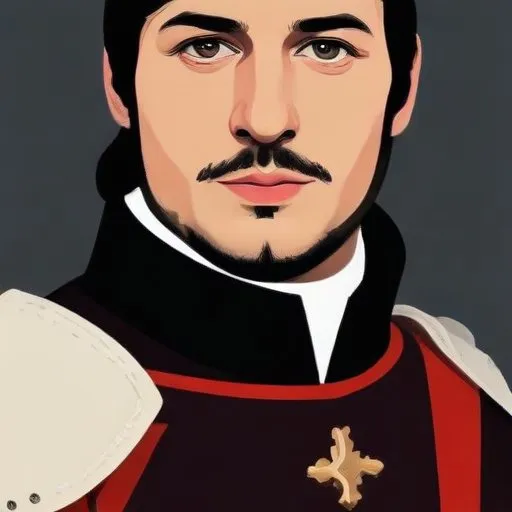
A British Army officer and royal courtier who served as Private Secretary to Queen Elizabeth II and played a key role in the monarch's daily life and affairs. He's known for his discretion and loyalty to the royal family.
Martin Charteris, Baron Charteris of Amisfield, was a British Army officer and courtier of Queen Elizabeth II, renowned for his dedicated service as the longest-serving Assistant Private Secretary to the Sovereign, a position he held for over 18 years. Later, he became Private Secretary to the Sovereign, cementing his reputation as a trusted and loyal advisor to the British monarchy.
Born on September 7, 1913, Charteris was the second of two sons to Hugo Francis Charteris, Lord Elcho, and Lady Violet Catherine Manners. His paternal grandparents were The 11th Earl of Wemyss and Mary Constance Wyndham, and his maternal grandparents were The 8th Duke of Rutland and Violet Lindsay. His father, a barrister, was killed in action in Egypt during the First World War, and his mother remarried in 1922.
Charteris was educated at Lockers Park School in Hertfordshire, Eton, and the Royal Military College, Sandhurst, where he was commissioned in the King's Royal Rifle Corps.
During the Second World War, Charteris fought in the Middle East, rising to the rank of lieutenant-colonel. After the war, he married the Hon. Mary Margesson, a daughter of the 1st Viscount Margesson, on December 16, 1944, in Jerusalem. They had three children together.
In 1950, Charteris was appointed Private Secretary to Princess Elizabeth, then Duchess of Edinburgh and heir presumptive to the British throne. From her accession in 1952 until 1972, he served as her Assistant Private Secretary under Sir Michael Adeane. On Adeane's retirement in 1972, Charteris was promoted to Private Secretary, a position he held until his retirement in 1977.
Throughout his career, Charteris was known for his discretion, loyalty, and dedication to the royal family. He was granted the honor of being a Permanent Lord in Waiting, a testament to his exemplary service.
As a seasoned courtier, Charteris held traditional views on the role of the monarchy and the importance of discretion and confidentiality. He was known for his straightforward and honest approach, which earned him the respect of the royal family and his peers.
Charteris' unwavering commitment to duty and his dedication to the royal family have left a lasting impact on modern society. He played a significant role in shaping the monarchy's public image and was instrumental in advising Queen Elizabeth II during key moments in her reign.
Charteris was granted a life peerage as Baron Charteris of Amisfield in 1978, recognizing his outstanding service to the royal family.
Martin Charteris, Baron Charteris of Amisfield, left an indelible mark on British history, serving as a shining example of loyalty, dedication, and discretion. His remarkable career spanned over four decades, earning him the respect and admiration of the royal family, politicians, and the public alike.
As a testament to his legacy, Charteris' life and career serve as a reminder of the importance of public service, duty, and honor. His remarkable story will continue to inspire future generations, ensuring his place in history as one of the most dedicated and loyal servants of the British monarchy.
Born in 1921
The husband of Queen Elizabeth II, supporting her reign and carrying out numerous philanthropic and ceremonial duties, while also advocating for environmental conservation and education.
Born in 1894
A British politician who served as Prime Minister from 1957 to 1963, known for leading the country through a period of economic prosperity and decolonization.
Born in 1903
A British aristocrat who served as Prime Minister from 1963 to 1964, known for his brief tenure and aristocratic background.
Born in 1897
A British politician who served as Prime Minister from 1955 to 1957, known for his role in the Suez Crisis and his diplomatic efforts during the Cold War.
Born in 1871
Prolific writer of historical novels and adventure stories, also a talented landscape painter.
Born in 1883
Led the Labour Party to a landslide victory in 1945, implementing significant social and economic reforms, including the creation of the National Health Service. He played a crucial role in shaping post-war Britain.
