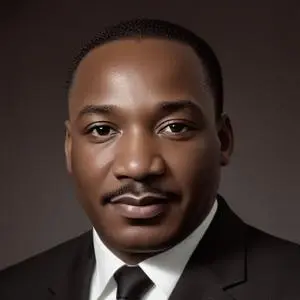
Martin Luther King Sr.: The Unyielding Champion of Civil Rights and Faith
A Pioneer in the Civil Rights Movement
Martin Luther King Sr., born Michael King, was an African American Baptist pastor, missionary, and a pivotal figure in the civil rights movement. As the father and namesake of the illustrious Martin Luther King Jr., he was a powerful force in shaping the course of American history, leaving an indelible mark on the struggle for racial equality.
Early Life and Education
Born on December 19, 1899, in Stockbridge, Georgia, King grew up in a humble household with his parents, Delia and James
Albert King. He was inspired by the ministers at the Floyd Chapel Baptist Church, who stood up for racial equality, and decided to become a preacher himself. King completed his high school education at Bryant Preparatory School and went on to study theology at Morehouse College, where he obtained a Bachelor of Theology in 1931.
A Ministry of Service and Activism
In 1927, King became the assistant pastor at the Ebenezer Baptist Church in Atlanta, eventually rising to senior pastor in 1931. During the Great Depression, he organized membership and fundraising drives that revitalized the church's finances. By 1934, King had become a respected leader in the local church community. That same year, he changed his name, and that of his eldest son, from Michael King to Martin Luther King, inspired by his trip to Germany for the Baptist World Alliance meeting.
Leadership and Legacy
As senior pastor of Ebenezer Baptist Church, King played a significant role in the civil rights movement. He was an early advocate for racial equality, and his leadership inspired a generation of activists, including his son, Martin Luther King Jr. King's commitment to social justice and his unwavering faith in the power of nonviolent resistance helped shape the course of the movement.
Personal Milestones and Key Life Events
- 1931: Became senior pastor of Ebenezer Baptist Church
- 1934: Changed his name to Martin Luther King, inspired by Martin Luther
- 1942: Participated in the Southern Christian Leadership Conference (SCLC)
- 1963: Supported his son's leadership in the March on Washington
Philosophical Contributions and Beliefs
King's ministry was rooted in his strong Christian faith and his belief in the power of nonviolent resistance. He drew inspiration from the teachings of Jesus Christ and the principles of
Mahatma Gandhi, incorporating them into his sermons and activism. King's philosophy emphasized the importance of love, compassion, and forgiveness in the pursuit of social justice.
Influence on Modern Society
Martin Luther King Sr.'s legacy extends far beyond his role as a pastor and civil rights leader. His commitment to social justice and his unwavering faith in the power of nonviolent resistance have inspired generations of activists, from the civil rights movement to modern-day social justice advocates.
Controversies and Public Perception
Despite his contributions to the civil rights movement, King faced criticism for his conservative views on certain issues, particularly his stance on women's rights and his opinions on communism. However, his commitment to social justice and his leadership in the movement ultimately overshadowed these controversies.
Quotes and Memorable Sayings
- "The gospel of Christ is the most revolutionary doctrine in the world, because it is the only doctrine that can change the human heart."
- "Love is the greatest force in the universe, and it is the only force that can overcome hatred and injustice."
Historical Context and Legacy
Martin Luther King Sr.'s life and work are a testament to the power of faith and activism in shaping American history. His contributions to the civil rights movement, his leadership in the church, and his unwavering commitment to social justice have left an enduring legacy that continues to inspire generations of social justice advocates.
Personal Relationships and Anecdotes
King's close relationship with his son, Martin Luther King Jr., is well-documented. The two men shared a deep bond, with the elder King serving as a mentor and inspiration to his son. King Jr. often credited his father with instilling in him the values of social justice and nonviolent resistance.
Inspirational Stories and Motivations
Martin Luther King Sr.'s life is a testament to the power of faith, perseverance, and determination. His story serves as a beacon of hope, inspiring generations to strive for a more just and equitable society. His legacy reminds us that even in the face of adversity, we can make a difference by standing up for what is right and fighting for a better world.
FAQ
Who is Martin Luther King Sr.?
Martin Luther King Sr. was an American pastor, missionary, and activist who played a significant role in the Civil Rights Movement. He was the father of Martin Luther King Jr.
What was Martin Luther King Sr.s role in the Civil Rights Movement?
King Sr. was a prominent leader in the Civil Rights Movement, working closely with his son to promote civil rights and social justice. He was a key figure in the African American church and community, using his pulpit to advocate for racial equality.
Where did Martin Luther King Sr. serve as a pastor?
King Sr. served as the pastor of the Ebenezer Baptist Church in Atlanta, Georgia, where he played a key role in the development of the African American community in the city.
What were Martin Luther King Sr.s views on nonviolence?
King Sr. was a strong advocate for nonviolent resistance, a philosophy that his son would later adopt and popularize in the Civil Rights Movement.
When did Martin Luther King Sr. pass away?
King Sr. passed away on November 11, 1984, at the age of 84, leaving behind a legacy of dedicated service to the Civil Rights Movement.