


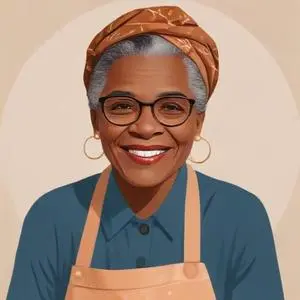
A behind-the-scenes leader in the Civil Rights Movement, known for grassroots organizing and empowering others to take action, particularly through the Student Nonviolent Coordinating Committee (SNCC).
Ella Baker was a renowned African American civil rights and human rights activist who dedicated her life to fighting for social justice. Known for her behind-the-scenes organizing and grassroots approach, Baker worked tirelessly alongside some of the most prominent leaders of the 20th century, including W.E.B. Du Bois, Thurgood Marshall, and Martin Luther King Jr.
Born on December 13, 1903, in Norfolk, Virginia, Ella Josephine Baker was raised in a family that valued education and community service. Her mother, Anna Baker, took in boarders to make ends meet, exposing young Ella to the struggles of poverty and racism. In 1910, the family moved to North Carolina, where Baker's mother instilled in her a strong sense of social responsibility.
Baker's commitment to social justice began in her teenage years, when she became involved in the NAACP. She went on to work with the Young Negroes Cooperative League, which aimed to promote economic empowerment among African Americans. During the 1940s, Baker served as the NAACP's director of branches, where she developed her skills as an organizer and strategist.
In the 1960s, Baker became the primary advisor and strategist for the SNCC, a student-led organization that sought to challenge racial segregation and discrimination. Baker's vision of grassroots organizing and radical democracy inspired a new generation of civil rights leaders, including Diane Nash, Stokely Carmichael, and Bob Moses.
Baker was a vocal critic of both racism in American culture and sexism within the civil rights movement. She believed that marginalized communities should be empowered to understand their own struggles and advocate for themselves, rather than relying on charismatic leaders or paternalistic organizations.
Ella Baker's legacy is that of a quiet leader who inspired countless activists and organizers. Biographer Barbara Ransby calls Baker "one of the most important American leaders of the twentieth century" and "perhaps the most influential woman in the civil rights movement." Her commitment to grassroots organizing and radical democracy continues to inspire social justice movements today.
Ella Baker received numerous awards and honors for her lifetime of service, including the Whitney M. Young Jr. Memorial Award, the Martin Luther King Jr. Award, and the National Association of Black Journalists' Lifetime Achievement Award.
Baker's relationships with prominent civil rights leaders were marked by mutual respect and admiration. Martin Luther King Jr. often referred to Baker as "Fundi," a term of endearment and respect. Diane Nash, a close friend and protégée, credits Baker with instilling in her the importance of grassroots organizing and community empowerment.
Ella Baker's life and work spanned more than five decades, from the NAACP's heyday to the emergence of the Black Power movement. Her commitment to social justice and human rights continues to inspire new generations of activists, scholars, and community leaders.
97 Years Old
A prominent leader in the civil rights movement, advocating for racial equality and social justice through nonviolent means, leaving a lasting impact on American history.
Born in 1913
Refused to give up her seat on a Montgomery, Alabama bus to a white person, sparking the Montgomery Bus Boycott, a pivotal event in the Civil Rights Movement.
Born in 1925
A prominent figure in the Civil Rights Movement, advocating for African American rights and self-defense, and a powerful orator who inspired a generation.
Born in 1912
A pioneering civil rights activist who played a key role in organizing the 1963 March on Washington, where Martin Luther King Jr. delivered his iconic "I Have a Dream" speech.
85 Years Old
A prominent figure in the Civil Rights Movement, advocating for Black Power and self-defense, and famously coining the term "Black Power" in 1966. Known for his radical approach to achieving racial equality.
Born in 1912
A pioneering figure in the struggle for racial and gender equality, she dedicated her life to empowering African American women and promoting education and social justice.
Born in 1889
Leader of the Brotherhood of Sleeping Car Porters, pioneering the Civil Rights Movement through nonviolent protests and advocacy for African American workers' rights.
99 Years Old
African-American activist and author who played a crucial role in the Civil Rights Movement, advocating for racial and gender equality, and wrote extensively on her experiences and the movement.
