


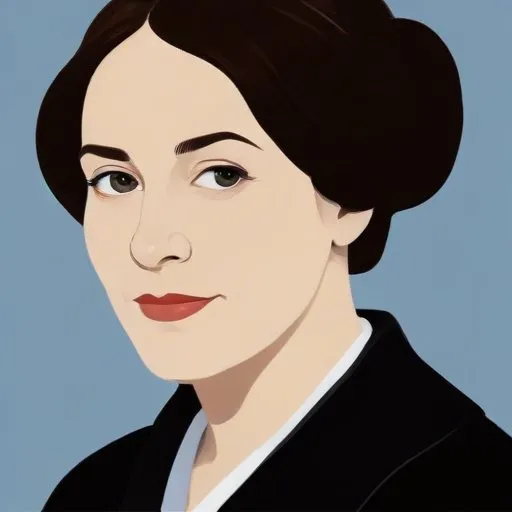
An American author, poet, and critic who wrote about the American West and its people, particularly women, in a lyrical and evocative style, exploring themes of nature, identity, and social justice.
Mary Hunter Austin, a celebrated American writer, is best known for her seminal work, The Land of Little Rain (1903), a masterpiece that vividly captures the essence of the American Southwest, its people, and its primal landscapes. This iconic book cemented her status as one of the earliest and most influential nature writers of the region, showcasing her profound appreciation for the Mojave Desert and its indigenous cultures.
Born on September 9, 1868, in Carlinville, Illinois, Mary Hunter Austin was the fourth of six children to Susannah and George Hunter. She graduated from Blackburn College in 1888, after which her family relocated to California, establishing a homestead in the San Joaquin Valley.
Austin's writing career spanned multiple genres, including novels, poetry, criticism, and playwriting. Her extensive research on the indigenous peoples of the Mojave Desert, which lasted 17 years, enabled her to craft works that resonated with the region's natural beauty and its native populations. Her notable publications include The Land of Little Rain, The Arrow Maker (1911), and numerous articles and essays that championed the rights of Native Americans and Spanish Americans.
Her play, The Arrow Maker, was produced at the New Theatre in New York in 1911, demonstrating her ability to engage audiences with stories that celebrated the region's cultural heritage. Austin's writing not only reflected her deep connection with the American Southwest but also showcased her commitment to social justice and equality.
Mary Hunter Austin's work has had a lasting impact on modern society, inspiring generations of nature writers, environmentalists, and social activists. Her writing helped raise awareness about the importance of preserving the natural beauty of the American Southwest and its fragile ecosystems. Austin's advocacy for Native American and Spanish American rights also contributed to a greater understanding and appreciation of the region's diverse cultural landscape.
Austin married Stafford Wallace Austin in 1891, and the couple was involved in the California Water Wars, a contentious period in the state's history that saw the Owens Valley's water supply diverted to Los Angeles. Following the 1906 San Francisco earthquake, Stafford relocated to Death Valley, while Mary joined the thriving art colony at Carmel-by-the-Sea, California.
Mary Hunter Austin's contributions to American literature and her unwavering commitment to social justice have left an indelible mark on the cultural landscape of the American Southwest. Her writing continues to inspire new generations of writers, environmentalists, and social activists, solidifying her position as a pioneering figure in the annals of American literary history.
Through her remarkable body of work, Mary Hunter Austin has taught us to cherish the beauty of the American Southwest, to respect its native populations, and to strive for a more just and equitable society.
Born in 1862
A pioneering female author of novels and short stories that explored the social conventions and morals of the Gilded Age, known for her witty and insightful portrayals of the American aristocracy.
Born in 1874
A pioneering figure in modernist literature, known for experimental writing styles and influential salons that fostered artistic innovation. 82
82 Years Old
A celebrated author of powerful, poignant stories and poems that explore the experiences of African American women, delving into themes of identity, oppression, and social justice. Her works are known for their emotional depth and lyrical prose.
95 Years Old
A celebrated author and editor, renowned for crafting powerful, poignant novels that explore the African American experience, particularly the lives of black women, and the horrors of slavery and racism.
Born in 1891
A celebrated author and anthropologist who explored African-American culture through novels, stories, and folklore, particularly in the rural South during the early 20th century.
Born in 1832
Wrote novels and poems that explored themes of family, love, and social justice, most famously "Little Women", a timeless coming-of-age story.
Born in 1860
Pioneering feminist writer and social reformer who penned the iconic short story "The Yellow Wallpaper," a powerful critique of patriarchal society and the oppression of women.
