


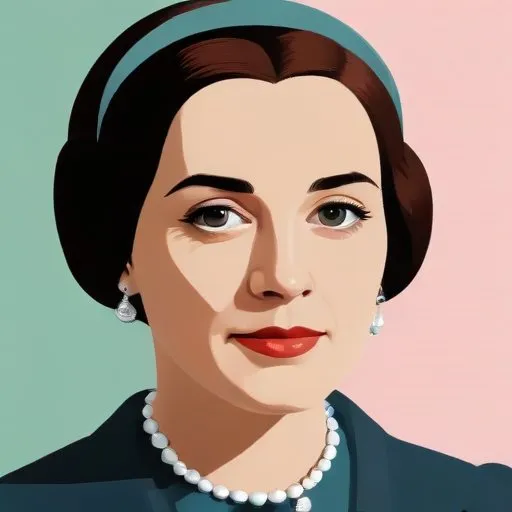
A Scottish aristocrat and society hostess, known for her lavish parties and high-society connections. She was a prominent figure in British high society during the early 20th century.
Mary Innes-Ker, Duchess of Roxburghe, was a British aristocrat known for her unwavering spirit and dedication to the arts, particularly the Royal Ballet. Her remarkable life was marked by a strong sense of determination, evident in her refusal to be evicted from her family home, Floors Castle, by her husband, George Innes-Ker, 9th Duke of Roxburghe.
Born Lady Mary Crewe-Milnes on 23 March 1915, she was the daughter of Robert Crewe-Milnes, 1st Marquess of Crewe, and Lady Peggy Primrose, one of the first seven women appointed as magistrates in 1919. Her maternal grandparents were Hannah de Rothschild and Archibald Primrose, 5th Earl of Rosebery. This esteemed lineage instilled in her a deep appreciation for the arts and a strong sense of responsibility.
Married to the 9th Duke of Roxburghe in 1935, Mary became a patron of the Royal Ballet during its golden era, supporting renowned dancers like Margot Fonteyn and Frederick Ashton. Her love for ballet was matched only by her passion for literature, as evident in her extensive book collection, which would later become a treasured bequest.
In 1967, Mary inherited the estate at West Horsley, Surrey, including the 16th-century West Horsley Place, from her mother, Margaret, Lady Crewe. This magnificent country house became a testament to her independence and a symbol of her resilience in the face of adversity.
On her passing in 2014, Mary bequeathed her vast collection of over 7,500 books to the library of Trinity College, Cambridge, where both her father and grandfather had studied. Among the rare volumes was a first edition of The Faerie Queene, inscribed by Charles I during his imprisonment. This remarkable gift continues to inspire scholars and literature enthusiasts to this day.
Through her life, Mary Innes-Ker, Duchess of Roxburghe, demonstrated an unwavering commitment to the arts, literature, and her heritage. Her story serves as a testament to the power of elegance, resilience, and determination, leaving an indelible mark on the world of British aristocracy and beyond.
At the age of 99, Mary's passing marked the end of an era, but her legacy lives on through her contributions to the world of ballet, literature, and her family's heritage. Her name will forever be synonymous with grace, refinement, and a deep love for the arts.
