


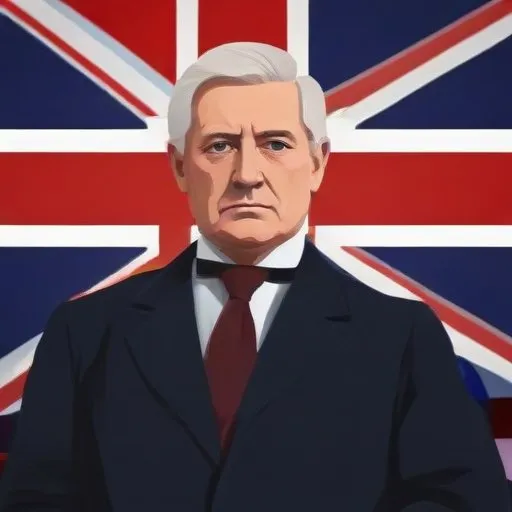
A British politician who served as Prime Minister of the United Kingdom from 1894 to 1895, known for his efforts to reform the British Empire and his role in the Liberal Party.
Archibald Primrose, 5th Earl of Rosebery, is most notably remembered for his brief but significant tenure as Prime Minister of the United Kingdom from March 1894 to June 1895. During this period, he led the Liberal Party and left an indelible mark on British politics, despite his eventual resignation as party leader in 1896.
Born on May 7, 1847, in London, Archibald Primrose was the son of Archibald Primrose, Lord Dalmeny, and grandson of Archibald Primrose, 4th Earl of Rosebery. He was educated at Eton College and later attended Christ Church, Oxford, where he developed a strong passion for history and politics.
Rosebery's entry into politics was marked by his sponsorship of the successful Midlothian campaign of William Ewart Gladstone in 1879. This campaign not only brought him national attention but also earned him the respect and admiration of Gladstone, who would later become his mentor.
In 1885, Rosebery entered the cabinet as a Junior Lord of the Treasury and later served as Chairman of the London County Council in 1889. His leadership skills and oratory prowess earned him recognition as a rising star within the Liberal Party.
In 1894, Rosebery succeeded Gladstone as Prime Minister and leader of the Liberal Party. Although his tenure was short-lived, he made significant contributions to British foreign policy, particularly in his handling of French and German affairs. He was a strong advocate for imperialism and national defense, which often put him at odds with his party's more liberal factions.
Rosebery's political ideology was shaped by his belief in Liberal Imperialism, which emphasized the need for strong national defense and imperialism abroad, while promoting social reform at home. He was a staunch critic of socialism and remained committed to upholding the principles of liberalism throughout his career.
Rosebery's legacy is marked by his contributions to British politics, particularly in the realm of foreign policy. Although his tenure as Prime Minister was brief, he left an indelible mark on the Liberal Party and British politics as a whole. His strong advocacy for imperialism and national defense continues to influence British foreign policy to this day.
In conclusion, Archibald Primrose, 5th Earl of Rosebery, was a complex and multifaceted figure whose contributions to British politics and society continue to be felt today. His tenure as Prime Minister, though short-lived, remains a significant chapter in British history, and his legacy as a brilliant orator and Liberal Imperialist continues to inspire and provoke generations to come.
Born in 1863
A Welsh lawyer and politician who served as Prime Minister of the United Kingdom, leading the country through World War I and introducing key social reforms. He's known for his charismatic leadership and progressive policies.
Born in 1852
A British Prime Minister who led the country through the early years of World War I, known for his role in shaping the country's war effort and introducing reforms like women's suffrage.
Born in 1871
Prolific writer of historical novels and adventure stories, also a talented landscape painter.
Born in 1858
A Canadian-Scottish banker and politician who served as Prime Minister of the United Kingdom during World War I, known for his leadership during wartime and his role in shaping British politics.
Born in 1866
A Scottish journalist and politician who served as the first Labour Party Prime Minister of the United Kingdom, leading the country through significant economic and social reforms. He is also known for his efforts to maintain peace in Europe during the interwar period.
