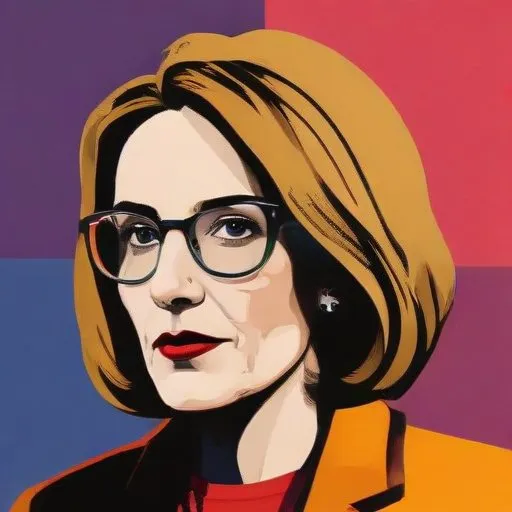
Mary Kaldor

Mary Kaldor

Mary Kaldor was born on March 16th, 1946

Full Name: Mary Kaldor
Place of Birth: London, UK
Profession: Economist, Academic
Notable Works: The Baroque Arsenal
Zodiac Sign: Virgo
Nationality: British
Date of Birth: March 16, 1946
Education: Oxford University

A renowned economist and academic, she is most known for her work on the concept of "new wars" and the changing nature of warfare in the modern era. Her research focuses on the intersection of economics, politics, and conflict.

Written by: Thomas Blackwood Thomas Blackwood

Mary Kaldor: The Visionary of Cosmopolitan Democracy

A Leading Voice in Global Governance and Humanitarian Intervention

Mary Kaldor is a renowned British academic and Professor of Global Governance at the London School of Economics, celebrated for her pioneering work in the development of cosmopolitan democracy and her insightful critiques of globalisation, international relations, and humanitarian intervention.

As a prominent thinker on global civil society and global governance, Kaldor has made significant contributions to our understanding of what she terms "New Wars," a concept that challenges traditional notions of warfare and its impact on civilians. Her work has been instrumental in shaping the discourse on humanitarian intervention, sparking intense debates about the role of military force in enforcing human rights.

Early Life and Career

Born on March 16, 1946, Mary Kaldor is the daughter of the economist Nicholas Kaldor and Clarissa. Her academic pursuits have taken her to various institutions, including the London School of Economics, where she currently serves as the Director of the Civil Society and Human Security Research Unit.

Cosmopolitan Democracy and Global Governance

Kaldor's work on cosmopolitan democracy has been influential in redefining the boundaries of democracy, advocating for a more inclusive and equitable global order. She envisions a world where citizens are empowered to participate in decision-making processes that transcend national borders, ensuring that global governance is more responsive to the needs of marginalized communities.

Key Publications and Contributions

Influence on Modern Society

Kaldor's ideas have had a profound impact on modern society, shaping policy debates on humanitarian intervention, global governance, and international relations. Her critiques of military intervention have sparked intense debates, pushing policymakers to reevaluate their approaches to conflict resolution.

Controversies and Critiques

In 1999, Kaldor supported international military intervention in Kosovo on humanitarian grounds, only to later express doubts about its effectiveness in promoting human rights. Her about-face on humanitarian intervention has sparked controversies, with some critics accusing her of contradicting herself.

Awards and Honors

Personal Milestones and Key Life Events

Beyond her academic pursuits, Kaldor has been an active participant in various civil society initiatives, including the European Nuclear Disarmament movement and the Helsinki Citizens' Assembly. Her commitment to social justice and human rights has driven her work, both in and out of academia.

Legacy and Impact

Mary Kaldor's work has left an indelible mark on the fields of international relations, global governance, and humanitarian intervention. Her ideas continue to shape policy debates, inspiring a new generation of scholars and policymakers to rethink their approaches to promoting human rights and global justice.

Comparative Analysis with Contemporaries

Kaldor's work has drawn comparisons with other prominent thinkers on global governance, such as Joseph Stiglitz and Amartya Sen. While sharing some similarities with these scholars, Kaldor's unique perspective on cosmopolitan democracy sets her apart as a distinct voice in the field.

Conclusion

Mary Kaldor's impressive body of work has cemented her position as a leading figure in the fields of global governance and humanitarian intervention. Her critiques of traditional approaches to conflict resolution and her advocacy for cosmopolitan democracy have inspired a new wave of thinkers and policymakers to rethink their approaches to promoting human rights and global justice. As a visionary scholar, Mary Kaldor continues to shape the discourse on international relations, leaving a lasting legacy that will endure for generations to come.
Timeline
1946
Born in London
Mary Kaldor was born on March 16, 1946, in London, England.
1970
Earned PhD in Economics
Kaldor earned her PhD in Economics from the University of Cambridge.
1986
Co-founded the European Nuclear Disarmament movement
Kaldor co-founded the European Nuclear Disarmament movement, advocating for nuclear disarmament.
2003
Published Global Civil Society
Kaldor co-edited the book Global Civil Society, exploring the role of civil society in global politics.
2007
Became Director of the LSEs Centre for the Study of Global Governance
Kaldor became the Director of the London School of Economics Centre for the Study of Global Governance.
Mary Kaldor

Mary Kaldor Quiz

What is Mary Kaldor's primary area of research?

Score: 0/5
FAQ
What is Mary Kaldors area of expertise in economics?
Mary Kaldor is an English economist and academic who has made significant contributions to our understanding of global governance, international relations, and social and economic development.
What is Mary Kaldors concept of new wars?
Mary Kaldors concept of new wars refers to a new type of conflict characterized by globalization, identity politics, and the erosion of state authority. Her work has influenced our understanding of modern warfare and its humanitarian consequences.
Has Mary Kaldor held any notable positions in academia or government?
Yes, Mary Kaldor has held several notable positions, including Director of the Centre for Global Governance at the London School of Economics and Political Science, and Chair of the Study Group on European Securities.
What is Mary Kaldors stance on globalization and economic development?
Mary Kaldor has argued that globalization has created new opportunities and challenges for economic development, emphasizing the need for more equitable and sustainable forms of global governance.
Can you tell me more about Mary Kaldors early life and education?
Mary Kaldor was born in 1946 in London, England. She studied economics at the University of Manchester and later earned her Ph.D. in economics from the University of Cambridge.

Related People:

Joseph Stiglitz

83 Years Old

A Nobel Prize-winning economist and academic who has made significant contributions to the field of economics, particularly in the areas of information economics and globalization.

Amartya Sen

93 Years Old

A renowned economist and philosopher who has made significant contributions to welfare economics, social choice theory, and development economics, and is known for his work on poverty, famine, and human development.

Jeffrey Sachs

72 Years Old

Leading expert on international economic development, poverty reduction, and sustainable development, known for his work with the United Nations and advocacy for global cooperation.

Paul Krugman

73 Years Old

A Nobel Prize-winning economist and academic who has made significant contributions to the field of international trade and economic geography, and is also a prominent columnist and author.

Thomas Piketty

55 Years Old

A renowned economist who authored the bestselling book "Capital in the Twenty-First Century", which explores economic inequality and the concentration of wealth. His work has significantly influenced modern economic thought and policy.

Nouriel Roubini

68 Years Old

A prominent economist and consultant who predicted the 2008 financial crisis, known for his accurate forecasts and warnings about economic downturns.