


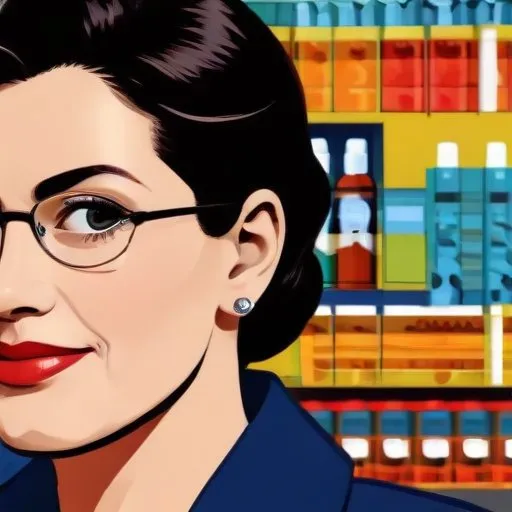
Pioneering cellular biochemist who discovered the mitochondria's role in cellular respiration, revolutionizing our understanding of cellular energy production. Her work has far-reaching implications for fields like medicine and biotechnology.
Mary Locke Petermann, a trailblazing American cellular biochemist, made groundbreaking contributions to the field of protein synthesis, earning her a prominent place in the annals of scientific history. Her discovery and characterization of animal ribosomes, the molecular complexes responsible for protein synthesis, revolutionized our understanding of cellular biology.
Mary Petermann was born on February 25, 1908, in Laurium, Michigan, to Anna Mae Grierson and Albert Edward Petermann, a general manager of the Calumet and Hecla Consolidated Copper Company. She attended Calumet High School and Massachusetts preparatory school, before graduating from Smith College in 1929 with high honors in chemistry. After taking a break to work as a research technician at Yale University and conducting research on acid-base imbalance in psychiatric patients at the Boston Psychopathic Hospital, she began her doctoral studies in physiological chemistry at the University of Wisconsin in 1936.
In 1939, Petermann graduated with a Ph.D. for her thesis work on the role of the adrenal cortex in ion regulation. She then joined the University of Wisconsin as a postdoctoral researcher, where she became the first female chemist staff member in the physical chemistry department. Her research on the physical chemistry of proteins with John Warren Williams and Alwin M. Pappenheimer led to significant breakthroughs in understanding antibody-antigen interactions, including the analysis of diphtheria toxin and antitoxin.
Using ultracentrifugation, Petermann and her colleagues demonstrated that approximately 23% of native diphtheria antitoxin (later determined to be the Fc portion of IgG) was inactive, and that this inactive portion could be removed by protease treatment. This research contributed significantly to Rodney Porter's determination of immunoglobulin structure.
Petermann's pioneering work earned her several accolades, including becoming the first woman to become a full professor at Cornell University's medical school.
Mary Locke Petermann's discovery of animal ribosomes has had far-reaching implications for our understanding of cellular biology and protein synthesis. Her work has paved the way for significant advancements in fields such as biotechnology, medicine, and genetics.
Petermann's life was marked by her dedication to science and her determination to break down barriers for women in STEM fields. Her trailblazing career serves as an inspiration to generations of female scientists and researchers.
Mary Locke Petermann's groundbreaking contributions to cellular biochemistry have left an indelible mark on the scientific community. Her legacy continues to inspire and motivate scientists, researchers, and students, ensuring that her pioneering spirit will endure for generations to come.
Mary Locke Petermann's remarkable life and achievements serve as a testament to her unwavering dedication to science and her unrelenting pursuit of knowledge, leaving behind a lasting legacy that continues to inspire and transform the scientific community.
Born in 1920
A British scientist who contributed significantly to the discovery of the structure of DNA, providing high-quality X-ray crystallography images that helped James Watson and Francis Crick develop their famous model.
98 Years Old
Discovered the structure of DNA, revolutionizing our understanding of genetics and earning a Nobel Prize. Pioneering work in molecular biology has far-reaching implications for medicine and beyond.
Born in 1916
Pioneering scientist who discovered the structure of DNA, revolutionizing our understanding of genetics and life itself.
Born in 1916
A Nobel Prize-winning physicist and biologist who contributed significantly to the discovery of the structure of DNA, using X-ray crystallography to produce the first clear images of the molecule.
Born in 1901
Pioneering chemist and peace activist who won two unshared Nobel Prizes, one for chemistry and one for peace, for his groundbreaking work on the nature of the chemical bond and his tireless efforts to promote nuclear disarmament.
Born in 1905
A pioneer in DNA research, this biochemist discovered the base pairing rules of DNA, leading to a fundamental understanding of genetic code.
Born in 1918
Developed techniques for sequencing DNA and proteins, revolutionizing molecular biology and earning two Nobel Prizes in Chemistry.
Born in 1850
A Nobel Prize-winning biologist who made groundbreaking discoveries in molecular biology, particularly in understanding the replication of viruses and DNA.
