


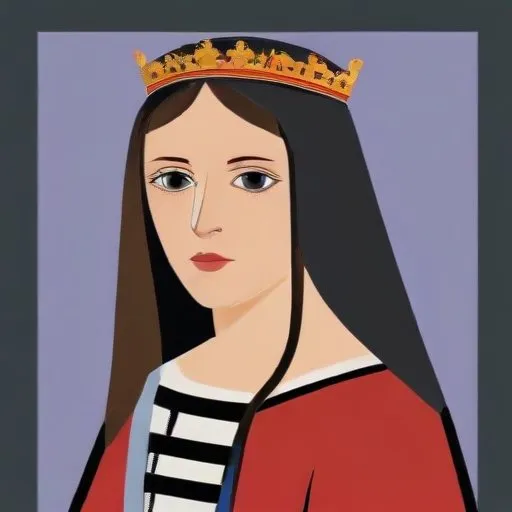
Daughter of King Edward I of England, she was a princess and nun who lived a life of quiet devotion, leaving behind a legacy of piety and humility.
Mary of Woodstock, the seventh daughter of King Edward I of England and Queen Eleanor of Castile, is known for her unconventional life as a nun who defied the traditional norms of her time. With a generous allowance from her parents, Mary lived a life of comfort and luxury, traveling extensively throughout the country despite being a nun.
Mary was born on March 11, 1278, and was dedicated to Amesbury Priory in Wiltshire at the age of seven, alongside thirteen daughters of nobles. Her grandmother, Eleanor of Provence, had lobbied for Mary and her cousin, Eleanor of Brittany, to become Benedictine nuns at the priory. Mary was formally veiled as a nun in December 1291, at the age of twelve.
Thanks to her parents' generous allowance, Mary lived a life of comfort and luxury. She received an annual allowance of £100, equivalent to approximately £124,000 in 2024, as well as double the usual allowance for clothing and a special entitlement to wine from the stores. She also had the right to forty oaks per year from royal forests and twenty tuns of wine per year from Southampton.
Despite being a nun, Mary did not lead a life of solitude and contemplation. She traveled extensively throughout the country, visiting her brother Edward in 1293, and regularly attending court. This was in direct defiance of the papal travel prohibition of 1303, which restricted the movement of nuns.
Mary's life and legacy are a testament to her strong will and determination to live life on her own terms. As a nun who refused to be bound by convention, she paved the way for future generations of women to challenge traditional norms and expectations.
Did you know that Mary's life was marked by controversy and defiance? She was known to have visited her brother Edward in 1293, despite being a nun, and regularly attended court. Her life was a testament to her strong will and determination to live life on her own terms.
Mary of Woodstock's life may have been unconventional, but it is a powerful reminder that even in the Middle Ages, women could challenge traditional norms and expectations to forge their own paths. Her legacy continues to inspire and fascinate historians and scholars to this day.
Born in 1284
The king whose disastrous reign led to his eventual deposition and mysterious death, remembered for his alleged homosexual relationships and power struggles with nobles.
Born in 1052
King of France from 1060 to 1108, known for his military campaigns and conflicts with the Church, particularly his excommunication by Pope Urban II.
Born in 1284
The king whose disastrous reign led to his eventual deposition and mysterious death, remembered for his alleged homosexual relationships and power struggles with nobles.
Born in 1274
Led Scotland during the First War of Scottish Independence, ultimately securing a decisive victory at the Battle of Bannockburn and earning recognition as the country's rightful king. He's celebrated for his bravery, strategic thinking, and unwavering commitment to Scottish freedom.
