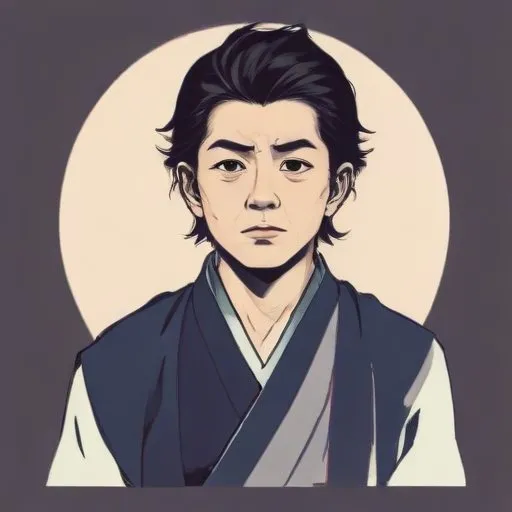
Matsunosuke Onoe: The Pioneer of Japanese Cinema
A Trailblazer in the Early Days of Film
Matsunosuke Onoe, also known as Medama no Matchan or "Eyeballs Matsu," was a Japanese actor who gained immense popularity in the early 20th century, earning the title of the first superstar of Japanese cinema. With over 1,000 films to his credit, Onoe's impact on the development of Japanese film industry is still felt today.
Early Life and Career
Born Tsuruzo Nakamura on September 12, 1875, Onoe grew up with a passion for the performing arts. At the age of 14, he left home to join an itinerant kabuki troupe, marking the beginning of his journey as an actor. In 1892, he adopted the stage name Tsurusaburo Onoe and began performing with the Tamizo Onoe company.
The Transition to Film
In 1905, Onoe adopted the more prestigious stage name Matsunosuke Onoe. Around the same time, his troupe's performances caught the attention of Shozo Makino, a filmmaker who owned a theater in Kyoto. Makino was approached by Yokota Shokai, a film import and exhibition company, to produce movies, and he saw an opportunity to bring Onoe's stage presence to the big screen. Onoe made his film debut in 1909 with "Goban Tadanobu Tadanobu the Fox," a movie adaptation of a famous kabuki play.
A Prolific Career
Onoe's troupe proved incredibly popular, and Makino chose Onoe to star in his future films. Over the next decade, Onoe starred in hundreds of films, often playing the lead characters in dramatizations of stories published by Tachikawa Bunko, a bestselling publisher at the time. He and Makino also pioneered the jidaigeki historical film genre, which remains a staple of Japanese cinema.
Awards and Recognition
Onoe's contributions to Japanese cinema were recognized both during and after his lifetime. In 1925, his 1,000th film, "Araki Mataemon," was celebrated as a milestone in his career.
Legacy
Matsunosuke Onoe's impact on Japanese cinema is still felt today. He paved the way for future generations of actors and filmmakers, and his contributions to the development of the jidaigeki genre continue to inspire new works. As the first superstar of Japanese cinema, Onoe's legacy serves as a reminder of the power of innovation and creativity in the arts.
-
Notable Works
- "Goban Tadanobu Tadanobu the Fox" (1909)
- "Araki Mataemon" (1925)
-
Awards and Honors
- Recognized as the first superstar of Japanese cinema
Matsunosuke Onoe's remarkable career and lasting impact on Japanese cinema serve as a testament to his innovative spirit and dedication to his craft.
FAQ
What is Matsunosuke Onoes significance in Japanese theatre?
Matsunosuke Onoe was a renowned Japanese actor who made significant contributions to Japanese theatre. He was known for his powerful performances and his ability to bring complex characters to life on stage.
How did Matsunosuke Onoes early life influence his acting career?
Matsunosuke Onoes early life had a profound impact on his acting career. His experiences growing up in Japan during the Meiji period shaped his worldview and informed his performances, adding depth and nuance to his characters.
What is Matsunosuke Onoes most famous role?
Matsunosuke Onoes most famous role is his portrayal of the titular character in the Japanese classic Yotsuya Kaidan. His performance was highly acclaimed and is still remembered today as one of the greatest interpretations of the character.
What role did Matsunosuke Onoe play in shaping Japanese drama?
Matsunosuke Onoe played a significant role in shaping Japanese drama. He was one of the first Japanese actors to focus on realistic, psychologically nuanced performances, paving the way for future generations of Japanese actors.
How did Matsunosuke Onoes work impact the development of Japanese theatre?
Matsunosuke Onoes work had a profound impact on the development of Japanese theatre. He helped establish a distinctly Japanese style, blending traditional influences with modern themes, and paved the way for future generations of Japanese actors and playwrights.