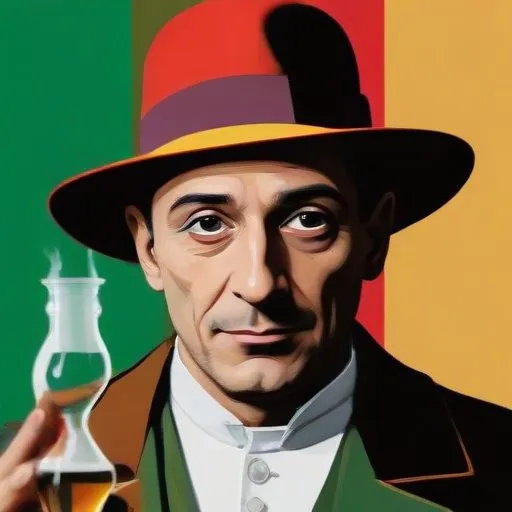
Matteo Tafuri: The Renaissance Polymath of Apulia
A Philosopher, Astrologer, and Physician of Renown
Matteo Tafuri, born in 1492, was an Italian luminary who left an indelible mark on the realms of philosophy, astrology, and medicine. This multifaceted individual was renowned for his exceptional divination skills, which often led to whispers of his alleged dealings in demonic arts, earning him both awe and suspicion.
Early Life and Education
Tafuri's earliest years were spent in Soleto, a small village in southern Apulia, where he was introduced to Hellenic culture through the teachings of Sergio Stiso, a prominent Hellenistic scholar. This foundation laid the groundwork for his future pursuits in philosophy and medicine, which he studied in Naples. The catalyst for his intellectual journey was his meeting with Zimaria, an Aristotelian disciple of
Pietro Pomponazzi, in Padua in 1525.
A Life of Travel and Discovery
Tafuri's thirst for knowledge led him to traverse the continent, visiting prominent centers of learning and meeting influential figures of the time. He traveled to England, where he encountered
Thomas More and the Archbishop Thomas Wolsey, although his stay was cut short due to accusations of heresy. Undeterred, he continued his journey, studying philosophy and medicine in Paris at the Sorbonne, and later at the University of Salamanca in Spain. His travels also took him to Africa, Poland, and Greece, exposing him to diverse cultural and intellectual traditions.
The Accusation of Witchcraft
In 1569, Tafuri faced a tumultuous episode in his life when he was accused of witchcraft and satanic powers by the Inquisition. Imprisoned for 15 months, he was ultimately acquitted, but the experience left a lasting scar. This incident, coupled with his reputation for divination, led to his being viewed with suspicion by the people of Soleto, who came to fear and dislike him.
Latter Years and Legacy
In his final years, Tafuri lived in relative poverty, relying on a pension from the Archbishop of Capua and a stipend from the Universitas of Soleto. Despite his difficulties, he continued to contribute to the education of the citizens, earning their respect and gratitude. He passed away on June 13, 1582, leaving behind a legacy as one of the most prominent figures of 16th-century Apulia.
Reputation and Impact
Tafuri's reputation as a sorcerer and practitioner of demonic arts has endured in popular culture, shrouding his actual accomplishments in mystery. In reality, his "magic" was rooted in his profound understanding of natural mysteries, which he explored through astrology, alchemy, and medicine. His work, though often misconstrued, has contributed significantly to our understanding of the interplay between these disciplines.
Major Works and Achievements
- Studied philosophy and medicine in Naples and Paris
- Met influential figures such as Thomas More and the Archbishop Thomas Wolsey in England
- Traveled extensively, visiting prominent centers of learning in Spain, Africa, Poland, and Greece
- Accused of witchcraft and satanic powers by the Inquisition, but ultimately acquitted
- Received a pension from the Archbishop of Capua and a stipend from the Universitas of Soleto
Quotes and Memorable Sayings
"The magic of nature lies not in spells and incantations, but in the understanding of its hidden rhythms and patterns."
Tafuri's life and work serve as a testament to the Renaissance spirit of curiosity and exploration, even in the face of adversity and misconception. His legacy continues to inspire and intrigue, inviting us to delve deeper into the intricacies of the human experience.
FAQ
What was Matteo Tafuris contribution to alchemy?
Matteo Tafuri was a renowned Italian alchemist who made significant contributions to the field of alchemy, particularly in the development of metallic transmutation. His work, De Medicina Auri, is a testament to his expertise.
What was Matteo Tafuris most notable work?
Matteo Tafuris most notable work is De Medicina Auri, a comprehensive treatise on alchemy that showcases his expertise in the field.
What was Matteo Tafuris significance in the history of alchemy?
Matteo Tafuri played a significant role in the history of alchemy, as his work influenced many subsequent alchemists and contributed to the development of the field.
What was Matteo Tafuris approach to alchemy?
Matteo Tafuris approach to alchemy was rooted in the pursuit of spiritual transformation and the attainment of enlightenment. He believed that alchemy could be used to achieve spiritual growth and self-realization.
What is Matteo Tafuris legacy in modern times?
Matteo Tafuris legacy in modern times is marked by a renewed interest in his work and a recognition of his contributions to the development of alchemy as a philosophical and spiritual pursuit.