


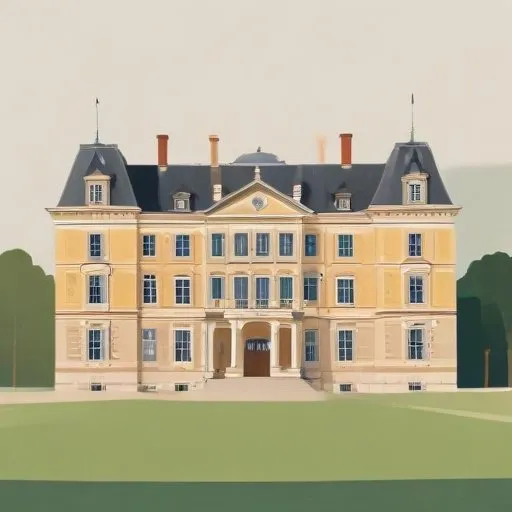
Designed grand Baroque palaces, including the stunning Pillnitz Castle, showcasing ornate architecture and majestic gardens.
Matthus Daniel Pppelmann is renowned for his remarkable contributions to the rebuilding of Dresden after the devastating fire of 1685, with his most iconic work being the breathtaking Zwinger Palace. As a master builder and architect, Pppelmann's innovative designs and exceptional craftsmanship have left an indelible mark on the city's architectural landscape.
Born on May 3, 1662, in Herford, Westphalia, Pppelmann was the son of a humble shopkeeper. His early fascination with building design led him to begin working as an unpaid apprentice in the court of Dresden Castle in 1680.
Under the patronage of King Augustus II the Strong, Pppelmann's talent and dedication earned him the position of court architect. He went on to design and oversee numerous monumental projects, including the grandiose Zwinger palace, which became the epitome of his architectural prowess.
Pppelmann's architectural style was a seamless blend of Baroque and Rococo elements, characterized by sweeping curves, ornate decorations, and precision craftsmanship. His designs not only reflected the era's grandeur but also showcased his ability to merge functionality with aesthetics.
Beyond the Zwinger Palace, his notable works include the reconstruction of Dresden Castle, Pillnitz Castle, and the picturesque Vineyard Church (Weinbergkirche) in Pillnitz. His collaborative effort with Johann Christoph Naumann on an urban plan for Warsaw, Poland, further demonstrates his versatility as an architect.
Pppelmann's personal life was marked by a strong sense of duty and dedication to his craft. He remained in Dresden for most of his life, passing away on January 17, 1736. He was laid to rest in the Matthauskirche in Dresden, a testament to his significant contributions to the city's cultural heritage.
A curious fact about Pppelmann is that he was the grandfather of the celebrated actress Friederike Sophie Seyler, demonstrating the intersection of art and architecture in his family lineage.
Pppelmann's architectural legacy extends far beyond his individual works. He played a pivotal role in shaping Dresden's architectural identity, which has since become a hallmark of the city's cultural landscape. His innovative designs and masterful execution have inspired generations of architects, cementing his place as a visionary in the world of architecture.
As we delve into the intricacies of Pppelmann's life and work, we are reminded of the profound impact that a single individual can have on the built environment. His trailblazing contributions continue to captivate and inspire us, serving as a testament to the transformative power of architecture.
Born in 1666
Designed the iconic Dresden Frauenkirche, a symbol of the city's reconstruction and hope after WWII, and a masterpiece of Baroque architecture.
