


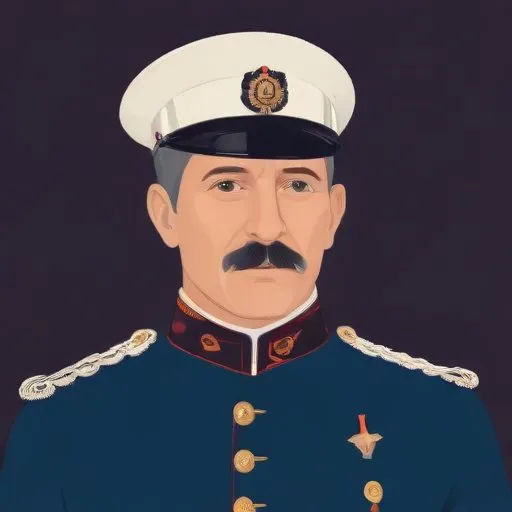
A French general who led the Algiers putsch, a failed coup against President Charles de Gaulle in 1961, and was later imprisoned for his role in the plot.
Maurice Challe, a French general during the Algerian War, is notorious for his role in the Algiers putsch and his innovative counterinsurgency tactics that left a lasting impact on modern warfare. As the commander of the French Air Force in Algeria between 1955 and 1960, Challe's unorthodox methods would be studied and emulated by others seeking to keep insurgency at bay.
Born on September 5, 1905, in Le Pontet, Vaucluse, Challe was a native of France. He began his military career in the infantry, later transferring to military aviation as a pilot officer. During World War II, Challe transmitted the Luftwaffe order of battle to the British prior to D-Day, and backed De Gaulle's return to power.
In July 1956, Egyptian leader Gamal Abdel Nasser's nationalization of the Suez Canal sparked a crisis that would draw in European powers. Challe, along with French Minister of Labor Albert Gazier, met with British Prime Minister Anthony Eden to propose a plan to occupy the canal zone. Eden's backing of the plan led to the Suez Crisis.
Challe's greatest military success came during the Algerian War, where his innovative counterinsurgency tactics weakened the Algerian National Liberation Army (ALN). His offensive, begun in March 1959, utilized speed and concentration of force to keep the ALN in constant retreat and disorder. This campaign would later be studied by others, including Syrian government forces during the Syrian Civil War.
The Challe Plan, only partially completed before his reassignment to France, aimed to crush the ALN through a combination of military and psychological warfare. The plan's success was reflected in the construction of the Challe Line, a line of electrified wire, minefields, and other military barriers that fortified the border between Algeria and Morocco and Tunisia.
Challe's legacy is marked by controversy, with some hailing him as a brilliant military strategist and others condemning his role in the Algiers putsch and human rights abuses during the Algerian War. Despite this, his counterinsurgency tactics remain a significant contribution to modern warfare, influencing military operations around the world.
Challe's legacy extends beyond the military sphere, influencing modern counterinsurgency strategies and shaping the approach to asymmetric warfare. His tactics have been emulated by forces around the world, often with devastating consequences for civilian populations.
In conclusion, Maurice Challe's tumultuous legacy serves as a reminder of the complexities and moral ambiguities of warfare. While his military innovations remain significant, they must be considered in the context of his role in human rights abuses and the devastating consequences of counterinsurgency warfare.
Born in 1890
A French military leader who led the Free French Forces during WWII and later became President of France, known for his strong leadership and vision for a unified Europe.
Born in 1888
A highly decorated military leader who played a crucial role in World War II, particularly in the Italian Campaign, and later became a prominent figure in French politics.
Born in 1902
Led the Free French Forces during WWII, playing a crucial role in the liberation of Paris and ultimately contributing to the Allied victory.
Born in 1882
A French lawyer and politician who served as the 17th President of France, known for his role in shaping the country's post-war constitution and politics. He played a key part in establishing the Fifth Republic.
Born in 1884
The first President of the Fourth Republic, serving from 1947 to 1954, known for his role in post-war France's reconstruction and establishment of the European Coal and Steel Community.
