


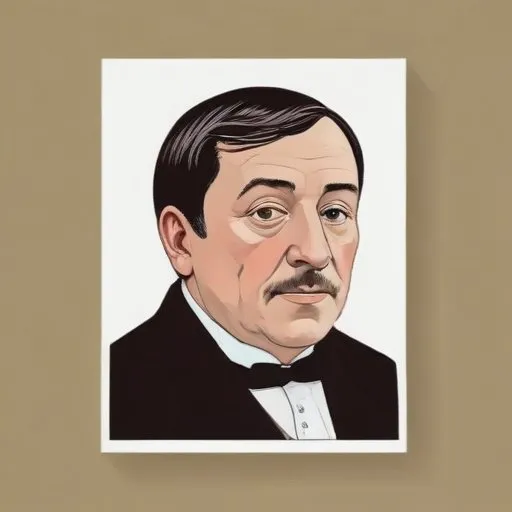
Maurice Polydore Marie Bernard Maeterlinck, a Belgian playwright, poet, and essayist, is renowned for his enchanting literary works that delved into the mysteries of life and death. His dramas, infused with a wealth of imagination and poetic fancy, earned him the prestigious Nobel Prize in Literature in 1911.
Born on August 29, 1862, in Ghent, Belgium, to a wealthy French-speaking family, Maeterlinck's fascination with literature began at an early age. His mother, Mathilde Colette Franoise, came from a wealthy family, and his father, Polydore, was a notary who nurtured a passion for tending to the greenhouses on their property.
In September 1874, Maeterlinck was sent to the Jesuit College of Sainte-Barbe, where he developed a distaste for the Catholic Church and organized religion. It was during this period that he befriended Charles van Lerberghe, a fellow writer who would later become a significant influence on Maeterlinck's work.
After gaining a law degree from the University of Ghent in 1885, Maeterlinck spent a few months in Paris, where he met members of the Symbolist movement, including Villiers de l'Isle Adam. This encounter had a profound impact on Maeterlinck's subsequent work, shaping his unique style and thematic focus.
Maeterlinck's early writings, including poems and short novels, demonstrated his inclination towards the mysterious and the unknown. His plays, which formed an integral part of the Symbolist movement, explored the human condition, delving into themes of death, life, and the human experience.
In later life, Maeterlinck faced credible accusations of plagiarism, which raised questions about the originality of his work. Despite this, his contributions to literature remain undeniable, and his plays continue to be celebrated for their unique blend of imagination and poetic flair.
Maeterlinck's work has inspired generations of writers and playwrights, influencing the development of modern drama and literature. His ability to weave complex themes into captivating narratives has left an indelible mark on the literary world.
Through his writing, Maeterlinck has continues to inspire readers to explore the mysteries of life and death, inviting them to ponder the deeper meanings behind human existence. His legacy serves as a testament to the power of literature to provoke, inspire, and mesmerize.
Maeterlinck's remarkable literary journey, marked by both accolades and controversies, has cemented his position as one of the most significant figures in the Symbolist movement. His contributions continue to captivate readers and inspire new generations of writers, solidifying his place in the annals of literary history.
Born in 1868
A French journalist and author who wrote the iconic novel "The Phantom of the Opera", a classic tale of love and horror that has been adapted into numerous stage productions and films.
Born in 1859
Creator of the iconic detective Sherlock Holmes, known for his ingenious mysteries and clever plot twists.
Born in 1866
A visionary writer who pioneered the science fiction genre, crafting timeless classics like "The Time Machine" and "War of the Worlds" that continue to inspire and captivate audiences today.
Born in 1828
A visionary writer who pioneered the science fiction genre, crafting timeless tales of adventure and exploration that continue to inspire generations.
Born in 1840
A pioneering figure in naturalist literature, known for his influential novels that exposed social ills and championed reform, such as "Germinal" and "Nana".
Born in 1821
A pioneering realist novelist who crafted meticulous, psychologically nuanced portrayals of 19th-century French life, particularly in his iconic novel "Madame Bovary".
Born in 1842
A French poet and critic who pioneered Symbolism, experimenting with language and form to evoke emotions and ideas, and is known for his enigmatic and influential poetry.
