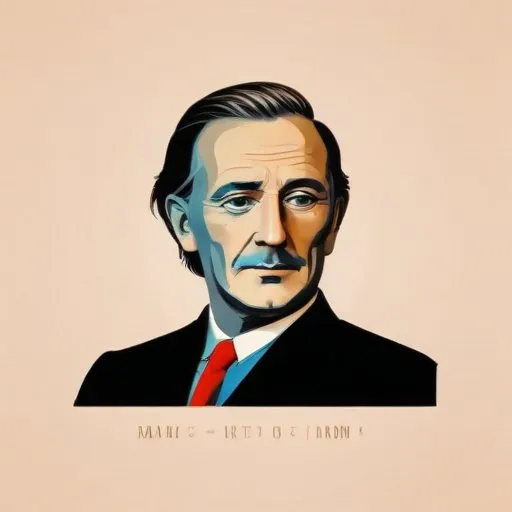
Max Kohnstamm: The Visionary Behind the European Union
A Life Dedicated to Unity and Cooperation
Max Kohnstamm, a Dutch historian and diplomat, is best known for his instrumental role in shaping the European Union as we know it today. Alongside other visionaries, Kohnstamm played a crucial part in developing the European Coal and Steel Community (ECSC) and the European Economic Community (EEC), laying the foundation for a united Europe.
Early Life and Influences
Born on May 22, 1914, in Amsterdam, Netherlands, Kohnstamm was the son of Philip Kohnstamm, a renowned physicist, philosopher, and pedagogue of Jewish-German origin. His family's impressive lineage included his uncle, Geldolph Adriaan Kessler, who contributed to the Dutch steel industry, and his great-uncle, Jean Baptiste August Kessler, a co-founder of Royal Dutch Shell. During World War II, Kohnstamm and his uncle Kessler were held hostage by the Germans at Camp Beekvliet in Sint-Michielsgestel, where they formed a strong bond despite their age difference.
Education and Academic Pursuits
Kohnstamm pursued his academic interests at Amsterdam University, where he studied Modern History. He later received a fellowship at American University in Washington, D.C., which allowed him to travel throughout the United States in 1938 and 1939. During this period, he exchanged letters with his father, sharing his impressions of the United States and voicing concerns about the impending war.
A Career Dedicated to European Unity
Kohnstamm's professional journey began as private secretary to Queen Wilhelmina of the Netherlands from 1945 to 1948. He then joined the Netherlands Foreign Office, serving as head of its German Bureau and Director of European Affairs from 1948 to 1952. In 1950, he became Vice President of the Netherlands Schuman Plan delegation and later served as Secretary to the High Authority of the European Coal and Steel Community from 1952 to 1956. His commitment to European unity led him to become Vice President of the Action Committee for the United States of Europe in 1956.
Leadership Roles and Contributions
Kohnstamm's leadership roles were a testament to his dedication to European integration. He was President of the European University Institute in Florence and Chairman of the Trilateral Commission in Europe. His contributions to the development of the European Union earned him recognition as one of the founding fathers of the EU.
Legacy and Impact
Max Kohnstamm's life's work continues to shape the European Union, promoting unity, cooperation, and economic growth among its member states. His tireless efforts have inspired generations of European leaders, cementing his place as a pioneer in the quest for a united Europe.
FAQ
What was Max Kohnstamms role in European integration?
Max Kohnstamm played a significant role in European integration as a Dutch historian and diplomat, serving as one of the founding fathers of the European Coal and Steel Community.
How did Max Kohnstamm contribute to the development of the European Union?
Max Kohnstamm contributed to the development of the European Union by serving as a high-ranking official in the EU Commission and playing a key role in shaping the Unions foreign policy.
What awards did Max Kohnstamm receive for his work?
Max Kohnstamm received several awards for his work, including the Charlemagne Prize, which recognized his contributions to European integration and unity.
How did Max Kohnstamms historical background influence his diplomatic work?
Max Kohnstamms historical background as a Dutch historian influenced his diplomatic work by providing a deep understanding of European history and politics, which he leveraged to promote cooperation and integration.
What is Max Kohnstamms legacy in European diplomacy?
Max Kohnstamms legacy in European diplomacy is one of vision and leadership, as he worked tirelessly to promote European integration and cooperation, shaping the course of modern European history.