


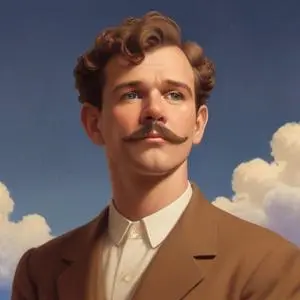
A renowned artist celebrated for his dreamlike, vibrant illustrations and paintings that often featured fantastical landscapes and figures, which adorned the covers of popular magazines and books. His work continues to inspire artists and designers today.
Maxfield Parrish was an American painter and illustrator, renowned for his captivating use of saturated hues and neoclassical imagery. His iconic style, which blended fantasy and reality, has made him one of the most successful and beloved artists of the 20th century.
Born on July 25, 1870, in Philadelphia, Pennsylvania, Parrish was the son of painter and etcher Stephen Parrish and Elizabeth Bancroft. His early life was filled with art, encouraged by his parents, who recognized his talent from a young age. A trip to Europe between 1884 and 1886, where he explored England, Italy, and France, exposed him to the works of the old masters and further fueled his passion for art.
Parrish's artistic career spanned over five decades, during which he produced an impressive 900 pieces of art, including calendars, greeting cards, and magazine covers. His distinctive style, characterized by vivid colors and dreamlike landscapes, captured the hearts of many. His most famous work, Daybreak (1922), was deemed the most successful art print of the 20th century by the National Museum of American Illustration.
Parrish's art was not only visually stunning but also reflected his philosophical beliefs. He believed in the power of art to evoke emotions and transport viewers to a world of beauty and wonder. His work often featured idyllic landscapes, accompanied by beautiful women, symbolizing his ideals of femininity and grace.
Parrish's influence on modern society extends far beyond the art world. His iconic style has inspired countless artists, designers, and writers. His work has been featured in films, literature, and music, cementing his status as a cultural icon.
"The more I paint, the more I realize that the essence of art is not to reproduce the visible, but to make visible the invisible."
Maxfield Parrish's legacy continues to inspire and enchant art lovers around the world. His unique style, which blended fantasy and reality, has left an indelible mark on American art and culture. Today, his work remains a testament to the power of art to transport us to a world of beauty and wonder.
A true master of his craft, Maxfield Parrish's artistic legacy continues to captivate audiences, inspiring new generations of artists and art enthusiasts alike.
Born in 1894
Famous for capturing the essence of American culture through heartwarming and humorous illustrations, this artist's work adorned the covers of The Saturday Evening Post for decades. Their nostalgic and relatable scenes continue to evoke feelings of warmth and nostalgia.
Born in 1874
A pioneering illustrator of the early 20th century, known for his iconic Arrow Collar Man advertisements and lavish depictions of American life, which set the standard for modern advertising art.
Born in 1882
A renowned painter and illustrator, celebrated for vivid, atmospheric depictions of American history and literature, particularly in classic children's books like Treasure Island and Robinson Crusoe.
Born in 1877
Creator of iconic patriotic posters, including the famous "I Want You" Uncle Sam recruitment poster, which has become a symbol of American patriotism.
Born in 1912
Creator of the beloved and bizarre Addams Family, a satirical take on the traditional American family, featuring characters like Morticia, Gomez, and Uncle Fester. Known for his dark humor and macabre illustrations.
Born in 1904
Beloved creator of whimsical stories and characters that spark imagination and creativity in children and adults alike, known for iconic works like "The Cat in the Hat" and "Green Eggs and Ham".
Born in 1882
A renowned artist of the early 20th century, known for his vivid, symbolic, and often provocative paintings and illustrations that explored the human condition, as well as his work in book design and travel writing.
Born in 1891
Creator of iconic American Regionalist paintings, including the enigmatic "American Gothic," which has become a cultural symbol of rural America.
