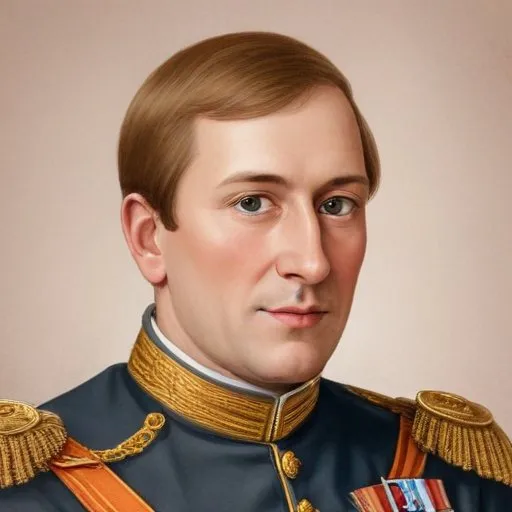
Maximilian I Joseph of Bavaria

Maximilian I Joseph of Bavaria

Maximilian I Joseph of Bavaria was born on May 27th, 1756

Full Name: Maximilian I Joseph
Place of Birth: Schwetzingen, Germany
Zodiac Sign: Leo
Occupation: King of Bavaria
Marriage: Caroline of Baden
Children: 8 children
Nationality: German
Reign: 1806-1825

King of Bavaria from 1806 to 1825, known for his liberal reforms and modernization of the country, earning him the title "Father of the Constitution".

Written by: Victor Malone Victor Malone

Maximilian I Joseph of Bavaria: The Visionary King

A Champion of Enlightenment and Reform

Maximilian I Joseph of Bavaria, a stalwart advocate of the Enlightenment, is best known for his transformative reign as the Duke of Zweibrücken, Prince-Elector of Bavaria, and eventually, the King of Bavaria. His relentless pursuit of modernization, secularization, and educational reforms left an indelible mark on theregion and cemented his position as a pioneer of progressive politics.

Early Life and Education

Rise to Power

Maximilian's military career began in 1777 as a colonel in the French Royal Army, where he rapidly rose to the rank of major general. He then switched allegiance to the Austrian army, participating in the initial campaigns of the French Revolutionary Wars.

Reign and Reforms

In 1795, Maximilian became the Duke of Zweibrücken, and in 1799, he inherited the title of Elector of Bavaria, marking the beginning of his transformative reign. Some of his notable achievements include:

Personal Life and Relationships

Maximilian's personal life was marked by turmoil and scandal. His mother's banishment and his own illegitimate siblings left an indelible mark on his psyche. However, his friendship with Klemens von Metternich, the future Austrian chancellor, during his time at the University of Strasbourg, testifies to his ability to form lasting connections.

Legacy

Maximilian I Joseph's reign was marked by controversy, but his commitment to Enlightenment values, educational reforms, and modernization left a lasting impact on Bavaria and beyond. As a champion of progress, he paved the way for future generations to build upon his vision of a more just and equitable society.

Quotes and Memorable Sayings

"The people are the true foundation of all power, and it is only by their happiness that the prosperity of a state can be ensured."

Through his unwavering dedication to the principles of the Enlightenment, Maximilian I Joseph of Bavaria etched his name in the annals of history as a visionary leader, whose reforms continue to inspire and influence modern society.

Timeline
1756
Born in Munich
Maximilian I Joseph of Bavaria was born in 1756 in Munich, Bavaria. He would go on to become the King of Bavaria and a prominent figure in European politics.
1795
Inherits Throne
Maximilian I Joseph inherited the throne of Bavaria, becoming the King and ruling with wisdom and justice.
1806
Elevated to King
Maximilian I Joseph was elevated to the rank of King, recognizing his importance in European politics.
1825
Dies in Munich
Maximilian I Joseph of Bavaria died in 1825 in Munich, Bavaria. His legacy as a wise and just ruler continues to be remembered in German history.
1825
Son Succeeds Him
Maximilian I Josephs son succeeded him as the King of Bavaria, continuing the familys legacy of wise and just rule.
Maximilian I Joseph of Bavaria

Maximilian I Joseph of Bavaria Quiz

What was Maximilian I Joseph of Bavaria known as due to his liberal reforms and modernization of the country?

Score: 0/5
FAQ
What were the key reforms of Maximilian I Joseph of Bavaria?
Maximilian I Joseph of Bavaria implemented a range of significant reforms, including the abolition of serfdom, the establishment of a constitutional monarchy, and the promotion of education and economic development.
How did Maximilian I Joseph of Bavaria respond to the Napoleonic Wars?
Maximilian I Joseph of Bavaria navigated the turbulent years of the Napoleonic Wars, often walking a fine line between alliance with France and loyalty to Austria, in order to preserve Bavarian independence and sovereignty.
What was the significance of Maximilian I Joseph of Bavarias marriage to Caroline of Baden?
Maximilian I Joseph of Bavarias marriage to Caroline of Baden strengthened Bavarias ties with other German states and secured important alliances, solidifying his position as a key player in European politics.
How did Maximilian I Joseph of Bavaria promote the arts in Bavaria?
Maximilian I Joseph of Bavaria was a strong patron of the arts, supporting numerous artists, architects, and intellectuals, and commissioning various cultural projects, including the construction of the Glyptothek and the Königsplatz in Munich.
How did Maximilian I Joseph of Bavaria die?
Maximilian I Joseph of Bavaria died on October 13, 1825, at the age of 77, after a long and eventful reign that saw him play a significant role in shaping Bavarian and European history.

Related People:

Ludwig I of Bavaria

Born in 1786

The King of Bavaria who commissioned the iconic Neuschwanstein Castle, a fairytale-like palace that inspired the Disney castle, and was a patron of the arts, supporting Richard Wagner's operas.

Ludwig I of Bavaria

Born in 1786

The King of Bavaria who commissioned the iconic Neuschwanstein Castle, a fairytale-like palace that inspired the Disney castle, and was a patron of the arts, supporting Richard Wagner's operas.

Jérôme Bonaparte

Born in 1784

The youngest brother of Napoleon Bonaparte, married to a German princess, and briefly King of Westphalia, known for his brief reign and attempts to modernize his kingdom. He's a footnote in Napoleon's shadow.

Napoleon Bonaparte

Born in 1769

A French military leader who rose to prominence during the French Revolution and became Emperor of France, known for his military conquests and reorganization of Europe. He is also famous for his Napoleonic Code, which remains a foundation of modern law.