


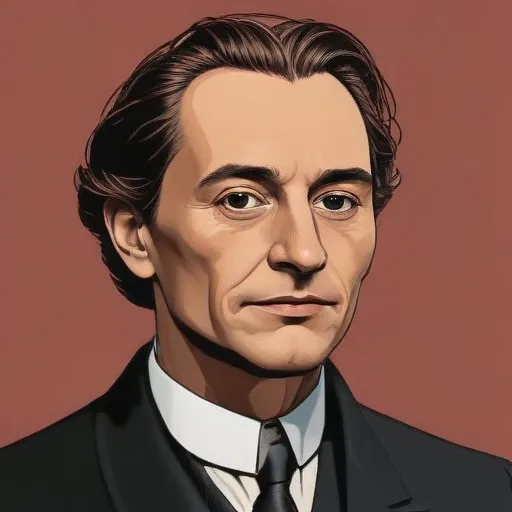
A German poet and author, known for his lyrical and symbolic works that explored themes of love, death, and the human condition. His writing style was characterized by its musicality and use of vivid imagery.
Maximilian Kronberger, affectionately known as Maximin, was a German poet who left an indelible mark on the literary world, particularly in the circle of Stefan George. His life, though short-lived, had a profound impact on George's work, and his legacy continues to fascinate scholars and literary enthusiasts alike.
In 1903, Kronberger's path crossed with Stefan George in Munich, a meeting that would change the course of literary history. According to some sources, their initial encounter took place in March 1902, while others claim it was 1901. Regardless of the exact date, it is undisputed that George was deeply impressed by Kronberger's poetic talent and idealized him to the point of proclaiming him a god.
Fate, however, had other plans. Kronberger's life was cut short by meningitis on the day after his 16th birthday, leaving behind a bereaved George and a body of work that would later become an integral part of the George circle's practice. The Maximin-Erlebnis (Maximin Experience) inspired George's subsequent works, and the cult of Maximin became an integral part of the circle's legacy.
In the years following Kronberger's passing, 33 of his poems were published posthumously in the collective volume Maximin Ein Gedenkbuch, now a rare and coveted book. This collection provided a glimpse into the poet's remarkable talent, and his work continues to influence literary circles to this day.
Kronberger's life and legacy continue to captivate scholars and literary enthusiasts, offering a fascinating glimpse into the intersection of artistic genius and the human experience. Despite his short time on this earth, Maximilian Kronberger's poetry and influence on Stefan George's work have left an indelible mark on literary history, ensuring his place as an enigmatic and enduring figure in the world of German poetry.
Born in 1868
A leading figure in German literature, known for his lyrical poetry and translations that explored themes of beauty, morality, and the human condition.
Born in 1875
A visionary poet and novelist who explored the human condition through lyrical and philosophical works, delving into the mysteries of existence, love, and the self.
Born in 1874
Austrian literary giant behind iconic works like "Der Rosenkavalier" and "Electra", known for poetic and philosophical explorations of human identity and morality.
Born in 1862
Austrian author and playwright who explored the human psyche through his works, often focusing on themes of love, relationships, and the bourgeoisie. His plays and novels offered a glimpse into the lives of Viennese high society during the early 20th century.
Born in 1883
A writer of surreal, psychologically complex fiction that explores the human condition, often featuring isolated protagonists in absurd, nightmarish scenarios.
Born in 1878
A German literary figure who wrote provocative plays and poetry that critiqued societal norms and authority, inspiring anarchist and anti-war movements.
Born in 1874
Austrian satirist and writer who critiqued the hypocrisy of modern life through his witty writings and biting social commentary. He's most famous for his magazine Die Fackel, which he wrote and published single-handedly for over 30 years.
Born in 1889
A philosopher who challenged traditional philosophy by emphasizing the importance of language and its limits, and is famous for his philosophical ideas on logic, reality, and the nature of meaning.
