


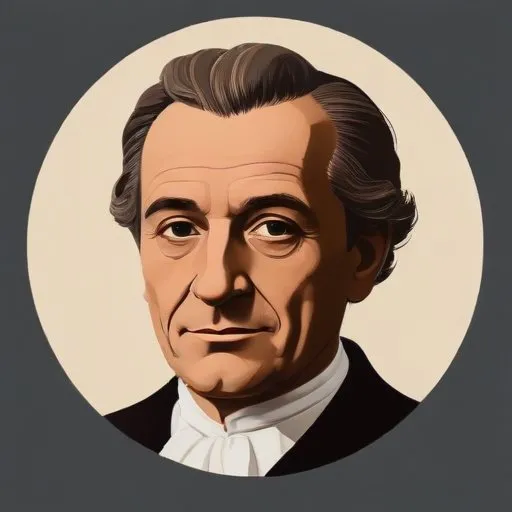
Austrian literary giant behind iconic works like "Der Rosenkavalier" and "Electra", known for poetic and philosophical explorations of human identity and morality.
Hugo von Hofmannsthal was a renowned Austrian novelist, librettist, poet, dramatist, narrator, and essayist, known for his contributions to the world of literature and opera. His works, often characterized by a blend of symbolism, lyricism, and philosophical depth, continue to inspire and influence artists to this day.
Born on February 1, 1874, in Landstrasse, Vienna, Hofmannsthal was the son of an upper-class Christian Austrian mother and a Christian Austrian-Italian bank manager. His family's noble title, Edler von Hofmannsthal, was inherited from his great-grandfather, a Jewish tobacco farmer who was ennobled by the Austrian emperor.
Hofmannsthal's education at Akademisches Gymnasium in Vienna laid the foundation for his writing career. He was fascinated by the works of Ovid, which would later become a significant influence on his writing. During his school days, he began writing poems and plays, often using pseudonyms, such as Loris Melikow and Theophil Morren, as he was not allowed to publish as a student.
Hofmannsthal's writing career took off when he met German poet Stefan George at the age of seventeen. George's journal, Bltter fr die Kunst, published some of Hofmannsthal's early poems. This exposure helped him establish himself as a rising literary talent.
After completing his law and philology studies at the University of Vienna in 1901, Hofmannsthal devoted himself to writing full-time. He became a key figure in the avant-garde group Young Vienna (Jung-Wien), alongside Peter Altenberg and Arthur Schnitzler.
In 1900, Hofmannsthal met composer Richard Strauss, marking the beginning of a fruitful collaboration. He wrote libretti for several of Strauss's operas, including:
These operas cemented Hofmannsthal's reputation as a master librettist and cemented his legacy in the world of opera.
Hofmannsthal's writing often explored themes of identity, morality, and the human condition. His philosophical contributions were influenced by his interests in mysticism, symbolism, and the works of Friedrich Nietzsche.
Throughout his career, Hofmannsthal grappled with the tension between individualism and societal expectations. His works often reflected his own concerns about the role of art in modern society and the search for meaning in a rapidly changing world.
Hofmannsthal's contributions to literature and opera have had a lasting impact on the cultural landscape. His collaborations with Richard Strauss remain some of the most beloved and enduring in the opera repertoire.
Today, Hofmannsthal's works continue to inspire artists, writers, and composers. His legacy serves as a testament to the power of art to transcend time and touch the human heart.
Born in 1862
Austrian author and playwright who explored the human psyche through his works, often focusing on themes of love, relationships, and the bourgeoisie. His plays and novels offered a glimpse into the lives of Viennese high society during the early 20th century.
Born in 1883
A writer of surreal, psychologically complex fiction that explores the human condition, often featuring isolated protagonists in absurd, nightmarish scenarios.
Born in 1898
A German-Swiss soldier and author, best known for writing the classic novel "All Quiet on the Western Front", a powerful anti-war tale that vividly depicts the horrors of World War I.
Born in 1881
A celebrated writer of psychological novels and biographies that probed the human condition, known for his vivid storytelling and insightful portrayals of historical figures.
Born in 1886
Austrian-American author and poet, known for his novels that explored the decay of values in modern society, particularly in his masterpiece "The Death of Virgil".
Born in 1874
Austrian satirist and writer who critiqued the hypocrisy of modern life through his witty writings and biting social commentary. He's most famous for his magazine Die Fackel, which he wrote and published single-handedly for over 30 years.
Born in 1860
Austro-Hungarian Zionist philosopher, journalist, and author who founded the modern Zionist movement, advocating for a Jewish homeland in Palestine. He's known for his influential book "The Jewish State" that sparked a global movement.
