


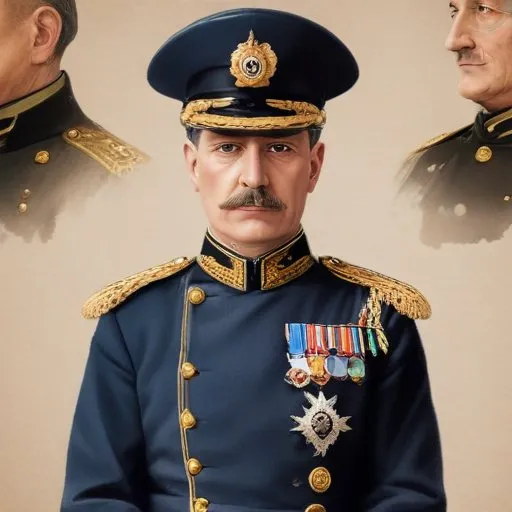
Austrian field marshal who led Habsburg forces to victory in the Thirty Years' War and was a prominent military strategist of his time. He played a key role in shaping the course of European history.
Maximilian Ulysses Browne, a renowned Austrian military officer, is best known for his exceptional service to the Habsburg Emperor during the 18th century. As one of the highest-ranking officers of his time, Browne's remarkable military career spanned several decades, earning him the respect and admiration of his contemporaries.
Born on October 23, 1705, in Basel, Switzerland, Browne was the son of Count Ulysses von Browne, a scion of the Wild Geese, an Irish family exiled after the Williamite War in Ireland. His father and uncle, George von Browne, were both created Counts of the Holy Roman Empire by Emperor Charles VI in 1716. These family connections played a significant role in shaping Browne's early career.
Browne's family ties and marital connections helped him secure a position in the Imperial Service of Austria. His father's friendship with John Churchill, the 1st Duke of Marlborough, further aided his establishment in the service. Following his father's death in 1731, Browne became the third Earl of Browne in the Jacobite Peerage. His wife, Countess Marie Philippine von Martinitz, had valuable connections at court, which also contributed to his rise to prominence.
Browne's military career was marked by several notable achievements. As a colonel of an Austrian infantry regiment, he distinguished himself in the Italian campaign of 1734. He further proved his mettle in the Tirolese fighting of 1735 and the Turkish war, earning recognition as a skilled general officer. During the War of the Austrian Succession, he served as a lieutenant field marshal, demonstrating his exceptional leadership skills.
Maximilian Ulysses Browne's remarkable military career had a lasting impact on the Habsburg Empire. His contributions to the Imperial Service of Austria were instrumental in shaping the empire's military strategy and policies. Browne's legacy serves as a testament to his unwavering dedication, strategic genius, and military prowess.
Maximilian Ulysses Browne's remarkable life and military career serve as a shining example of dedication, strategic genius, and military prowess. His legacy continues to inspire and awe, solidifying his place as one of the most distinguished Austrian military officers of the 18th century.
Born in 1663
A brilliant military strategist and statesman, he led the Holy Roman Empire to numerous victories against the Ottoman Empire, earning him legendary status in European history.
Born in 1725
Austrian field marshal who led military reforms and victories, earning him the title of Count and a prominent place in European military history.
Born in 1717
Austrian field marshal who led military campaigns against Prussia and the Ottoman Empire, achieving significant victories and earning recognition as one of the most prominent military leaders of the 18th century.
Born in 1758
A skilled military strategist and one of Napoleon's most trusted generals, known for his victories in the Peninsular War and his role in shaping modern warfare.
Born in 1769
A French military leader who rose to prominence during the French Revolution and became Emperor of France, known for his military conquests and reorganization of Europe. He is also famous for his Napoleonic Code, which remains a foundation of modern law.
