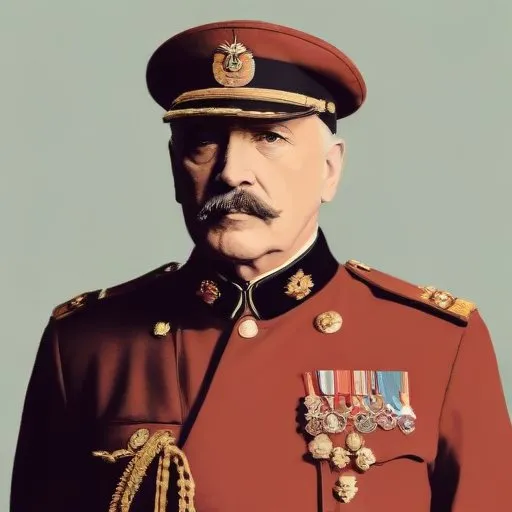
Ernst Gideon von Laudon: The Baltic German Military Officer Who Defied Frederick the Great
A Life of Military Service and Strategic Brilliance
Ernst Gideon von Laudon is remembered as one of the most formidable opponents of Prussian King
Frederick the Great, a military mastermind who outwitted and outmaneuvered the great king on numerous occasions. Born on February 13, 1717, in present-day Latvia, Laudon would go on to leave an indelible mark on European military history.
Early Life and Career
Laudon's family, of mixed German and Latgalian origin, had settled in Eastern Livonia (present-day Latvia) since the 15th century. His father, Otto
Gerhard Ritter von Laudohn, was a lieutenant colonel who served in the Swedish army. Laudon's early life was marked by a strong sense of duty and discipline, which he carried into his military career.
- In 1732, Laudon joined the Imperial Russian Army as a cadet, where he honed his military skills and developed a keen strategic mind.
- During the War of the Polish Succession (1733-1738), he participated in the Siege of Danzig, showcasing his bravery and tactical prowess.
Rise to Prominence
Dissatisfied with the prospects in the Russian Army, Laudon resigned in 1741 and sought military employment elsewhere. He applied to King Frederick the Great, but was initially rebuffed. However, he soon found success in Vienna, where he was made a captain in the Freikorps of Franz von der Trenck.
Silesian Wars and Confrontation with Frederick the Great
Laudon's next active service was in the Silesian mountains during the Second Silesian War (1744-1745) against Prussia. It was during this campaign that he distinguished himself as a master strategist, repeatedly outmaneuvering Frederick the Great's forces. His successes earned him recognition and promotion, solidifying his reputation as a formidable military officer.
Later Life and Legacy
Laudon's military career spanned over five decades, during which he served in various capacities, including as a field marshal and commander of the Austrian Army. He died on July 14, 1790, leaving behind a legacy as one of the greatest military minds in European history.
Quote and Memorable Sayings
"A good general is not one who wins battles, but one who wins wars." — Ernst Gideon von Laudon
Historical Context and Legacy
Laudon's military campaigns and strategic brilliance played a significant role in shaping European history. His victories against Frederick the Great's forces helped to balance the power dynamics in the region, while his tactical innovations influenced military thinking for generations to come.
Personal Milestones and Key Life Events
- 1732: Joined the Imperial Russian Army as a cadet
- 1741: Resigned from the Russian Army and sought employment elsewhere
- 1744-1745: Participated in the Second Silesian War against Prussia
- 1759: Elevated to the rank of Freiherr (Baron) von Laudon
- July 14, 1790: Passed away, leaving behind a legacy as a military mastermind
Influence on Modern Society
Laudon's military innovations and strategic thinking continue to inspire military historians and strategists to this day. His legacy serves as a reminder of the importance of adaptability, tactical brilliance, and decisive leadership in the face of adversity.
FAQ
What are the notable battles fought by Ernst Gideon von Laudon?
Ernst Gideon von Laudon was a renowned Austrian field marshal who fought in several notable battles, including the Battle of Kunersdorf, Battle of Liegnitz, and Battle of Freiberg. He is considered one of the most successful military commanders of the Habsburg Empire.
What was Ernst Gideon von Laudons role in the Seven Years War?
Ernst Gideon von Laudon played a significant role in the Seven Years War, where he led the Austrian army to several victories against the Prussian army, including the Battle of Kunersdorf. His military tactics and strategies were instrumental in the wars outcome.
What honors did Ernst Gideon von Laudon receive for his military service?
Ernst Gideon von Laudon received numerous honors for his military service, including the Order of the Golden Fleece, the Order of Maria Theresa, and the rank of Field Marshal. He was also promoted to the rank of Graf (Count) in recognition of his military achievements.
What was Ernst Gideon von Laudons early life and education like?
Ernst Gideon von Laudon was born in 1717 in Austria and came from a noble family. He received his early education at the Viennese Theresianum and later joined the Austrian army, where he quickly rose through the ranks due to his exceptional military skills and strategic thinking.
How did Ernst Gideon von Laudons military career impact the Habsburg Empire?
Ernst Gideon von Laudons military career had a significant impact on the Habsburg Empire, as he helped to expand its territories and secure its borders through his military victories. He is considered one of the most important military leaders in Austrian history.