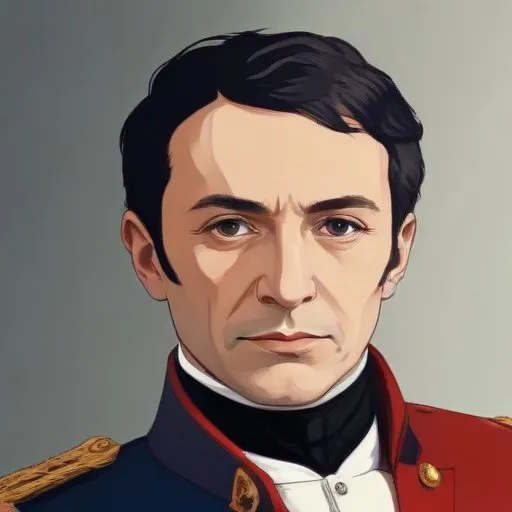
Lazare Carnot: The Organizer of Victory
A French Mathematician, Physicist, and Military Strategist
Lazare Carnot is remembered as a leading figure of the French Revolution, credited with transforming the French Revolutionary Army into an effective fighting force. He is renowned for his military reforms, which introduced mass conscription, and his instrumental role in the War of the First Coalition, earning him the title "The Organizer of Victory."
Early Life and Education
Born on May 13, 1753, in Nolay, France, Carnot came from a family of modest means. Despite financial challenges, his parents recognized his intellectual potential and encouraged his education. He studied at the École du Génie in Mézières, where he developed a strong foundation in mathematics and physics.
Military Career and Reforms
In 1792, Carnot was elected to the National Convention, where he became a member of the Committee of Public Safety. As one of the Ministers of War, he oversaw the reorganization of the French army, imposing discipline and expanding the force through mass conscription. His reforms were instrumental in reversing the tide of the War of the First Coalition, securing several key victories for the French.
Political Career
Carnot's political career was marked by his commitment to Republican values. He broke with
Maximilien Robespierre and played a role in his overthrow, later becoming one of the five initial members of the Directory. However, he was ousted after the Coup of 18 Fructidor in 1797 and went into exile.
Mathematical Contributions
In addition to his political and military achievements, Carnot was an accomplished mathematician. His work,
Géométrie de position, published in 1803, is considered a pioneering work in the field of projective geometry.
Personal Life and Exile
After Napoleon's rise to power, Carnot returned to France and briefly served as Minister of War in 1800. Disillusioned with Napoleon's coronation as Emperor, he withdrew from public life. In 1812, he returned to serve under Napoleon, overseeing the defense of Antwerp against the Sixth Coalition. After the second Bourbon Restoration, Carnot was exiled and died in Magdeburg, Prussia, on August 2, 1823.
Legacy
Lazare Carnot's impact on modern society is multifaceted. His military reforms and strategies continue to influence military tactics, while his mathematical contributions have shaped the field of projective geometry. As a stalwart Republican, he remains an important figure in French history, remembered for his unwavering commitment to his principles.
- Carnot's legacy extends beyond France, with his work influencing military strategy and mathematical developments worldwide.
- He is celebrated as a hero of the French Revolution, with his name etched on the Arc de Triomphe in Paris.
- His work in projective geometry paved the way for future mathematicians, including Felix Klein and Henri Poincaré.
FAQ
What were Lazare Carnots key accomplishments as a military strategist?
Lazare Carnot played a crucial role in the French Revolutionary Wars, reorganizing the French army and developing innovative military tactics that helped France secure several key victories.
How did Lazare Carnots mathematical background influence his military thinking?
Lazare Carnots mathematical training helped him apply logical and analytical thinking to military strategy, allowing him to develop more effective tactics and operations.
What was Lazare Carnots role in the Committee of Public Safety?
Lazare Carnot served on the Committee of Public Safety, where he oversaw military operations and played a key role in shaping French policy during the Reign of Terror.
How did Lazare Carnots legacy impact the development of modern warfare?
Lazare Carnots military reforms and innovations paved the way for modern warfare, influencing military strategists and thinkers for generations to come.
What was Lazare Carnots relationship like with Napoleon Bonaparte?
Lazare Carnot had a complex and often tumultuous relationship with Napoleon Bonaparte, who both admired and criticized Carnots military genius.