


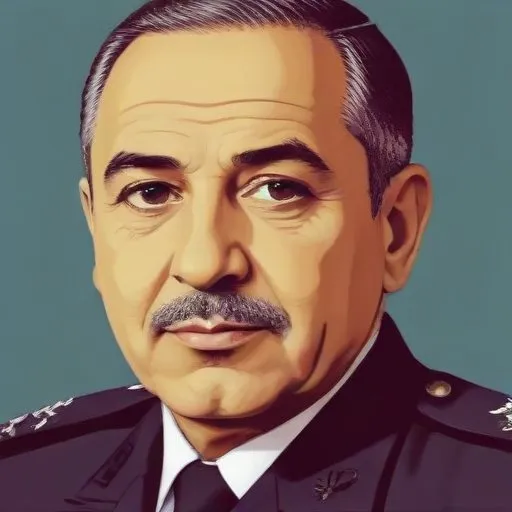
The 12th Israeli Minister of Communications was a high-ranking military officer who later transitioned into politics, serving in various government roles and playing a key part in shaping Israel's national security and communication policies. He's most known for his instrumental role in the 1967 Six-Day War and his efforts to strengthen Israel's intelligence agencies.
Meir Amit, a name synonymous with Israeli intelligence, is widely regarded as the most successful intelligence officer in Israel's history. As the Chief Director and head of global operations for Mossad from 1963 to 1968, Amit orchestrated some of the agency's most impressive accomplishments, earning him a reputation as a mastermind of espionage.
Born Meir Slutsky on March 17, 1921, in Tiberias, Palestine, Amit grew up in a family with strong Zionist roots. He later adopted the Hebrew name Amit, meaning "colleague," and was known as Meir Amit Slutsky. Amit's early life was marked by a deep sense of nationalism, which led him to join the kibbutz Alonim in the lower Galilee and enlist in the Haganah, a Jewish paramilitary organization.
Amit's military career was marked by rapid advancement, and he rose through the ranks to become a major general. During the 1948 Arab-Israeli War, Amit fought bravely, and his leadership skills caught the attention of Moshe Dayan, a prominent Israeli military leader and politician. Dayan became Amit's mentor, and their relationship played a significant role in shaping Amit's future.
In the late 1950s, Amit took a break from his military career to pursue an MBA degree at Columbia Business School in New York City. Upon his return to Israel, he entered the Israeli intelligence community, first as a major general at the head of IDF Intelligence in 1961, and then as Mossad Director in 1963.
Amit's tenure as Mossad Director was marked by unprecedented success. He was the only person in Israeli history to hold the positions of Mossad chief and head of military intelligence simultaneously. Under his leadership, the Mossad achieved several notable accomplishments, including the Recruitment of Eli Cohen, who penetrated the highest levels of the Syrian government, and the defection of an Iraqi pilot who flew a MiG-21 from Iraq to Israel.
Amit's most significant contribution to Israeli intelligence was the expansion of human intelligence (HUMINT) capabilities, particularly in the Arab world. He recognized the importance of human intelligence gathering in the region and invested heavily in developing a network of informants and agents. This strategy paid off, and Israel was able to gather critical information that helped shape its foreign policy and national security decisions.
Meir Amit's legacy extends far beyond his impressive career as a military officer and intelligence chief. He played a critical role in shaping Israel's national security policy and was widely respected for his intellectual acumen and leadership skills. Amit's influence on modern Israeli society is still felt today, and he remains an iconic figure in the country's history.
Amit's personal life was marked by a strong sense of family and community. He was married to Yona Amit, and they had three children together. In addition to his professional accomplishments, Amit was also known for his literary pursuits and was a published author.
Despite his impressive career, Amit was not immune to controversy. He was criticized for his role in several high-profile operations, including the abduction and assassination of Israeli citizens suspected of treason. However, Amit's supporters argue that his actions were necessary to protect Israel's national security interests.
Meir Amit was known for his wit and wisdom. One of his most famous quotes is, "The truth is that there is no truth. There are only stories, and the stories that are told are those that are believed."
Amit's contributions to Israel's national security were recognized and honored during his lifetime. He was awarded the Israeli Defense Prize in 1967, and the President's Medal of Honor in 2003.
Meir Amit passed away on July 17, 2009, but his legacy continues to inspire generations of Israeli leaders and intelligence professionals. As a pioneering figure in Israeli intelligence, Amit's impact on modern society is still felt today, and his name remains synonymous with excellence in the world of espionage and national security.
98 Years Old
The 11th Prime Minister of Israel, a military leader who played a key role in shaping the country's history, known for his controversial yet influential decisions that continue to impact the Middle East.
84 Years Old
A decorated military leader who later navigated Israel's complex political landscape as Prime Minister, known for his efforts to resolve the Israeli-Palestinian conflict.
76 Years Old
The 9th Prime Minister of Israel, a dominant figure in Israeli politics, known for his strong leadership and controversial policies. He has been a central figure in shaping Israel's foreign policy and security strategy.
Born in 1923
A Nobel Peace Prize winner who served as Israel's President and Prime Minister, known for his efforts to bring peace to the Middle East through diplomatic negotiations.
Born in 1922
A renowned Israeli leader and peacemaker who played a crucial role in shaping the country's history and was awarded the Nobel Prize for his efforts towards peace in the Middle East.
Born in 1915
A renowned Israeli military leader and statesman who played a key role in shaping Israel's foreign policy and defense strategy, known for his iconic eye patch and daring military operations.
Born in 1898
A pioneering female leader who served as Israel's first and only female Prime Minister, known for her strong leadership during times of war and peace. She played a crucial role in shaping Israel's early years and remains an iconic figure in Israeli politics.
Born in 1913
A Belarusian-born Israeli politician who served as Prime Minister of Israel and was awarded the Nobel Peace Prize for his efforts to establish a peace treaty with Egypt. He's known for his strong leadership and commitment to Israeli security.
