


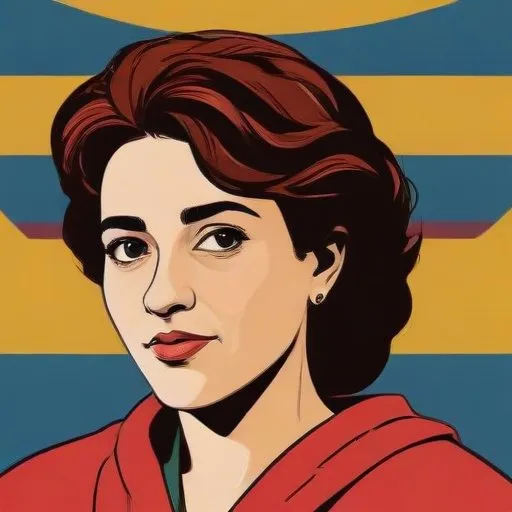
A renowned Catalan writer and poet, celebrated for her lyrical and introspective works that explore themes of love, identity, and social change, particularly in her novel "The Time of the Doves".
Merc Rodoreda is renowned as the most influential contemporary Catalan language writer, with her works translated into over thirty languages, earning her a revered position in the literary world. Her novel, The Time of the Doves, has become the most popular Catalan novel to date, cementing her status as a literary icon.
Born on October 10, 1908, in Barcelona, Rodoreda was surrounded by a family that cherished literature and the arts. Her parents, Andreu Rodoreda and Montserrat Gurgu, instilled in her a deep love for words and imagination. Her mother's fondness for music and her father's passion for theater had a profound impact on Rodoreda's creative trajectory.
Despite facing financial difficulties, Rodoreda's parents encouraged her to pursue her education, albeit briefly. She attended the Lurdes School in the Sarri neighborhood and later the Nuestra Seora de Lourdes center, where her love for literature was nurtured.
Rodoreda's writing career spanned over five decades, during which she wrote numerous novels, short stories, and essays. Her unique voice and style, which blended elements of realism and lyricism, resonated with readers worldwide. Her works often explored themes of love, identity, and the human condition, drawing from her own experiences as a woman and a Catalan.
The Time of the Doves, published in 1962, is arguably Rodoreda's magnum opus. This poignant novel tells the story of Natalia, a young woman navigating the complexities of life, love, and identity during the Spanish Civil War. The book's universal appeal lies in its ability to transcend linguistic and cultural boundaries, making it a beloved classic across the globe.
Rodoreda's contributions to Catalan literature have been recognized with numerous awards and honors. In 1967, she received the prestigious Sant Jordi Award for her novel The Time of the Doves. She was also awarded the Joan Crexells Award and the Ramon Llull Prize, among others, solidifying her position as a literary luminary.
Rodoreda's writing was deeply rooted in her philosophical beliefs about the human experience. She once said, "I write because I like to write. If it didn't seem like an exaggeration, I would say that I write to please myself. If others like what I write, the better." This quote encapsulates her approach to writing, which was driven by a desire to explore and understand the intricacies of human existence.
Rodoreda's influence on modern Catalan literature is immeasurable. Her works have inspired generations of writers, including prominent authors like Manuel de Pedrolo and Quim Monzó. Her legacy extends beyond the literary world, with her name becoming synonymous with Catalan culture and identity.
In 2013, the Merc Rodoreda Archive was established to preserve and promote her literary and artistic legacy. This initiative ensures that her works continue to inspire and captivate audiences, solidifying her position as a beacon of Catalan literature.
Merc Rodoreda's life and works serve as a testament to the power of literature to transcend borders and touch hearts. As a writer, philosopher, and artist, she continues to inspire generations, cementing her place as a cultural icon.
Born in 1904
A renowned surrealist master of bizarre, dream-like paintings and sculptures that blur reality and fantasy, known for iconic works like "The Persistence of Memory" and "The Elephants".
Born in 1881
A pioneering artist who transformed modern art with pioneering Cubist works, creating a new visual language that continues to inspire and influence art, design, and culture.
Born in 1893
A renowned Spanish artist, famous for his vibrant, dreamlike paintings and sculptures that blended abstraction and surrealism, creating a unique visual language. His works often featured bold colors, biomorphic forms, and a sense of playfulness.
Born in 1902
A Spanish poet and playwright celebrated for his avant-garde style and powerful anti-fascist writings, which greatly influenced 20th-century Spanish literature.
Born in 1898
A Spanish poet and author, celebrated for his surreal and introspective works that explored the human condition, earning him the Nobel Prize in Literature in 1977.
Born in 1898
A Spanish poet, playwright, and director who explored themes of love, death, and Spanish culture through his works, including the famous play "Blood Wedding".
Born in 1899
A visionary writer who crafted intricate, philosophical tales that blurred reality and fantasy, influencing generations of authors and thinkers. 82
Born in 1916
A Spanish writer and politician who won the Nobel Prize in Literature in 1989 for his innovative and influential literary style, which explored the human condition and Spanish culture.
