


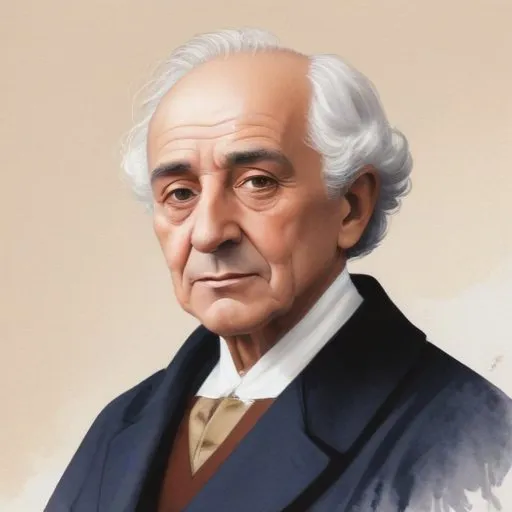
A Spanish poet and playwright celebrated for his avant-garde style and powerful anti-fascist writings, which greatly influenced 20th-century Spanish literature.
Rafael Alberti, a luminary of Spanish literature, is celebrated for his profound and evocative poetry, earning him a esteemed place among the Generation of 27. This iconic group of writers, including Federico García Lorca and Vicente Aleixandre, revolutionized Spanish poetry in the early 20th century.
Born on December 16, 1902, in the Puerto de Santa María, a coastal town in the province of Cádiz, Alberti was immersed in a world of rich cultural heritage. His family's history as vintners, supplying sherry to European royalty, and his Italian and Irish ancestry, infused his work with a deep sense of tradition and global perspective.
Alberti's educational journey began at the Jesuit Colegio San Luis Gonzaga, where he was exposed to the Jesuit ranking system, which would later influence his poetry's themes of social hierarchy and rebellion.
Following the Spanish Civil War, Alberti's Marxist beliefs led to his exile, a period that greatly influenced his writing. His poetry became a powerful tool for social commentary, reflecting his experiences as an outsider and his desire for justice and equality.
His most famous work, La Arboleda Perdida (The Lost Grove), published in 1959, is a poignant memoir that offers a glimpse into his early life and the events that shaped his art.
Rafael Alberti's poetry has had a profound impact on modern Spanish literature, influencing generations of writers and intellectuals. His work continues to be celebrated for its lyricism, depth, and unwavering commitment to social justice.
As a testament to his enduring legacy, Alberti's poetry remains a powerful symbol of resistance and hope, inspiring readers around the world.
Rafael Alberti's remarkable life, marked by exile, resistance, and artistic triumph, serves as a testament to the transformative power of poetry. His work continues to inspire, educate, and enrich our understanding of the human experience.
As we reflect on Alberti's extraordinary legacy, we are reminded of the enduring importance of art in shaping our world and our understanding of ourselves.
Born in 1898
A Spanish poet, playwright, and director who explored themes of love, death, and Spanish culture through his works, including the famous play "Blood Wedding".
Born in 1898
A Spanish poet and author, celebrated for his surreal and introspective works that explored the human condition, earning him the Nobel Prize in Literature in 1977.
Born in 1898
A renowned Spanish poet and philologist who made significant contributions to the study of Spanish literature, particularly in the field of Golden Age poetry. He's also known for his own poetry, which explores themes of love, death, and existential crisis.
Born in 1893
A Spanish poet, critic, and academic who explored themes of love, nature, and human existence through lyrical and introspective verse, earning him the Cervantes Prize.
Born in 1910
A 20th-century poet and playwright who explored themes of love, death, and social justice, creating powerful and emotive works that continue to resonate with readers today.
Born in 1875
A leading figure in Spanish literature, known for his innovative and influential poetry that explored themes of love, nature, and the human condition. His works are considered a bridge between modernism and the Generation of '27.
