


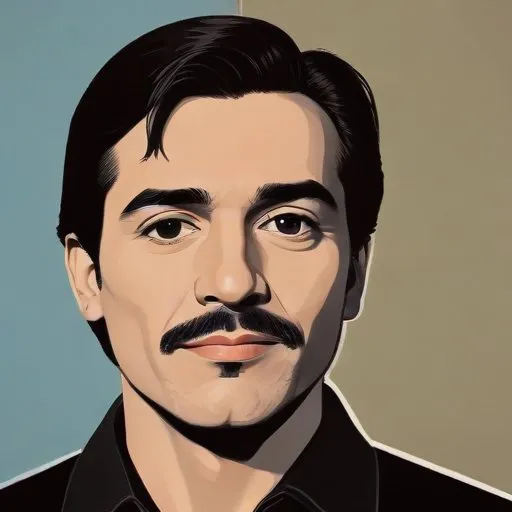
A Spanish poet, critic, and academic who explored themes of love, nature, and human existence through lyrical and introspective verse, earning him the Cervantes Prize.
Jorge Guilln, a renowned Spanish poet, scholar, and literary critic, is best known for his remarkable contributions to the world of literature, particularly as a member of the esteemed Generation of 27. Throughout his illustrious career, Guilln delivered influential lectures, penned thought-provoking poetry, and left an indelible mark on the literary landscape.
Born on January 18, 1893, in Valladolid, Spain, Guilln spent his formative years in his hometown before moving to Switzerland from 1909 to 1911. He pursued higher education at the universities of Madrid and Granada, graduating with a licenciatura in philosophy in 1913.
Guilln's literary journey began with the publication of his poems in Espaa and La pluma in the early 1920s. His dissertation on Gngoras' poem Polifemo earned him a doctorate from the University of Madrid in 1924. This was followed by his appointment as the chair of Spanish Literature at the University of Murcia from 1925 to 1929, where he founded and edited the literary magazine Verso y Prosa alongside Juan Guerrero Ruiz and Jos Ballester Nicols.
One of Guilln's most notable achievements was delivering the Charles Eliot Norton lectures at Harvard University from 1957 to 1958, which were later published in 1961 as Language and Poetry: Some Poets of Spain. The final lecture was a heartfelt tribute to his colleagues in the Generation of 27.
Guilln's contributions to literature were recognized with numerous awards and honors. In 1983, he was named Hijo Predilecto de Andaluca (Favorite Son of Andalusia), a prestigious title bestowed upon him by the Andalusian government. He was also nominated for the Nobel Prize in Literature four times, a testament to his profound impact on the literary world.
In 1921, Guilln married Germaine Cahen, and the couple had two children, Claudio and Teresa. Claudio went on to become a respected critic and scholar of comparative literature, while Teresa married the renowned Harvard professor Stephen Gilman.
Jorge Guilln's remarkable life and work continue to inspire generations of writers, scholars, and literary enthusiasts. His poetry and literary critiques serve as a testament to his profound understanding of the human experience, and his influence on modern Spanish literature remains unparalleled.
Through his remarkable achievements, Guilln has left an indelible mark on the literary world, cementing his place as one of the most important Spanish poets and literary critics of the 20th century.
Born in 1898
A Spanish poet, playwright, and director who explored themes of love, death, and Spanish culture through his works, including the famous play "Blood Wedding".
Born in 1902
A Spanish poet and playwright celebrated for his avant-garde style and powerful anti-fascist writings, which greatly influenced 20th-century Spanish literature.
Born in 1898
A Spanish poet and author, celebrated for his surreal and introspective works that explored the human condition, earning him the Nobel Prize in Literature in 1977.
Born in 1898
A renowned Spanish poet and philologist who made significant contributions to the study of Spanish literature, particularly in the field of Golden Age poetry. He's also known for his own poetry, which explores themes of love, death, and existential crisis.
Born in 1910
A 20th-century poet and playwright who explored themes of love, death, and social justice, creating powerful and emotive works that continue to resonate with readers today.
Born in 1875
A leading figure in Spanish literature, known for his innovative and influential poetry that explored themes of love, nature, and the human condition. His works are considered a bridge between modernism and the Generation of '27.
Born in 1902
A Spanish poet and critic, known for his lyrical and introspective poetry that explores themes of love, identity, and exile, with a unique blend of modernism and classicism.
