


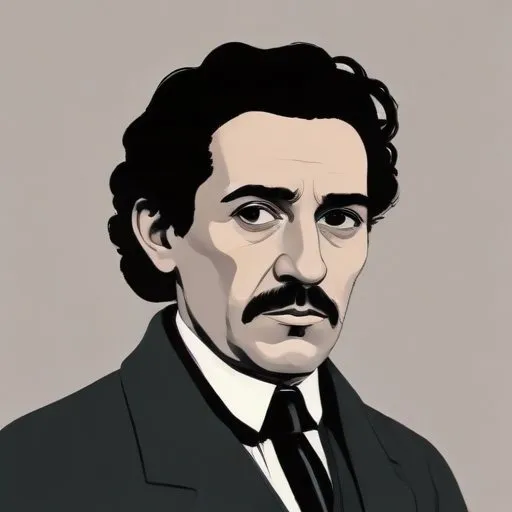
A Spanish poet and critic, known for his lyrical and introspective poetry that explores themes of love, identity, and exile, with a unique blend of modernism and classicism.
Luis Cernuda, a prominent figure of the Generation of 27, was a Spanish poet, critic, and professor, renowned for his lyrical and profound poetry, as well as his contributions to literary criticism and teaching. His works, characterized by their emotional intensity, intellectual depth, and exploration of themes such as love, desire, and exile, have had a lasting impact on Spanish literature.
Born on September 21, 1902, in Seville, Spain, Cernuda grew up in a military family and was the youngest of three siblings. His early life was marked by a sense of isolation and introversion, which he later reflected upon in his poetry. He began writing poetry at the age of 14, and his early encounters with literature, particularly the works of Bécquer, left an indelible mark on his artistic vision.
In 1938, Cernuda fled to the United Kingdom, where he taught at the universities of Glasgow and Cambridge, before moving to the United States in 1947. He eventually settled in Mexico, where he continued to write and teach until his death in 1963. Throughout his exile, Cernuda remained committed to his art, publishing numerous collections of poetry, as well as critical essays on literature.
Cernuda's poetry is characterized by its lyricism, intensity, and exploration of themes such as love, desire, and the human condition. His works, including Perfil del aire, Ocnos, and La realidad y el deseo, showcase his mastery of language and form. As a critic, Cernuda wrote extensively on Spanish, French, English, and German literature, leaving a lasting impact on literary scholarship.
Cernuda was openly gay, which was a rarity in his time, and his poetry often reflects his experiences and emotions as a gay man. His openness about his sexuality has made him a role model for the LGBTQ+ community in Spain. Despite his exile, Cernuda remained deeply connected to his Spanish heritage, and his works continue to be celebrated for their lyricism, depth, and emotional power.
Throughout his career, Cernuda received numerous awards and honors for his literary contributions, including the prestigious Premio de la Crítica Española. His legacy extends beyond his own writing, as he has inspired generations of Spanish poets and writers.
Cernuda's poetry and criticism have had a profound impact on Spanish literature, and his legacy continues to inspire writers, scholars, and readers alike. His openness about his sexuality has also contributed to a greater understanding and acceptance of LGBTQ+ individuals in Spain.
In conclusion, Luis Cernuda was a visionary poet, critic, and professor, whose works continue to captivate readers with their lyricism, depth, and emotional intensity. His legacy serves as a testament to the power of literature to transform and inspire, and his contributions to Spanish literature remain unparalleled.
Born in 1898
A Spanish poet, playwright, and director who explored themes of love, death, and Spanish culture through his works, including the famous play "Blood Wedding".
Born in 1904
A renowned surrealist master of bizarre, dream-like paintings and sculptures that blur reality and fantasy, known for iconic works like "The Persistence of Memory" and "The Elephants".
Born in 1904
A Chilean poet and diplomat who wrote passionate and evocative poetry that explored love, politics, and the human condition, and was awarded the Nobel Prize in Literature in 1971.
Born in 1902
A Spanish poet and playwright celebrated for his avant-garde style and powerful anti-fascist writings, which greatly influenced 20th-century Spanish literature.
Born in 1898
A Spanish poet and author, celebrated for his surreal and introspective works that explored the human condition, earning him the Nobel Prize in Literature in 1977.
Born in 1898
A renowned Spanish poet and philologist who made significant contributions to the study of Spanish literature, particularly in the field of Golden Age poetry. He's also known for his own poetry, which explores themes of love, death, and existential crisis.
Born in 1893
A Spanish poet, critic, and academic who explored themes of love, nature, and human existence through lyrical and introspective verse, earning him the Cervantes Prize.
Born in 1910
A 20th-century poet and playwright who explored themes of love, death, and social justice, creating powerful and emotive works that continue to resonate with readers today.
