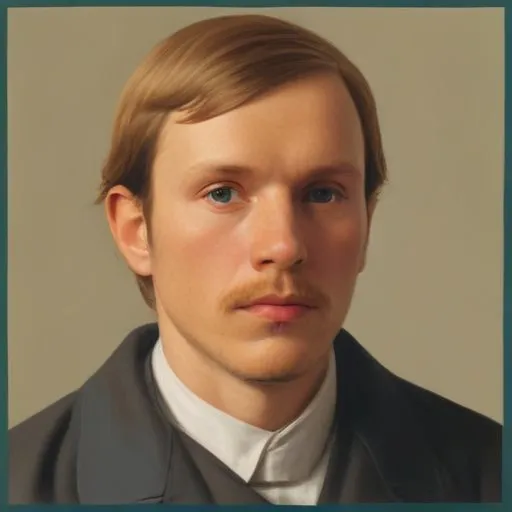
Michael Ancher: The Danish Realist Master of the Sea
A Life Dedicated to Capturing the Essence of the Fishing Community
Michael Ancher is widely regarded as one of Denmark's most celebrated artists, renowned for his vivid depictions of the country's fishing community and the majestic landscapes of the Skagerak and the North Sea. Through his intricate and masterful paintings, Ancher immortalized the lives of fishermen, their struggles, and their triumphs, earning him aplace among the greatest realist artists of all time.
Early Life and the Genesis of a Passion
Born on June 9, 1849, on the island of Bornholm, Michael Peter Ancher was the son of a local merchant. Following his father's financial difficulties, Ancher was forced to abandon his secondary education and fend for himself. This setback, however, proved to be a blessing in disguise, as it led him to take up an apprenticeship as a clerk at Kal Manor in eastern Jutland. It was during this period that he met the painters
Theodor Philipsen and Vilhelm Groth, who encouraged him to pursue a career in art.
The Formative Years and the Royal Danish Academy of Art
In 1871, Ancher attended C.V. Nielsen's art school as a precursor to joining the prestigious Royal Danish Academy of Art in Copenhagen later that year. Although he left the academy in 1875 without graduating, his time there played a pivotal role in shaping his artistic style and vision. It was during this period that he befriended Karl Madsen, a fellow student who would later invite him to travel to Skagen, a small fishing village in northern Jutland that would become the inspiration for some of Ancher's most iconic works.
Skagen and the Birth of a Artistic Movement
Ancher's first visit to Skagen in 1874 marked the beginning of a lifelong fascination with the region and its people. He soon became an integral part of the Skagen Painters, a group of artists who congregated in the village each summer to exchange ideas and capture the beauty of the surrounding landscapes. In 1880, Ancher married Anna Brøndum, a fellow painter and Skagen native, whose father owned the local Brøndums Hotel, which served as a hub for the artistic community.
A Career Marked by Artistic Triumphs
Ancher's artistic breakthrough came in 1879 with the painting
Will He Round the Point?, a work that showcased his unique ability to capture the drama and intensity of the sea. This triumph was followed by a string of masterpieces, including
The Lifeboat is Taken through the Dunes (1883) and
The Pilots (1896), which cemented his reputation as a master of Danish realism.
Personal Life and Legacy
Ancher's marriage to Anna Brøndum produced a daughter, Helga, in 1883. The family moved to Markvej in Skagen, where they maintained a home and studio. Ancher's legacy extends far beyond his own artistic accomplishments, as he played a pivotal role in establishing Skagen as a hub for artistic innovation and creativity.
Influence on Modern Society and the Art World
Ancher's contributions to the development of Danish realism have been profound, inspiring generations of artists to explore the country's unique cultural heritage. His dedication to capturing the lives of fishermen and the majesty of the sea has left an indelible mark on the nation's artistic identity.
Philosophical Contributions and Beliefs
Through his art, Ancher expressed a deep appreciation for the human spirit and the struggles of the working class. His work serves as a testament to the power of art to capture the essence of the human experience, elevating the ordinary to the realm of the extraordinary.
Controversies and Public Perception
Ancher's works, while widely acclaimed, have not been without controversy. Critics have accused him of romanticizing the lives of fishermen, failing to fully capture the harsh realities of their existence. Despite these criticisms, Ancher's art remains an integral part of Denmark's cultural heritage, a testament to his unwavering commitment to his artistic vision.
Quotes and Memorable Sayings
"The sea is a mirror of the soul." - Michael Ancher
Historical Context and Legacy
Ancher's life and art continue to serve as a beacon of inspiration for artists, historians, and enthusiasts alike. His contributions to the development of Danish realism have earned him a place among the greatest artists of all time, ensuring that his legacy will endure for generations to come.
Comparative Analysis with Contemporaries
Ancher's unique style and vision set him apart from his contemporaries, yet his contributions to the development of Danish realism place him firmly within the pantheon of great artists of the era, alongside luminaries such as Vilhelm Hammershøi and Laurits Andersen Ring.
Personal Relationships and Anecdotes
Ancher's close friendships with fellow Skagen Painters, including Karl Madsen and Viggo Johansen, played a significant role in shaping his artistic vision and fostered a sense of community and collaboration among the group.
Impact on Pop Culture
Ancher's works have inspired countless adaptations in literature, music, and film, cementing his status as a cultural icon in Denmark and beyond.
Awards and Honors
Ancher received numerous awards and accolades throughout his career, including the prestigious Thorvaldsen Medal in 1899.
Charitable Work and Social Contributions
Ancher's commitment to capturing the lives of fishermen and the working class reflects his deep empathy for the struggles of others, as well as his desire to give back to the community that inspired his art.
Inspirational Stories and Motivations
Ancher's unwavering dedication to his craft, despite the challenges he faced, serves as a beacon of inspiration for artists and individuals alike, a testament to the power of passion and perseverance in the pursuit of one's dreams.