


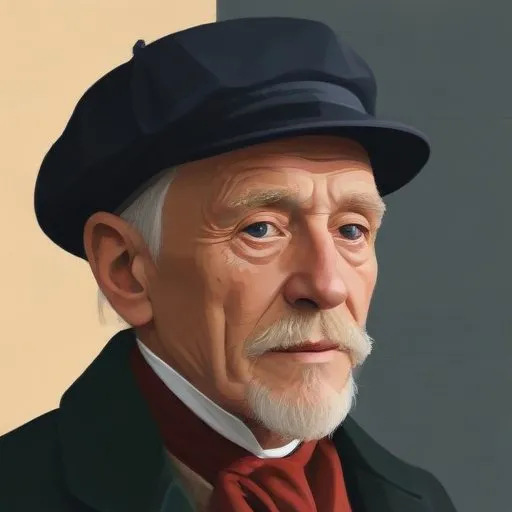
A Danish painter of landscapes and animals, known for his Impressionist style and capturing the beauty of rural life.
Theodor Esbern Philipsen was a renowned Danish painter known for his captivating landscapes and animal portraits, as well as his pioneering role in introducing Impressionism to Denmark. With a unique style that blended traditional techniques with modern innovations, Philipsen left an indelible mark on the art world.
Born on June 10, 1840, in Copenhagen to a cultured merchant family, Philipsen was exposed to the world of art from a young age. Despite his initial interest in agriculture, he was drawn to art, and his brother's introduction to painter Hans Smidth sparked his desire to become an artist.
Philipsen began his artistic training at the Royal Danish Academy of Fine Arts, where he studied under Carl Bøgh and later came under the influence of Frederik Vermehren. He was also familiar with the works of Johan Thomas Lundbye and Paulus Potter, which had a significant impact on his style.
In 1873, Philipsen was awarded the Neuhausenske Prize for his painting of horses swimming, a testament to his exceptional talent and dedication to his craft.
In the 1880s, Philipsen traveled to Paris to study with Léon Bonnat, where he honed his skills in croquis drawing and became acquainted with the radical trends in French art. His friendship with Remy Cogghe, with whom he spent time in Spain and Italy, further expanded his artistic horizons.
Philipsen's time in Paris had a profound impact on his work, as he began to adopt Impressionist techniques, such as painting en plein air and using small brushes with quick, firm strokes. This unique blend of traditional and modern styles earned him recognition as a pioneer of Impressionism in Denmark.
Philipsen's association with Paul Gauguin, who visited Copenhagen in the winter of 1884-1885, was particularly significant. Gauguin's advice on using small brushes with quick, firm strokes had a lasting impact on Philipsen's work.
Philipsen received numerous accolades throughout his career, including the Eckersberg Medal in 1890 and the Thorvaldsen Medal in 1915. His contributions to Danish art were widely recognized, and he is credited with establishing Impressionism as an important aspect of Danish painting.
Theodor Philipsen passed away on March 3, 1920, but his legacy lives on. His innovative style, which blended traditional techniques with modern innovations, continues to inspire artists and art enthusiasts alike. As a pioneering figure in Danish Impressionism, Philipsen's work remains a testament to the power of artistic innovation and creativity.
A true master of his craft, Theodor Philipsen's contributions to Danish art continue to be celebrated to this day. His innovative style, which blended traditional techniques with modern innovations, remains a testament to the power of artistic creativity and innovation.
Born in 1810
A 19th-century Danish master of genre painting and illustration, capturing everyday life and historical scenes with vivid detail and humor.
Born in 1631
Governor-general of Norway during the Napoleonic Wars, known for maintaining Norway's autonomy and independence. He played a crucial role in shaping Norway's future as a sovereign state.
