


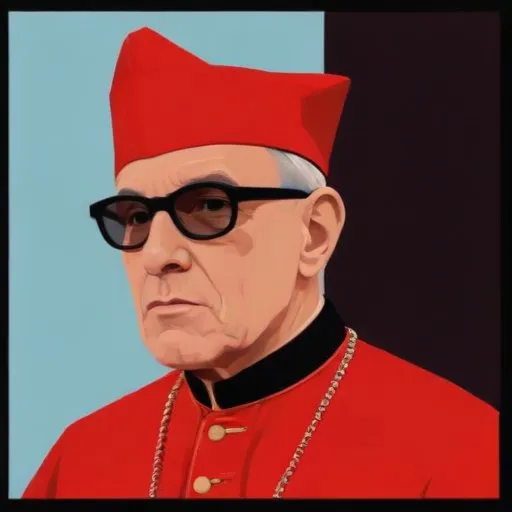
A prominent Catholic Church leader, he played a crucial role in shaping the Church's stance on various issues during the early 20th century, particularly during World War II.
Michael von Faulhaber, a prominent figure in the Catholic Church, is revered for his 35-year tenure as the Archbishop of Munich, from 1917 to 1952. He is remembered for his unyielding stance as a monarchist, his vocal denouncement of the Weimar Republic, and his complex relationship with the Nazi regime.
Born on March 5, 1869, in Klosterheidenfeld, Bavaria, Faulhaber was the third of seven children to Michael and Margarete Faulhaber. He pursued his education at gymnasiums in Schweinfurt and Würzburg, followed by a brief stint as an Officer Cadet in the Bavarian army in 1887-1888. Faulhaber's calling to the priesthood led him to the Kilianeum Catholic Seminary in Würzburg, where he was ordained on August 1, 1892.
Faulhaber's early years as a priest in Würzburg (1892-1910) laid the foundation for his future roles. In 1910, he was appointed as the suffragan bishop of Speyer, and later, in 1917, he became the Archbishop of Munich, a position he held until his passing in 1952. His elevation to Cardinal in 1921 solidified his position as a senior member of the Catholic Church.
Faulhaber's reign was marked by controversy, particularly in the context of the Nazi regime. While he recognized the new government as legitimate and maintained diplomatic bridges, he also condemned certain Nazi policies, such as religious persecution. His involvement in drafting the anti-Nazi encyclical Mit brennender Sorge in 1937 demonstrated his commitment to combating the regime's extremist ideologies.
However, Faulhaber's membership in the Amici Israel, a priestly association founded in 1926, has been criticized for its goal of converting Jewish people to Catholicism. This aspect of his legacy has sparked debate and underscores the complexities of his relationship with the Jewish community during a tumultuous period in history.
One of Faulhaber's most notable achievements was ordaining Joseph Ratzinger, the future Pope Benedict XVI, as a priest in 1951. This encounter highlights Faulhaber's influence on the next generation of Catholic leaders.
Faulhaber's legacy extends beyond his ecclesiastical roles. He played a significant part in shaping the Catholic Church's response to the Nazi regime, navigating the treacherous landscape of political and moral obligations.
Throughout his life, Faulhaber remained committed to his faith and his people. Despite the challenges and controversies that surrounded him, he continued to serve as a beacon of hope and guidance for the Catholic community.
As the last surviving Cardinal appointed by Pope Benedict XV, Faulhaber's passing on June 12, 1952, marked the end of an era. His unwavering dedication to the Catholic Church and his unshakeable convictions continue to inspire and intrigue scholars and historians alike.
Faulhaber's remarkable life, though marked by complexities and controversies, stands as a testament to his unwavering commitment to his faith and his people. His legacy continues to inspire and educate, serving as a reminder of the power of conviction and the importance of moral leadership.
Born in 1876
The leader of the Catholic Church from 1939 to 1958, known for his controversial role during World War II, particularly in regards to the Holocaust. He is also remembered for his encyclicals on social justice and liturgical reforms.
Born in 1876
The leader of the Catholic Church from 1939 to 1958, known for his controversial role during World War II, particularly in regards to the Holocaust. He is also remembered for his encyclicals on social justice and liturgical reforms.
