


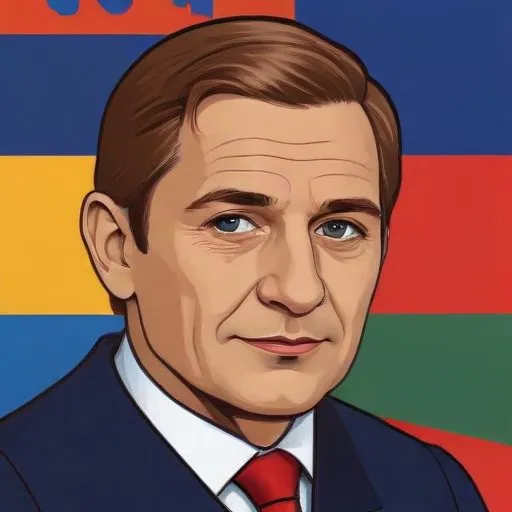
First President of Slovakia, leading the country to independence from Czechoslovakia in 1993, and shaping its early years as a sovereign nation.
Michal Kov, the first president of Slovakia, served from 1993 to 1998, and is renowned for his pivotal role in the country's transition from communism to democracy. His leadership and vision played a crucial part in Slovakia's independence from Czechoslovakia, earning him a revered place in the country's history.
Born on August 3, 1930, in the village of Lučatín, Czechoslovakia, Kov graduated from the University of Economics in Bratislava and began his career as a bank employee. During the 1960s, he worked in London and Cuba, an experience that broadened his perspective and prepared him for his future role in politics.
Kov's entry into politics began during the Velvet Revolution, when he served as the Finance Minister of the Slovak Socialist Republic from 1989 to 1991. He was one of the founders and vice-chairman of the Movement for a Democratic Slovakia, a party that played a significant role in the country's democratic transformation. In 1990, he was elected as a deputy to the Federal Assembly of Czechoslovakia, further solidifying his position as a key figure in Slovak politics.
In February 1993, Kov was elected president by the National Council of Slovakia, a testament to his popularity and influence. During his presidency, he clashed with Prime Minister Vladimír Mečiar, which ultimately led to the downfall of the Mečiar government and the creation of a new government. Kov's leadership and commitment to democracy earned him international recognition, and he became a symbol of hope for a newly independent Slovakia.
Kov's life was not without challenges. In 1995, his son was kidnapped and taken to Austria, an incident that sparked widespread outrage and concern. However, this event did not deter Kov from his duty as president, and he continued to work towards a better future for Slovakia.
Kov's presidency was marked by his commitment to democracy, freedom, and human rights. He believed in the importance of European integration and worked tirelessly to strengthen Slovakia's ties with the European Union. His leadership style was characterized by his ability to listen and compromise, attributes that earned him the respect of his peers and the Slovak people.
Kov's contributions to Slovakia's independence and democratic development were recognized both nationally and internationally. He received numerous awards and honors, including the Order of the White Double Cross, the highest state honor in Slovakia.
Michal Kov's presidency marked a significant turning point in Slovakia's history. He played a crucial role in the country's transition from communism to democracy, and his leadership paved the way for Slovakia's integration into the European Union. Today, he is remembered as a champion of democracy and a symbol of hope for a better future.
Kov's life is a testament to the power of perseverance and dedication. Despite facing numerous challenges and setbacks, he remained committed to his vision for a democratic Slovakia. His leadership and legacy continue to inspire generations of Slovaks, and his story serves as a reminder of the importance of fighting for freedom and democracy.
84 Years Old
First Prime Minister of Slovakia, serving three non-consecutive terms, known for his role in the country's independence from Czechoslovakia.
85 Years Old
The 3rd President of Slovakia, a lawyer-turned-politician who served from 2004 to 2014, known for his efforts to strengthen the country's economy and international relations.
63 Years Old
A Slovak entrepreneur and philanthropist who served as President of Slovakia, known for his humanitarian work and efforts to combat corruption. He's a prominent figure in Slovak politics and philanthropy.
52 Years Old
A first baseman and outfielder who played for several MLB teams, including the Detroit Tigers and Atlanta Braves, known for his clutch hitting and strong defensive skills.
71 Years Old
Slovakia's Prime Minister from 1998 to 2006, known for leading the country's transition to a market economy and accession to the European Union and NATO.
