


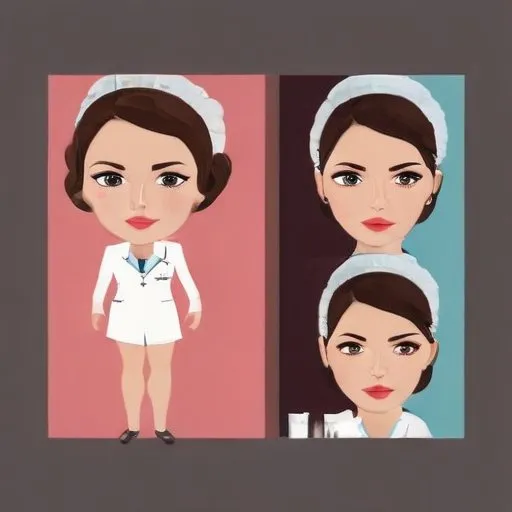
A pioneering Polish gynecologist and sexologist who advocated for women's reproductive rights and sexual education, breaking taboos in a conservative society. Her work focused on empowering women to take control of their bodies and sexuality.
Michalina Wisocka, a Polish gynecologist and sexologist, is best known for writing the groundbreaking book "The Art of Loving" (Sztuka kochania), the first comprehensive guide to sexual life in a communist country. Published in 1978, this book became a bestseller with over 7 million copies sold, sparking a wave of openness about sexual matters in Poland.
Born on July 1, 1921, in Warsaw, Poland, Michalina Wisocka came from a family of intellectuals. Her father, Jan Tymoteusz Braun, was a teacher, and her mother, Anna née Ciołkowska, belonged to the Ciołkowski coat of arms. She had two younger brothers, Andrzej, a writer, and Jan, a sumerologist. Her niece, Ewa Braun, went on to become an Academy Award-winning set decorator and costume designer.
Wisocka's work as a gynecologist and sexologist focused on infertility treatment, birth control, and promoting sexual education. She was a co-founder of the Society of Sensible Maternity, where she worked tirelessly to improve reproductive health. She also served as the chief of the first Dispensary of Sensible Maternity in the Institute of Mother and Child in Warsaw and later led the Cytodiagnostic Laboratory of Family Planning Society during the 1970s.
Her most notable contribution, however, was her book "The Art of Loving," which offered practical advice on sexual relationships, fertility, and contraception. This book was a game-changer in communist Poland, where sexual matters were largely taboo. Wisocka's work helped to demystify sexuality, encouraging open discussions and promoting healthy relationships.
In recognition of her outstanding contributions to the field of sexual health and education, Wisocka was awarded the Knight's Cross of the Order of Polonia Restituta on September 9, 1997.
Michalina Wisocka's legacy extends beyond her book and professional achievements. She played a significant role in shaping Poland's cultural and social landscape, paving the way for future generations to engage in open and informed discussions about sexuality.
In 2017, a biopic titled "Sztuka kochania. Historia Michaliny Wisockiej" (The Art of Loving. The Story of Michalina Wisocka) was released, directed by Maria Sadowska and starring Magdalena Boczarska as Wisocka.
To commemorate her life and work, the Park of Love in Lubniewice and a square in Warsaw were dedicated to her memory.
Michalina Wisocka's pioneering work continues to inspire and educate people to this day, leaving behind a lasting legacy in the fields of sexual health, relationships, and education.
Born in 1867
A pioneering scientist who pioneered radioactivity research, discovering elements polonium and radium, and paving the way for breakthroughs in medicine and energy.
Born in 1884
A pioneering female writer of Polish literature, known for her novels and plays that explored themes of love, family, and social issues, offering a glimpse into Poland's turbulent past.
Born in 1923
A Polish poet and translator who captured the human experience through subtle, introspective verse, earning her the Nobel Prize in Literature. Her poetry explores the complexities of life, love, and mortality.
77 Years Old
Acclaimed director and screenwriter behind thought-provoking films and TV series, often exploring complex social and political themes. Known for her work on "In Darkness" and "The Wire".
