


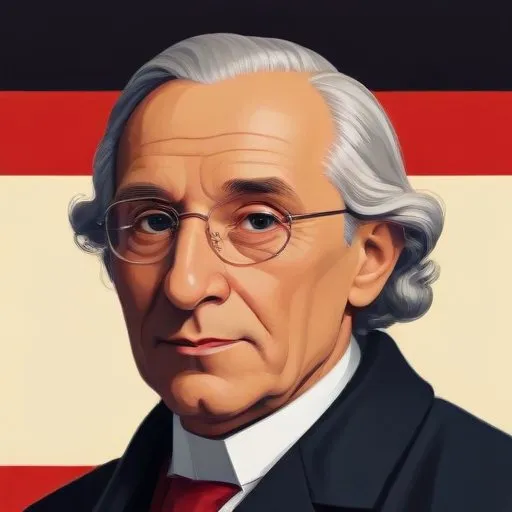
Developed the Vienna Circle's logical positivism, a philosophical movement that emphasized empirical evidence and rejected metaphysics. They also made significant contributions to the philosophy of science and ethics.
Born in 1879
A brilliant physicist who developed the theory of relativity and is considered one of the most influential scientists of the 20th century, known for his groundbreaking work in physics and mathematics.
Born in 1901
A pioneer in quantum mechanics, he formulated the uncertainty principle, which revolutionized our understanding of the atomic world. His groundbreaking work reshaped modern physics.
Born in 1885
A pioneer in quantum mechanics, he introduced the concept of wave-particle duality, revolutionizing our understanding of atomic structure. His philosophical approach to science also explored the nature of reality and human understanding.
Born in 1889
A philosopher who challenged traditional philosophy by emphasizing the importance of language and its limits, and is famous for his philosophical ideas on logic, reality, and the nature of meaning.
Born in 1891
Developed logical positivism, a philosophical movement that emphasized scientific evidence and rejected metaphysics, and made significant contributions to the fields of philosophy of language, philosophy of science, and epistemology.
Born in 1879
Austrian mathematician and philosopher who made significant contributions to topology, set theory, and philosophy of mathematics, and is known for his work on the Hahn-Banach theorem.
Born in 1906
A groundbreaking logician and philosopher who shook the foundations of mathematics with his incompleteness theorems, proving that no formal system can be both complete and consistent.